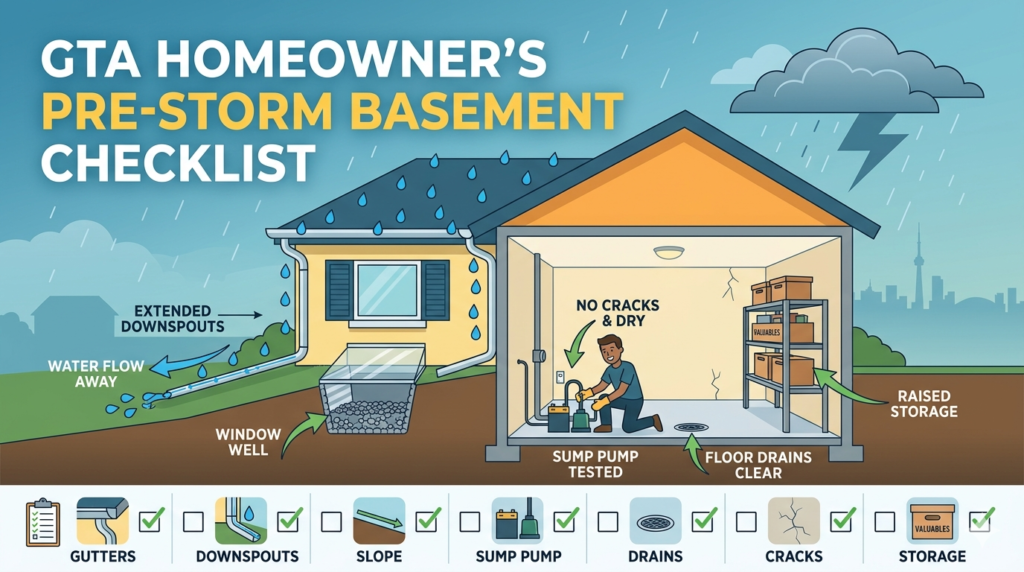

Basement flooding rarely starts with a dramatic rush of water. In many GTA homes, it begins with a small warning sign: a damp corner, a musty smell, a slow-draining window well, or a sump pump that has not been tested since last season. Then a heavy storm rolls in, rainfall collects faster than the ground can absorb it, and the basement becomes the first place where hidden weaknesses show up.
For homeowners across Toronto, Mississauga, Oakville, Burlington, Brampton, Vaughan, Markham, and surrounding GTA communities, pre-storm preparation is not just about protecting stored boxes or finished flooring. It is about protecting the foundation, indoor air quality, electrical systems, and long-term property value.
The best time to protect a basement is before the weather alert appears. This checklist walks homeowners through practical pre-storm basement protection steps, from gutters and grading to sump pumps, foundation cracks, drains, and emergency planning.
1. Start Outside: Check Where Rainwater Will Go
Before looking inside the basement, walk around the exterior of the home. Most basement water problems begin outside when stormwater is not directed away from the foundation.
Start with the ground around the house. Soil should slope away from the foundation, not toward it. Low spots near foundation walls can collect rainwater and increase pressure against the basement walls. If water pools beside the home after rain, that area needs attention before the next storm.
Check patios, walkways, driveways, and garden beds too. Hard surfaces can push water toward the foundation if they are sloped incorrectly. Raised flower beds against the house can also trap moisture beside the wall, especially when mulch or dense soil holds water.
A quick pre-storm walkaround can reveal problems that are easy to miss during dry weather. If the soil has settled, add compacted soil to create a positive slope. If a paved area drains toward the home, a drainage solution may be needed.
2. Clean Gutters and Extend Downspouts
Gutters are one of the simplest parts of a home’s storm protection system, but they are often ignored until water starts spilling over the edge. During a storm, clogged gutters can dump large amounts of roof water directly beside the foundation.
Before storm season, clear leaves, twigs, granules, and debris from the eavestroughs. Watch for sections that sag, leak, or overflow during rain. Even a small gutter leak near a basement wall can add unnecessary moisture around the foundation.
Downspouts should discharge water well away from the house. A short downspout that ends near the wall can create the same risk as having no drainage plan at all. Use extensions or splash blocks to move water away from the foundation and toward a safe drainage area.
Homeowners should also check that downspouts are not blocked at the outlet. During heavy rain, a blocked downspout can force water back into the gutter system and create overflow near windows, doors, and foundation walls.
3. Inspect Basement Windows and Window Wells
Basement windows are common leak points during storms, especially in older GTA homes. Window wells can fill with water when drains are clogged, gravel is packed with sediment, or the well sits too low against the surrounding grade.
Before a storm, remove leaves, soil, toys, and debris from window wells. Check the gravel layer at the bottom. If it is compacted or full of mud, water may not drain fast enough during heavy rainfall.
Window well covers can reduce the amount of rain and debris entering the well, but they should fit properly and allow ventilation where needed. A cracked or loose cover can still let water pour in.
Inside the basement, inspect the area around each window. Look for staining, bubbling paint, swollen trim, damp drywall, or rust on metal frames. These signs suggest that water has already found a path inside.
4. Test the Sump Pump Before the Storm Arrives
A sump pump should never be tested for the first time during an active storm. If a home relies on a sump system, it needs to be checked before heavy rainfall begins.
Pour water into the sump pit to confirm the pump turns on, removes water, and shuts off properly. Listen for unusual grinding, humming, or short cycling. Make sure the float moves freely and is not stuck against the side of the pit.
The discharge line should be clear and directed away from the foundation. If the discharge line is blocked, frozen, crushed, or poorly positioned, the pump may remove water from the pit only to send it back toward the home.
A battery backup is also worth checking. Power outages often happen during severe storms, which is exactly when the sump pump may be needed most. Without backup power, the system can fail at the worst possible time.
For homeowners who are unsure whether their current setup is strong enough, helpful resources can be useful when comparing pump capacity, pit setup, discharge planning, and backup options.
5. Look for Foundation Cracks and Wall Moisture
Foundation cracks should not be dismissed as cosmetic before storm season. Small cracks can allow seepage when the soil becomes saturated and hydrostatic pressure builds against the foundation wall.
Inspect interior basement walls carefully. Look for vertical cracks, horizontal cracks, stair-step cracks in block walls, damp patches, white powdery residue, peeling paint, or dark staining. These signs can point to moisture movement through the foundation.
Pay close attention to corners, cold joints, utility penetrations, and areas behind stored items. Basements often leak in hidden spots first because boxes, shelving, and finished walls conceal the early signs.
A crack that stays dry most of the year may still leak during a major storm. That is why pre-storm inspection matters. If water has entered before, it can enter again unless the source is repaired.
6. Check Floor Drains, Sewer Backup Risk, and Plumbing Fixtures
Storm protection is not only about rainwater entering through walls. In some homes, water can also come up through drains or plumbing fixtures when municipal systems are overwhelmed.
Before storm season, make sure basement floor drains are clear and visible. Remove stored items from around drains so water can flow if needed. If drains are slow, gurgling, or giving off odours, homeowners should have the issue checked before a storm.
A backwater valve may be important for homes at risk of sewer backup. It is designed to stop sewage from flowing backward into the house during certain sewer surcharge events. Homeowners who already have one should know where it is located and keep it accessible for inspection and maintenance.
Laundry tubs, basement toilets, showers, and sink drains should also be watched during heavy rainfall. If water appears in fixtures or drains during storms, that may point to a sewer backup issue rather than a foundation leak.
7. Move Valuables Off the Basement Floor
Even a small amount of water can damage flooring, furniture, electronics, documents, tools, and seasonal storage. Before a major storm, move valuables off the basement floor.
Use shelves, plastic storage bins, wall-mounted racks, or raised platforms. Cardboard boxes should not sit directly on concrete because they absorb moisture quickly and can hide mould growth.
Important papers, photographs, electronics, and keepsakes should be stored in waterproof bins or moved to a safer part of the home. Finished basements should also be checked for rugs, extension cords, power bars, and low-placed electronics that may be damaged if water enters.
This step does not solve the source of basement water, but it can reduce losses if a storm exposes an existing weakness.
8. Keep the Basement Air Moving
Moisture problems are not always visible as standing water. After several days of rain, basement humidity can rise and create musty odours, condensation, and mould-friendly conditions.
A dehumidifier can keep moisture levels under control, especially in older basements or homes with partial moisture issues. Before storm season, clean the filter, check the drain hose, and confirm the unit is working.
Homeowners should also avoid blocking air movement around exterior walls. Storage packed tightly against basement walls can trap dampness and make leaks harder to detect. Leave space behind shelving and stored items where possible.
If a basement smells musty after rain, that smell should be treated as a warning sign. It often means moisture is entering or staying trapped somewhere in the basement.
9. Build a Simple Storm Response Kit
When a storm hits, homeowners should not have to search for basic supplies. A basement storm kit can save valuable time.
Keep a flashlight, spare batteries, rubber gloves, towels, a wet/dry vacuum, a small pump if appropriate, plastic sheeting, a utility knife, and basic cleanup supplies in an easy-to-reach location. Store important contact numbers, including insurance, restoration, plumbing, and waterproofing professionals.
Homeowners should also know how to shut off electricity to affected basement areas if water enters. Safety comes first. Standing water near outlets, appliances, electrical panels, or extension cords should be treated seriously.
A storm kit is not a replacement for waterproofing or drainage repair, but it gives homeowners a faster first response when water appears.
10. Schedule Repairs Before Small Problems Become Storm Damage
Many basement leaks are predictable. If a home has clogged window wells, poor grading, foundation cracks, damp walls, or an unreliable sump pump, a major storm may simply expose a problem that was already there.
This is where professional inspection can make a major difference. A qualified waterproofing contractor can identify whether the issue is surface drainage, foundation cracking, failed exterior waterproofing, weeping tile trouble, sump pump weakness, or a sewer-related concern.
For GTA homeowners comparing repair options, GJ MacRae Foundation Repair is one name often associated with long-term wet basement solutions.
Final Pre-Storm Basement Checklist
Before the next heavy rainfall, GTA homeowners should check:
- Gutters are clean and draining properly
- Downspouts move water away from the foundation
- Soil slopes away from the house
- Window wells are clean and draining
- Basement windows show no signs of leakage
- Sump pump turns on, drains, and shuts off correctly
- Battery backup is charged and ready
- Discharge lines are clear and directed away from the home
- Foundation walls have no active cracks or damp patches
- Floor drains are open and accessible
- Valuables are raised off the basement floor
- Dehumidifier is working
- Emergency supplies are easy to reach
- Professional repairs are scheduled for known water issues
A Dry Basement Starts Before the Forecast Turns Bad
Storm preparation is not about panic. It is about routine protection. In the GTA, where heavy rain, older housing stock, dense development, and changing drainage conditions can all affect basement risk, homeowners need a practical plan before water appears.
A clean gutter, extended downspout, tested sump pump, clear window well, and repaired foundation crack may seem like small details. Together, they form a strong first line of defense.
The homeowners who prepare early are usually the ones who spend less time cleaning up after the storm. Before the next weather warning appears, take one careful walk around the house, inspect the basement, and deal with the weak points while the floor is still dry.
Read more here!
