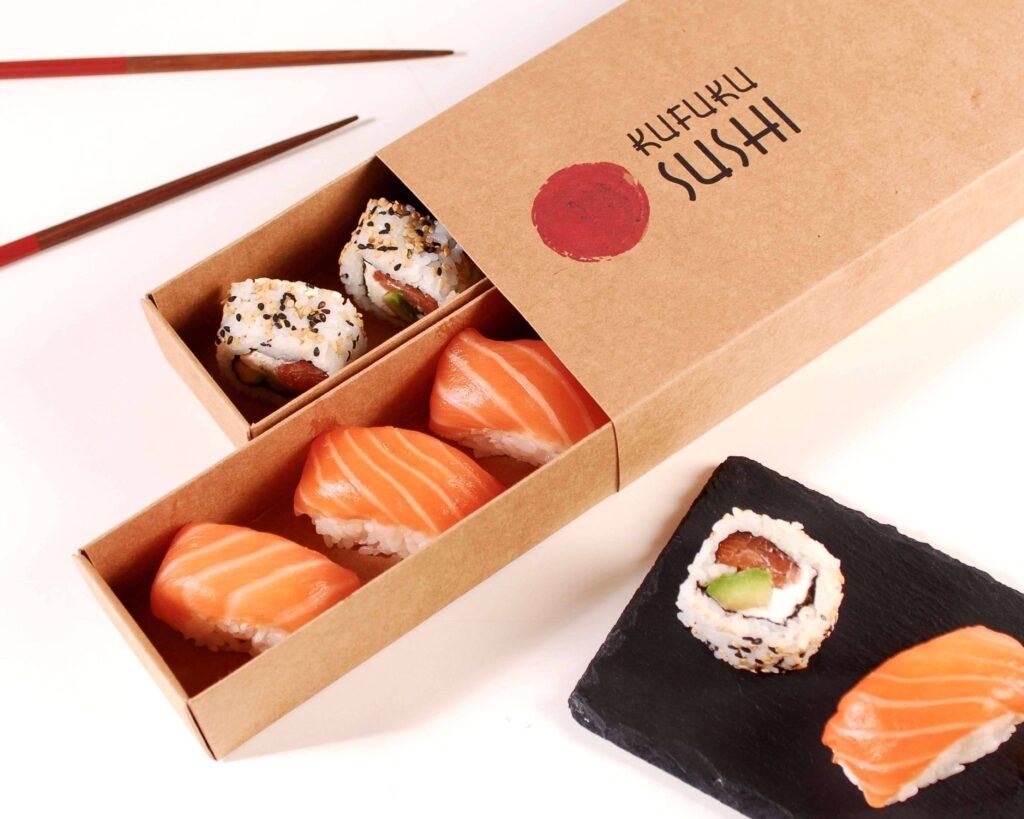

Sushi is not merely food; it is an art form defined by precision, color, and texture. In the world of high-end Japanese cuisine, the presentation is as vital as the flavor profile. Custom sushi boxes serve as the canvas for this art, bridging the gap between the chef’s kitchen and the customer’s table. For a decade, I have observed how packaging can either elevate a dining experience or diminish the perceived quality of the ingredients. A premium sushi box must respect the delicacy of the product, ensuring that the visual arrangement remains intact while providing a sophisticated “first look” that justifies a premium price point.
2. Structural Integrity: Preventing the “Soggy Bottom” Syndrome
One of the greatest technical challenges in food packaging is moisture management. Sushi rice must remain moist but not wet, while the nori (seaweed) needs to stay crisp for as long as possible. Professional-grade sushi boxes are engineered with high-quality, food-grade paperboard that features moisture-resistant coatings. These coatings prevent the box from absorbing oils or liquids, which would otherwise lead to structural failure. By utilizing specialized barriers, brands can ensure that the box remains sturdy and dry, preserving the integrity of the nigiri or maki inside during transit.
3. The Psychology of Transparency: The Power of Windows
In the food industry, “seeing is believing.” Custom sushi boxes often incorporate PET or PLA (eco-friendly) transparent windows. This design choice is rooted in consumer psychology; when customers can see the vibrant oranges of salmon and the deep greens of avocado, it triggers an immediate appetite response. A windowed box acts as a silent testimonial to the freshness of the ingredients. From a marketing perspective, this transparency reduces the “cognitive load” on the buyer, providing instant proof of quality and craft, which is essential for grab-and-go retail environments.
4. Branding Minimalism: Aligning with Japanese Aesthetics
Japanese design philosophy often centers on “Ma” (the beauty of empty space) and “Wabi-sabi” (simplicity). When designing custom sushi boxes, a “less is more” approach often yields the highest brand authority. Using a matte finish with a single, high-contrast logo or a subtle UV-spot pattern creates a sense of exclusivity. Sophisticated branding isn’t about clutter; it’s about choosing a palette—such as deep black, slate grey, or natural kraft—that complements the vibrant colors of the sushi. This aesthetic alignment positions your brand as an authentic purveyor of Japanese culinary tradition.
5. Food Safety and Compliance: Non-Toxic Excellence
As an experienced content writer, I emphasize that packaging is a safety barrier. Custom sushi boxes must be manufactured using FDA-approved or ISO-certified food-grade materials. This means the inks must be soy-based or water-based, and the adhesives must be non-toxic and odor-free. Because sushi is often consumed at room temperature or slightly chilled, the packaging must not “outgas” any chemical smells that could alter the subtle aroma of the fish. Ensuring your packaging is chemically inert is not just a legal requirement; it https://bloggingarena.com/ a commitment to the customer’s health and sensory experience.
6. Sustainable Luxury: The Eco-Friendly Mandate
The modern diner is increasingly aware of the environmental impact of single-use plastics. The shift toward biodegradable and compostable sushi boxes is no longer a niche trend—it is a market standard. Utilizing sugarcane bagasse, bamboo fiber, or FSC-certified recycled paperboard allows a brand to reduce its carbon footprint while appealing to the “conscious consumer.” Transitioning away from traditional plastic trays toward paper-based custom boxes signals that your brand is forward-thinking and ethically responsible, a move that significantly boosts long-term brand loyalty.
7. Compartmentalization: Engineering the Perfect Layout
A disorganized box is the enemy of a premium sushi experience. Custom inserts and compartments are essential for keeping wasabi, pickled ginger, and soy sauce separate from the main rolls. This prevents flavor cross-contamination and ensures that the heat from a spicy mayo doesn’t affect a delicate piece of sashimi. Advanced packaging design considers the “physics of delivery,” ensuring that even if the box is tilted during transport, the contents remain in their designated zones. This attention to internal architecture is what separates a professional establishment from a standard takeaway.
8. The “Unboxing” Ritual in the Digital Age
Social media has turned every meal into a potential viral moment. A beautifully crafted custom packaging paper for food businesses encourages “food photography,” which serves as free organic marketing. When a box opens with a magnetic click or features a unique “origami-style” folding mechanism, it creates a memorable ritual. This “unboxing” experience is a powerful tool for customer retention. In my 10 years of industry analysis, I’ve found that customers are 40% more likely to share a photo of their meal if the packaging is unique, providing your brand with invaluable digital reach.
9. Thermal Regulation and Freshness Preservation
Sushi is a temperature-sensitive product. While paper boxes are not insulators in the traditional sense, high-density paperboard provides a better thermal buffer than thin plastic. Custom designs can include micro-perforations for ventilation, preventing condensation from building up and making the rice “mushy.” This balance of airflow and protection ensures that the sushi maintains its “chef-intended” temperature from the restaurant to the customer’s home, ensuring every bite is as fresh as if it were served at the sushi bar.