
One of the first questions businesses ask before building an app is pretty straightforward: “How much is this going to cost?”
The frustrating answer is that there’s no fixed number.
A simple app with a few screens might cost less than a small marketing campaign, while a large-scale platform with real-time features, payments, AI integration, and custom infrastructure can easily move into six figures. Sometimes much more.
That’s why many businesses start conversations with a mobile app development company long before actual coding begins. The planning stage matters because app pricing is tied to dozens of moving parts, not just development hours.
A lot of founders underestimate this at first. They compare apps the same way people compare websites, but mobile products are usually more complex than they appear from the outside.
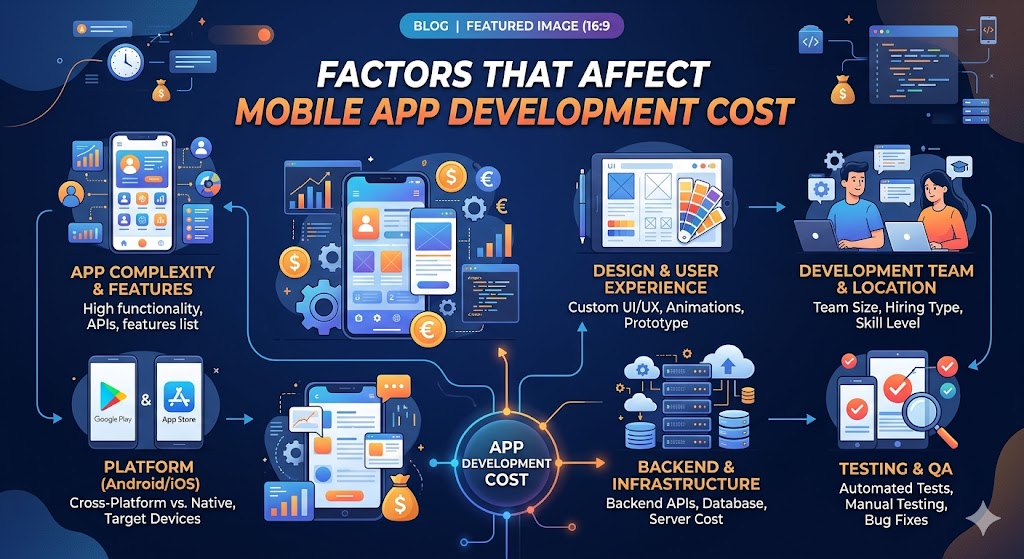
This guide breaks down the biggest factors that influence app pricing and why costs vary so dramatically from one project to another.
Why App Development Costs Vary So Much?
Not all apps are built the same way.
A basic calculator app and something like Uber technically both count as mobile apps, but the infrastructure behind them is completely different.
One runs mostly offline with minimal logic.
The other handles:
- real-time GPS tracking
- payments
- user authentication
- driver matching
- cloud infrastructure
- live notifications
The difference in complexity changes everything about development cost.
That’s why there’s no universal pricing model.
1. App Complexity
This is usually the biggest pricing factor.
The more features and technical systems involved, the more time the project requires.
a. Simple Apps
Basic apps often include:
- login systems
- simple dashboards
- static content
- limited backend functionality
Examples:
- calculator apps
- note-taking apps
- small business apps
These are relatively affordable compared to larger platforms.
b. Mid-Level Apps
These include more dynamic functionality:
- API integrations
- user profiles
- payment gateways
- cloud syncing
Examples:
- fitness apps
- booking apps
- eCommerce apps
Development becomes more resource-intensive here.
c. Complex Apps
This category includes:
- Real-time communication
- AI features
- Advanced security
- Large databases
- Scalable backend systems
Apps like TikTok or Uber fall into this level.
Costs increase dramatically because infrastructure and scalability become major concerns.
2. Platform Choice
A business building for Android only will usually spend less than one targeting both Android and iOS.
There are three common approaches:
1. Native Development
Separate apps are built for:
- iOS
- Android
This gives better platform optimization but increases development effort because two codebases must be maintained.
2. Cross-Platform Development
Tools like Flutter and React Native allow developers to share code across platforms.
This often reduces:
- development time
- testing effort
- maintenance costs
Though it’s not always the best choice for extremely complex apps.
3. UI/UX Design
Design is one area people regularly underestimate.
A polished interface takes time.
Custom animations, transitions, onboarding flows, and interactive elements all require additional design and frontend work.
There’s also a huge difference between:
- template-style layouts
- fully custom experiences
Apps competing in crowded markets usually need stronger UX to stand out.
Bad UX quietly destroys retention rates.
4. Backend Infrastructure
Some apps barely need backend systems.
Others depend heavily on them.
Backend development covers things like:
- databases
- servers
- APIs
- authentication systems
- cloud storage
For example, social media apps require constant data syncing between users, which dramatically increases infrastructure complexity.
The backend is often where scalability problems show up first.
5. Third-Party Integrations
Many apps rely on external services rather than building everything internally.
Common integrations include:
- payment gateways
- maps and navigation
- SMS verification
- analytics tools
- social logins
Each integration adds development and testing requirements.
Sometimes third-party APIs also introduce long-term subscription costs.
6. Real-Time Features
Real-time systems are expensive to build correctly.
Features like:
- messaging
- live tracking
- notifications
- video streaming
require persistent server communication and optimized infrastructure.
Apps like WhatsApp appear simple from the outside, but their backend systems are incredibly sophisticated.
Real-time performance becomes especially difficult at scale.
7. Security Requirements
Security affects development costs more than many businesses expect.
Apps handling:
- payments
- healthcare records
- personal data
- financial transactions
need stronger encryption, compliance measures, and secure authentication systems.
Fintech and healthcare apps are particularly expensive because regulatory requirements increase development complexity.
Security shortcuts usually become expensive later.
8. App Maintenance and Updates
Launch is not the finish line.
Apps require ongoing:
- Bug fixes
- OS compatibility updates
- Performance optimization
- Feature improvements
Maintenance typically costs a percentage of the original project annually.
A lot of businesses budget for development but forget long-term maintenance entirely.
That mistake shows up later.
9. Developer Location and Team Structure
Development rates vary significantly depending on location.
Teams in:
- North America
- Western Europe
generally charge more than teams in:
- Eastern Europe
- South Asia
But lower hourly rates don’t automatically mean lower overall costs. Communication quality, project management, and technical expertise matter too.
Cheap development sometimes becomes expensive rework later.
10. Timeline Expectations
Fast timelines increase costs.
If businesses want accelerated development, teams often need:
- more developers
- extended work hours
- parallel workflows
Urgency almost always increases pricing.
There’s a limit to how much app development can realistically be rushed before quality starts suffering.
11. App Testing and Quality Assurance
Testing is one of the least glamorous but most important stages.
Apps must be tested across:
- different devices
- operating systems
- screen sizes
- network conditions
QA becomes more expensive as app complexity grows.
Skipping proper testing creates problems that users notice immediately.
And users are not patient with broken apps anymore.
12. AI and Advanced Technologies
AI features are becoming more common, but they increase costs significantly.
Examples include:
- recommendation engines
- chatbots
- voice recognition
- predictive analytics
Apps integrating machine learning require specialized expertise and infrastructure.
The same applies to:
- blockchain
- augmented reality
- VR systems
Advanced technology almost always means higher development investment.
How Businesses Usually Miscalculate Costs
A lot of founders focus only on visible features.
They forget about:
- backend systems
- scalability
- testing
- security
- maintenance
This creates unrealistic expectations around mobile app development costs early in the planning process.
The app itself is only part of the system. Infrastructure matters just as much.
Ways to Reduce App Development Costs
Reducing costs doesn’t necessarily mean sacrificing quality.
Some practical strategies include:
1. Start With an MVP
Build core features first instead of everything at once.
This helps validate demand before scaling investment.
2. Use Cross-Platform Frameworks
Shared codebases can reduce duplication.
3. Prioritize Features Carefully
Not every feature needs to exist in version one.
Many successful apps launched surprisingly small.
4. Use Existing APIs
Building custom infrastructure for everything is usually unnecessary early on.
Future Trends Affecting App Development Costs
Several trends are shaping pricing across the industry:
- AI integration
- cloud-native architecture
- low-code development tools
- stronger privacy regulations
- wearable device support
At the same time, user expectations continue increasing.
People now expect apps to feel smooth, personalized, and instant, almost by default.
Final Thoughts
Mobile app pricing depends on far more than coding hours. Complexity, infrastructure, security, design, scalability, and maintenance all influence the final budget.
That’s why two apps that look similar on the surface can have completely different development costs underneath.
The smartest approach is usually starting with a clear product scope instead of chasing every feature idea immediately. Businesses that plan carefully tend to avoid the expensive rebuilds and delays that happen when projects grow without structure.
Building a successful app is rarely cheap, but understanding what actually drives the cost helps businesses make much better decisions before development even starts.
