
In 2026, smart devices are no longer limited to smartphones and wearables. They now include connected vehicles, industrial sensors, AR/VR headsets, smart medical equipment, and entire smart city infrastructures. What connects all these innovations is one fundamental requirement: reliable wireless performance in real-world conditions.
As wireless technologies become more complex—5G Advanced, Wi-Fi 7, ultra-wideband (UWB), satellite IoT, and early 6G research—traditional testing methods are struggling to keep up. Conducted testing with cables and connectors is no longer enough to validate how devices behave in real environments. This is where over-the-air (OTA) testing becomes essential, and why the wireless OTA chamber has become a critical tool for modern smart device validation.
In simple terms, smart devices must be tested the same way they will actually operate: wirelessly, in controlled yet realistic conditions. Without this, performance issues, regulatory failures, and customer dissatisfaction are almost guaranteed.
Key Takeaways
- Wireless OTA chambers enable realistic, cable-free validation of smart devices.
- They are essential for testing 5G, IoT, automotive, and next-gen wireless technologies.
- OTA testing improves measurement accuracy, compliance, and product reliability.
- Automated OTA chambers reduce test time and increase repeatability.
- Choosing the right chamber directly impacts product quality and time-to-market.
The Shift from Conducted to Over-the-Air Testing
For years, RF testing relied heavily on conducted methods—connecting devices directly using RF cables. While this approach is still useful for early-stage measurements, it fails to represent how antennas, radios, and wireless systems interact in real environments.
Modern smart devices integrate:
- Multiple antennas (MIMO, beamforming)
- Complex RF front ends
- AI-driven radio optimization
- Dynamic frequency switching
All these elements behave differently when tested wirelessly versus through a cable.
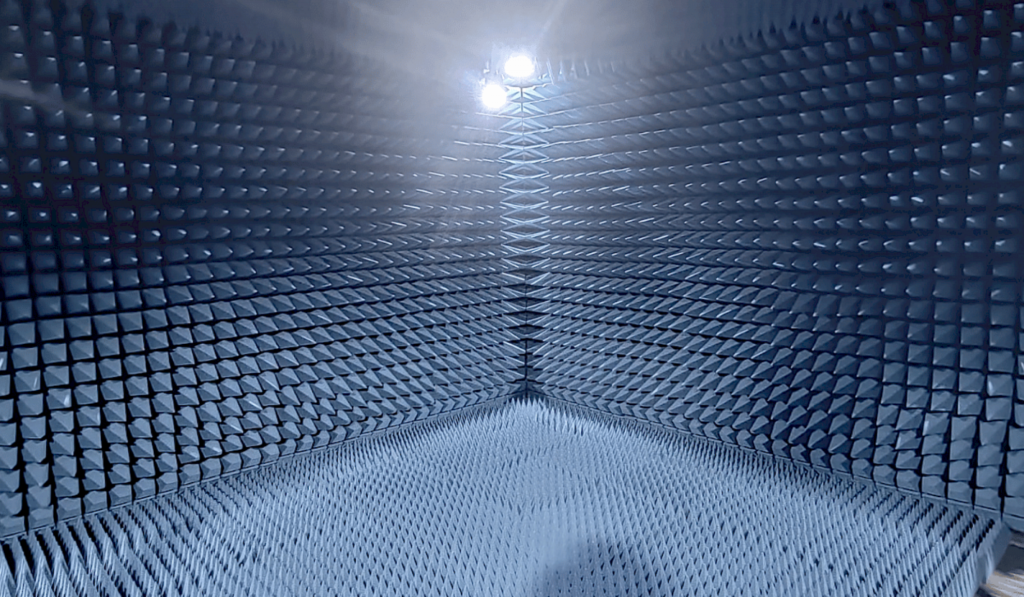
A wireless OTA chamber simulates free-space conditions in a controlled environment. It allows engineers to measure radiated performance such as throughput, latency, radiation patterns, signal quality, and real-world connectivity behavior.
In short, conducted testing tells you if the electronics work. OTA testing tells you if the device actually performs.
Why Smart Device Validation Is More Challenging Than Ever
Smart device validation in 2026 faces several major challenges:
1. Multi-Technology Integration
Devices now support multiple protocols simultaneously: 5G, Wi-Fi, Bluetooth, GNSS, UWB, and sometimes satellite links. Testing all these interactions requires a flexible and isolated environment.
2. mmWave and Beamforming
5G mmWave and advanced beamforming technologies depend heavily on antenna design and spatial behavior. These cannot be validated accurately without OTA testing.
3. Compact and Embedded Designs
Smaller form factors mean antennas are tightly integrated into the device structure, making RF behavior more sensitive to enclosure materials and component placement.
4. Regulatory Pressure
Global standards from organizations like 3GPP, CTIA, ETSI, and FCC increasingly mandate OTA-based measurements for certification.
5. Real-World Performance Expectations
Users expect seamless connectivity across environments. Lab tests must now reflect real-world conditions more than ever before.
All these challenges make OTA chambers not just useful—but necessary.
How Wireless OTA Chambers Solve These Challenges
A wireless OTA chamber provides a controlled, interference-free environment where devices can be tested exactly as they operate in the field.
Key Benefits
Realistic Testing Conditions
OTA chambers simulate free-space environments, enabling accurate measurement of radiated performance.
Isolation from External Interference
Shielding ensures results are not affected by external RF signals, Wi-Fi networks, or cellular traffic.
Repeatable Measurements
Test conditions remain consistent, making results reliable across different test cycles.
Support for Advanced Technologies
OTA chambers can handle Sub-6 GHz, mmWave, massive MIMO, beam steering, and multi-antenna systems.
Automation Ready
Modern chambers integrate with robotic positioners and test software for fully automated workflows.
This makes the wireless OTA chamber a foundational element in any serious smart device validation strategy.
Core Features That Matter in an OTA Chamber
Not all OTA chambers are created equal. The performance and usability depend heavily on the following features:
1. Shielding Effectiveness
High shielding ensures that external signals do not contaminate measurements.
2. Absorber Material
RF absorbers minimize reflections and create a near-anechoic environment.
3. Frequency Range
Support for Sub-6 GHz and mmWave is essential for future-proof testing.
4. Antenna Positioning Systems
Automated positioning allows precise measurement of radiation patterns.
5. Chamber Size and Flexibility
Different devices require different chamber dimensions and configurations.
6. Software Integration
Compatibility with RF instruments and automation platforms is critical.
Together, these features determine whether the chamber supports basic testing or enterprise-level validation.
Real-World Applications Across Industries
Wireless OTA chambers are now used across nearly every smart technology sector:
Telecom and 5G
- Smartphone certification
- Massive MIMO testing
- Network equipment validation
Automotive
- V2X communication
- Telematics systems
- Autonomous vehicle sensors
IoT and Smart Cities
- Industrial sensors
- Smart meters
- Asset tracking devices
Consumer Electronics
- Wearables
- Smart home products
- AR/VR devices
Healthcare
- Wireless medical devices
- Remote monitoring systems
As connectivity becomes universal, OTA testing becomes universal too.
Best Practices for Selecting and Implementing an OTA Chamber
Organizations and institutions planning to adopt OTA testing should consider the following practical steps:
1. Define Your Use Cases
Start by listing the technologies and devices you need to test—5G, Wi-Fi, IoT, automotive, or all of them.
2. Plan for the Future
Choose a chamber that supports future frequency bands and standards.
3. Prioritize Automation
Manual testing does not scale. Automated OTA systems improve efficiency and consistency.
4. Validate Compliance Requirements
Ensure the chamber meets regulatory standards for your target markets.
5. Invest in Training
Engineers must understand OTA principles to extract meaningful results.
6. Integrate with Your Lab Ecosystem
The chamber should work seamlessly with existing RF instruments and software.
These steps help organizations avoid underutilized investments and maximize ROI.
Why OTA Testing Is Now a Strategic Advantage
OTA testing is no longer just a technical requirement—it is a business differentiator.
Companies that adopt advanced OTA validation:
- Launch products faster
- Reduce field failures
- Improve customer satisfaction
- Achieve global certifications more easily
- Build stronger engineering credibility
In competitive markets, wireless performance directly impacts brand reputation.
A well-implemented OTA strategy means fewer surprises after launch and more confidence in product quality.
FAQ: Wireless OTA Chambers and Smart Device Testing
1. What is a wireless OTA chamber?
A wireless OTA chamber is a shielded test environment that allows engineers to evaluate the radiated wireless performance of devices without physical RF connections.
2. Why is OTA testing better than conducted testing?
OTA testing reflects real-world behavior by measuring how antennas and radios perform wirelessly, which conducted testing cannot accurately replicate.
3. Which devices require OTA testing?
Smartphones, IoT devices, automotive systems, wearables, medical devices, and any product using wireless connectivity.
4. Can OTA chambers support 5G mmWave?
Yes, modern chambers are designed to support both Sub-6 GHz and mmWave frequencies.
5. Are OTA chambers required for certification?
Many regulatory bodies now mandate OTA-based measurements for wireless device approval.
6. How long does it take to implement an OTA test setup?
With proper planning, an OTA system can be deployed within weeks and scaled over time.
Take the Next Step Toward Smarter Wireless Validation
As wireless technologies evolve, testing strategies must evolve with them. Smart device validation is no longer about just checking compliance—it’s about ensuring real-world performance, reliability, and user experience.
A well-designed wireless OTA chamber enables organizations to validate devices exactly as they will be used, reducing risk and accelerating innovation. It transforms testing from a bottleneck into a competitive advantage.
For organizations seeking trusted expertise and future-ready solutions, Orbis Systems stands out as a leader in advanced RF and OTA testing technologies—helping innovators build smarter, more reliable connected devices for tomorrow’s world.