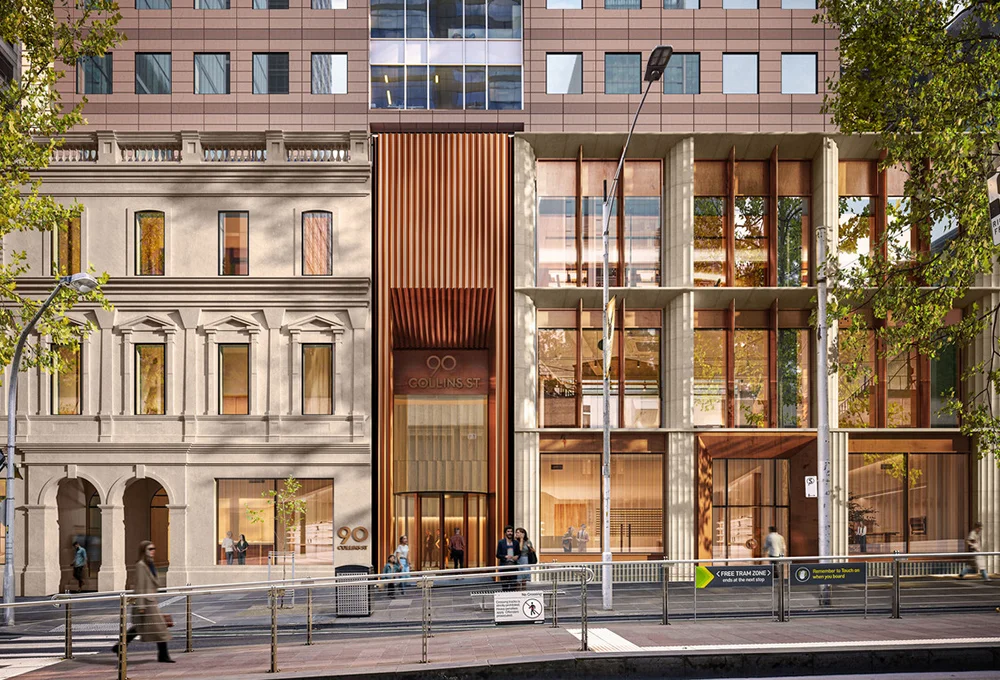

Sydney has always known how to reinvent itself. From the convict-built sandstone walls of The Rocks to the transformed wool stores of Ultimo, the city carries layers of industrial memory within its bones — and increasingly, its most forward-thinking planners and developers are choosing not to erase that memory, but to build on top of it. This is the essence of what urban thinkers are calling Adaptive Reuse 2.0: a more sophisticated, data-informed, and community-centred evolution of the practice that transforms old buildings into thriving new spaces. The Award-Winning Architects NSW community has been at the forefront of this shift, championing approaches that balance heritage integrity with contemporary performance standards — setting benchmarks that resonate far beyond the city limits.
What makes this moment different from earlier waves of adaptive reuse is the convergence of three forces: mounting pressure on urban land supply, a global reckoning with embodied carbon in construction, and a cultural appetite for spaces that carry authentic character. Developers who once defaulted to demolition and rebuild are now running the numbers differently. According to the Green Building Council of Australia, repurposing an existing structure can reduce embodied carbon by up to 50–75% compared to new construction — a figure that is increasingly difficult to ignore in an era where sustainability credentials directly influence asset value and tenant attraction.
But this is not simply an environmental story. It is a story about identity, economics, and the kind of cities Australians want to live and work in.
Why Sydney’s Industrial Bones Are an Asset, Not a Liability
Walk through Surry Hills, Alexandria, or Marrickville on any given weekday and you will see the evidence firsthand. Former warehouses have become design studios, distilleries, co-working campuses, and restaurant precincts. The Australian Urban Observatory’s data consistently shows that mixed-use adaptive reuse precincts generate higher pedestrian foot traffic, stronger local business revenues, and greater community satisfaction scores than comparable new-build developments.
Sydney’s inner-ring industrial suburbs hold a structural advantage that newer cities simply cannot replicate: generous floor-to-ceiling heights (typically five to eight metres), robust concrete or timber post-and-beam construction, and large floor plates that offer the spatial flexibility modern occupants demand. These are not incidental features — they are precisely the qualities that technology companies, creative agencies, and hospitality operators actively seek and are willing to pay a premium for.
The commercial logic is compelling. CBRE’s 2024 Sydney Market Outlook noted that refurbished heritage and industrial office stock in precincts such as Chippendale and Pyrmont commands rental premiums of 15–22% over comparable new-build stock in outer suburban business parks. Authenticity, it turns out, has a market rate.
The Technical Complexity Nobody Talks About
Here is where the conversation often gets glossed over: adaptive reuse at this scale is technically demanding in ways that a straightforward new build is not. Heritage overlays, contaminated land remediation, asbestos management, structural upgrades to meet contemporary seismic and fire codes — these are real costs that require expert navigation rather than wishful thinking.
Consider the transformation of the Brewery Yard precinct in Chippendale. The project required structural engineers to work around original timber trusses, heritage consultants to negotiate State Heritage Register obligations, and acoustic specialists to reconcile the industrial shell with residential amenity standards — all simultaneously. Projects like this do not succeed on enthusiasm alone. They succeed because multidisciplinary teams bring depth and precision to every constraint the existing fabric presents.
The NSW Heritage Act 1977 and State Environmental Planning Policy (Housing) 2021 amendments have both created new pathways for adaptive reuse while preserving conservation intent. Understanding these regulatory frameworks — and knowing how to work creatively within them — is a genuine competitive advantage for developers and their design teams.
The Sustainability Case Is Now Undeniable
For years, sustainability advocates made the moral argument for reusing existing buildings. Now, the financial and regulatory environment is making the same argument in a language the development industry can no longer ignore.
The federal government’s updated National Construction Code (NCC 2022) introduced more stringent energy efficiency requirements for new builds — requirements that, paradoxically, make the cost-benefit calculation of refurbishment more attractive in certain typologies. Add to this the growing influence of institutional investors applying ESG (Environmental, Social, and Governance) criteria to their property portfolios, and the direction of travel becomes clear.
Lifecycle carbon analysis tells a particularly stark story. The embodied carbon locked into a 1930s brick warehouse — the energy already expended in manufacturing the bricks, mixing the mortar, and constructing the walls — is a resource already spent. Demolishing that building wastes that embedded resource entirely and incurs the carbon cost of a new structure on top. Retaining and adapting the shell preserves the investment while dramatically reducing the operational carbon footprint through contemporary insulation, glazing, and services upgrades.
A 2023 report by the Australian Sustainable Built Environment Council (ASBEC) found that the built environment accounts for approximately 23% of Australia’s total greenhouse gas emissions. Shifting even 20% of construction activity towards adaptive reuse pathways could deliver emissions savings equivalent to taking nearly 500,000 cars off the road annually.
Community and Cultural Dividends
The benefits of Adaptive Reuse 2.0 extend well beyond carbon spreadsheets and rental yields. There is a social fabric argument that urban planners are increasingly confident in making.
When a neighbourhood retains its built heritage — its old flour mills, its corner pubs, its Victorian-era terraces — it retains an irreplaceable sense of place that functions as a genuine community asset. Research from the University of Melbourne’s Melbourne School of Design has consistently found that residents in heritage-rich neighbourhoods report stronger senses of belonging and place attachment than those in homogenous new-build environments.
Sydney’s transformation of the Carriageworks arts precinct in Eveleigh stands as a case study in how industrial heritage can anchor an entire cultural ecosystem. What was once a Victorian-era railway workshops complex is now one of Australia’s most significant performing arts and markets venues, drawing over 500,000 visitors annually while anchoring significant private investment across the surrounding precinct. The building did not just survive — it became the reason the precinct thrives.
This is the multiplier effect that adaptive reuse delivers at its best: a single well-executed transformation creates the gravitational pull that attracts complementary uses, stimulates streetscape investment, and shifts a precinct’s economic trajectory.
What Adaptive Reuse 2.0 Actually Looks Like in Practice
The “2.0” designation is not mere marketing. It reflects genuine evolution in how these projects are conceived and delivered. Several defining characteristics set the current generation of adaptive reuse apart from earlier iterations:
- Hybrid performance standards: Contemporary adaptive reuse projects are no longer content with preserving facades while gutting interiors. Best practice now integrates high-performance building envelopes, smart building management systems, and passive design principles while respecting heritage fabric.
- Community co-design: Developers working in established neighbourhoods are increasingly involving existing communities in design processes — not just through statutory consultation, but through genuine participatory design workshops that shape outcomes. This approach reduces planning friction and produces spaces that local communities actively support and use.
- Mixed-income and use integration: The most resilient adaptive reuse precincts deliberately blend commercial, residential, cultural, and community uses rather than pursuing single-use optimisation. This creates the diversity of activity that sustains vibrancy across different times of day and seasons.
- Technology integration: From passive house principles applied to heritage shells to rooftop solar installations on Victorian-era warehouses, contemporary adaptive reuse marries old fabric with current technology in ways that would have seemed impractical a decade ago.
The Path Forward for Sydney
Sydney sits at an inflection point. Its housing affordability crisis, infrastructure constraints, and sustainability obligations are all converging on the same conclusion: the city cannot build its way out of its challenges through greenfield expansion alone. Adaptive reuse is not a niche strategy for heritage enthusiasts — it is a mainstream urban development tool that Sydney’s planning frameworks, investment community, and design profession need to embrace at scale.
The encouraging news is that the architecture, policy, and financial conditions are increasingly aligned to make this happen. Inner-Sydney councils from Canterbury-Bankstown to the City of Sydney have been progressively updating local environmental plans to facilitate more flexible adaptive reuse pathways. State government planning reforms continue to streamline heritage approval processes for genuine conservation outcomes.
And the projects being delivered right now — from the Powerhouse Ultimo to the evolving tech and creative precincts emerging across Alexandria and Redfern are demonstrating, compellingly, that Sydney’s heritage and industrial fabric is not a constraint on the city’s future. It is one of its greatest competitive assets.
The cities that will define sustainable urbanism in the decades ahead are not the ones that build fastest. They are the ones smart enough to recognise the extraordinary value already embedded in what they have built — and courageous enough to imagine it anew.