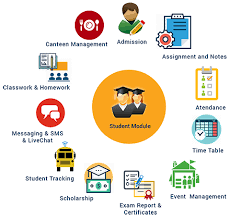

Running a school is no longer just about classrooms and chalkboards. Today’s schools juggle admissions, attendance, exams, fees, parents, teachers, reports, and compliance — all at the same time.
If you’ve ever felt overwhelmed by paperwork, miscommunication, or slow processes, you’re not alone.
This is exactly where a School Management System comes in.
In this blog, we’ll break down the real problems schools face and explain how a School Management System solves them, with practical examples and answers to common questions schools ask online.
What Is a School Management System?
A School Management System is a digital platform that helps schools manage academic, administrative, and communication tasks from one central system.
Instead of using registers, Excel sheets, WhatsApp messages, and manual files, everything is handled digitally — faster, smarter, and more accurately.
Major Problems Schools Face (And How a School Management System Solves Them)
1. Manual Administrative Work Wastes Time
The problem:
School staff spend hours on paperwork — attendance registers, admission forms, fee records, exam sheets, and reports. This leads to delays, errors, and stress.
How a School Management System helps:
A School Management System automates routine admin tasks like:
- Student admissions
- Attendance tracking
- Exam schedules
- Report cards
- Fee management
Admins can complete tasks in minutes instead of hours.
Result: Less paperwork, fewer errors, and more time for meaningful work.
Read more here
2. Poor Communication Between School and Parents
The problem:
Parents often complain they don’t receive timely updates about attendance, homework, exams, or school announcements.
How a School Management System helps:
With built-in parent portals and notifications, schools can:
- Send instant announcements
- Share exam results securely
- Notify parents about attendance
- Communicate via SMS, email, or app
Result: Better transparency and stronger parent trust.
3. Attendance Tracking Is Inaccurate and Time-Consuming
The problem:
Manual attendance leads to mistakes, lost registers, and time wasted in every class.
How a School Management System helps:
Teachers can mark attendance digitally in seconds. The system:
- Stores records automatically
- Generates monthly attendance reports
- Alerts parents about absences
Result: Accurate records and improved student accountability.
4. Exam Management Is Stressful and Disorganised
The problem:
Scheduling exams, entering marks, calculating grades, and preparing report cards manually is exhausting and error-prone.
How a School Management System helps:
A School Management System allows schools to:
- Create exam timetables
- Enter marks digitally
- Auto-calculate grades and results
- Generate report cards instantly
Result: Faster exams, fewer errors, and happier teachers.
5. Fee Collection and Accounting Are Confusing
The problem:
Tracking paid and unpaid fees manually often leads to disputes, missed payments, and accounting errors.
How a School Management System helps:
The system provides:
- Automated fee reminders
- Digital fee records
- Payment tracking
- Financial reports
Result: Improved cash flow and fewer fee-related issues.
Common Questions People Ask About School Management Systems
Is a School Management System Only for Large Schools?
No.
Modern School Management Systems are designed for small schools, colleges, academies, and large institutions alike.
Platforms like eSchool offer scalable solutions that grow with your school.
Is a School Management System Difficult to Use?
Not at all.
Most systems are user-friendly and require minimal training. Teachers, admins, and parents can easily navigate dashboards.
eSchool, for example, is built specifically for ease of use, even for non-technical staff.
Can a School Management System Improve Teacher Productivity?
Absolutely.
Teachers save time on:
- Attendance
- Exam grading
- Reports
- Communication
This allows them to focus more on teaching and student development.
Does a School Management System Help with Data Security?
Yes.
Unlike paper files or spreadsheets, a School Management System stores data securely with:
- Role-based access
- Cloud backups
- Data encryption
This protects sensitive student and school information.
Problems in Online Learning and How a School Management System Helps
Lack of Centralised Learning Data
The problem:
Online learning tools are often disconnected from attendance, exams, and reports.
The solution:
A School Management System integrates academic and administrative data in one place, making hybrid learning smoother.
Student Performance Tracking Is Difficult
The problem:
Schools struggle to track individual student progress over time.
The solution:
With built-in analytics, schools can monitor:
- Academic performance
- Attendance trends
- Behaviour reports
This helps identify students who need extra support early.
Why Schools Are Switching to a School Management System in 2025
Here are the top reasons schools are making the switch:
- Rising administrative workload
- Demand for digital transparency
- Parent expectations for real-time updates
- Compliance and reporting needs
- Time and cost efficiency
A School Management System is no longer a luxury — it’s a necessity.
Why Choose eSchool – School Management System?
If you’re considering implementing a School Management System, eSchool stands out as a reliable and feature-rich solution.
What Makes eSchool Different?
- All-in-one school management platform
- Easy-to-use dashboards
- Powerful reporting tools
- Secure cloud-based system
- Dedicated support team
- Suitable for schools of all sizes
Whether you’re managing a single campus or multiple branches, eSchool simplifies school operations from day one.
Final Thoughts
Schools today face complex challenges — from admin overload to communication gaps and data management issues.
A School Management System solves these problems by bringing everything into one organised, digital platform.
If your school is still relying on manual processes, now is the time to upgrade.
Contact eSchool today to discover how a smart School Management System can transform your school’s efficiency, communication, and growth.