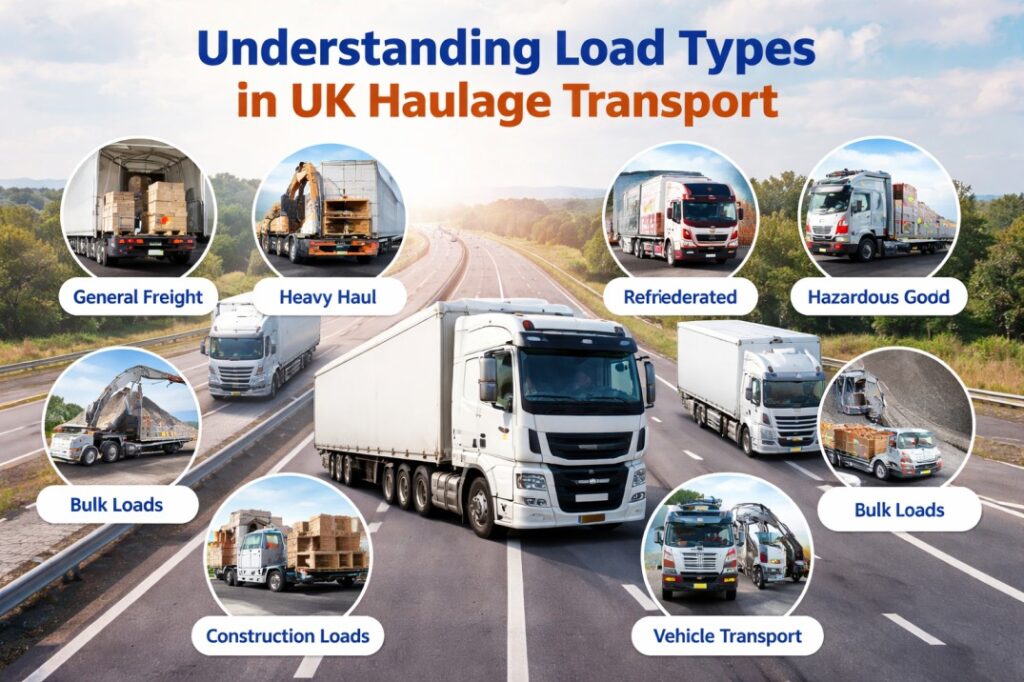

The UK haulage industry is the backbone of national trade, supporting everything from supermarket supply chains to large-scale construction projects. Yet, one of the most misunderstood aspects of road transport is load classification. Understanding different load types is not just technical jargon — it directly affects vehicle selection, compliance, fuel efficiency, safety, and delivery performance.
With two decades of experience in transport content strategy and logistics communication, one thing remains clear: businesses that understand their load requirements operate more efficiently, reduce risk, and save money. This guide breaks down UK haulage load types in a practical, real-world way.
Why Load Types Matter in UK Transport Operations
Every load behaves differently during transit. Weight distribution, fragility, temperature sensitivity, legal classification, and packaging standards all influence how goods should be transported.
In the UK, improper load handling can result in:
- DVSA enforcement penalties
- Vehicle instability and safety risks
- Increased insurance costs
- Delivery delays
- Product damage
Choosing the right transport solution begins with identifying the correct load category.
1. General Freight Loads
General freight is the most common haulage category across the UK. These loads include boxed goods, palletised stock, retail merchandise, and industrial supplies that do not require special handling.
Key Features:
- Usually palletised or packaged
- Standard curtain-sided or box trailers
- No temperature control needed
- Ideal for retail distribution and warehousing
This load type dominates domestic UK transport routes between logistics hubs, distribution centres, and retailers.
2. Full Truck Load (FTL)
Full Truck Load means a single customer occupies the entire vehicle. This is popular for large shipments or time-sensitive deliveries.
Benefits:
- Faster transit times
- Reduced handling risk
- Direct point-to-point delivery
- Higher security
FTL is widely used for manufacturing supply chains, bulk retail stock movement, and contract transport operations.
3. Part Load and Groupage Freight
Part load transport allows multiple consignments to share vehicle space. Groupage services consolidate freight from several shippers into one route.
Advantages:
- Lower transport cost for small shipments
- Ideal for SMEs
- Efficient space utilisation
This approach is common for UK regional distribution and cross-border European shipments.
4. Heavy Haul and Abnormal Loads
Abnormal loads include oversized, overweight, or unusually shaped cargo that exceeds standard road limits.
Examples:
- Construction machinery
- Wind turbine components
- Industrial tanks
- Structural steel
Special Requirements:
- Police or highway authority notifications
- Escort vehicles
- Route planning
- Special permits
This sector is tightly regulated in the UK and requires specialist haulage expertise.
5. Temperature-Controlled Loads (Refrigerated Transport)
Refrigerated haulage, often called “reefer transport”, is critical for perishable and pharmaceutical industries.
Common Cargo:
- Fresh produce
- Meat and dairy products
- Frozen goods
- Medicines
Temperature accuracy is legally required, especially for food safety compliance. Modern UK fleets rely on digital temperature monitoring systems to maintain cold chain integrity.
6. Hazardous and Dangerous Goods
Transporting hazardous materials is one of the most regulated sectors in UK haulage.
Includes:
- Flammable liquids
- Chemicals
- Gases
- Corrosive materials
Legal Requirements:
- ADR-certified drivers
- Proper vehicle signage
- Spill control equipment
- Emergency documentation
Safety, training, and compliance are non-negotiable when moving dangerous goods.
7. Bulk Loads
Bulk transport involves moving unpackaged materials in large quantities.
Common Bulk Cargo:
- Grain and animal feed
- Cement and aggregates
- Coal and raw minerals
- Liquid fuels
Specialised vehicles such as tippers, tankers, and walking floor trailers are used to load and unload efficiently.
8. Fragile and High-Value Loads
Not all freight is heavy or bulky. Some shipments are lightweight but extremely valuable.
Typical Cargo:
- Electronics
- Medical equipment
- Artwork
- Luxury goods
These loads require:
- Enhanced packaging
- Shock protection
- Vehicle tracking
- Theft prevention measures
Security-focused haulage is increasingly important within UK urban distribution.
9. Construction and Site Delivery Loads
Construction haulage is a category of its own due to irregular load shapes and delivery locations.
Includes:
- Timber
- Bricks and blocks
- Steel beams
- Site machinery
This type of transport often involves off-road access, uneven surfaces, and timed site deliveries that demand experienced drivers and specialised equipment.
10. Automotive Transport Loads
Vehicle transport plays a major role in UK logistics.
Includes:
- New car deliveries
- Auction vehicle transport
- Breakdown recovery logistics
Car transporters, covered trailers, and multi-deck carriers are used to safely move vehicles without damage.
Choosing the Right Load Type Strategy
Understanding load classification is not only about compliance — it’s about improving operational efficiency.
When selecting haulage services, businesses should consider:
- Weight and volume
- Delivery time sensitivity
- Handling requirements
- Risk profile
- Regulatory obligations
A mismatch between cargo type and vehicle choice leads to higher costs and operational problems.
Technology and Load Optimisation in Modern UK Haulage
Today’s haulage industry is driven by data. Load planning software, telematics, and AI-based route optimisation tools are helping UK operators:
- Reduce empty miles
- Improve fuel efficiency
- Increase vehicle utilisation
- Track cargo in real time
- Enhance customer transparency
Load management is no longer manual guesswork — it is becoming a strategic advantage.
Sustainability and Load Efficiency
Environmental responsibility is reshaping transport operations. Efficient load planning reduces emissions by:
- Maximising vehicle capacity
- Reducing unnecessary trips
- Improving route efficiency
UK logistics companies are increasingly focused on sustainable freight practices to meet carbon reduction targets.
Final Thoughts
Understanding load types in UK haulage transport is not just technical knowledge — it is a foundation for profitable, compliant, and efficient logistics operations.
Whether you are a business shipping goods, a logistics manager planning distribution, or a transport provider expanding services, mastering load classifications helps you:
- Improve delivery reliability
- Reduce operational risk
- Optimise transport costs
- Stay compliant with UK regulations
The future of UK haulage belongs to businesses that combine practical experience with smart load management strategies.