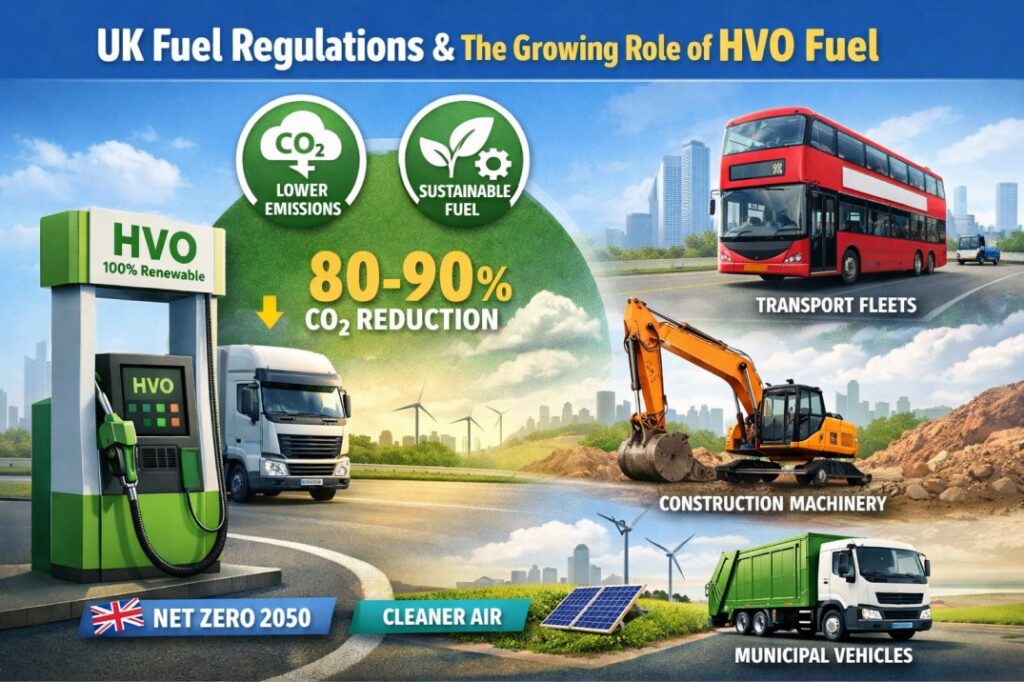

The United Kingdom stands at a pivotal moment in its energy transition journey. With ambitious net-zero goals set for 2050, the nation’s fuel regulations are evolving faster than ever before. Traditional diesel and petrol fuels are being challenged by cleaner, low-carbon alternatives—and among these, HVO fuel (Hydrotreated Vegetable Oil) is gaining prominence as a practical and scalable solution. But what exactly are the drivers behind this shift, how is HVO fuel regulated, and what does the future hold? This article explores these questions in depth.
Understanding the UK’s Fuel Regulation Landscape
Fuel regulations in the UK have undergone significant transformation over the past decade. Originally focused on quality and safety standards, today’s regulatory environment also reflects climate commitments, air quality improvements, and broader energy security concerns.
The Road Transport Fuel Consumption Labelling Regulations, Renewable Transport Fuel Obligation (RTFO), and various emissions standards all work together to shape what fuels can be sold, how they must perform, and how suppliers report carbon savings. In essence, the UK government uses regulation to guide both industry behaviour and consumer adoption toward lower carbon intensity fuels.
A key pillar of this strategy is the recognition that decarbonising road transport will require not just electric vehicles (EVs), but also cleaner alternatives for sectors that are harder to electrify—such as heavy goods vehicles (HGVs), agricultural machinery, marine transport, and construction equipment. This is where HVO fuel enters the conversation.
What is HVO Fuel?
Hydrotreated Vegetable Oil (HVO) is a next-generation biofuel produced from renewable feedstocks—such as waste vegetable oils, used cooking oils, and certain sustainable plant oils. Unlike traditional biodiesel (FAME), which is blended with fossil diesel, HVO undergoes a hydrogen treatment process that yields a high-quality, drop-in diesel replacement.
This means HVO can be used in existing diesel engines without modification, offering a seamless transition for fleets and machinery. It also boasts superior combustion stability, improved cold weather performance, and lower emissions of particulates and NOx (nitrogen oxides) compared to conventional diesel.
Why HVO Matters in Today’s UK Policy Framework
The UK’s commitment to reducing greenhouse gas emissions has set an ambitious tone for energy and transport policy. Decarbonisation targets, such as the Sixth Carbon Budget and the legally binding net-zero goal by 2050, mean that every sector must contribute to emission reductions.
Transport is one of the hardest sectors to decarbonise due to its reliance on liquid fuels. While EV adoption continues to rise, especially for personal vehicles, heavy vehicles, buses, and off-road machinery still largely depend on diesel engines. For these areas, alternative liquid fuels like HVO provide an effective bridge solution.
Moreover, the Renewable Transport Fuel Obligation (RTFO) encourages fuel suppliers to include renewable and low carbon fuels in their offerings. HVO provides significantly higher carbon savings per litre than traditional biodiesel, making it an attractive option for suppliers aiming to meet their obligations and reduce overall carbon intensity.
Environmental and Operational Benefits of HVO
Significant Carbon Reduction
One of the strongest selling points of HVO is its ability to deliver carbon savings of up to 80–90% compared with fossil diesel. This varies depending on feedstock, but even conservative assessments show substantial lifecycle emission reductions.
Improved Air Quality
In urban centres and industrial zones where air pollution is a public health concern, HVO’s lower particulate emissions help improve local air quality. Cleaner combustion also results in reduced soot and engine deposits, potentially extending engine life.
Compatibility and Convenience
HVO is a drop-in fuel, meaning it works with existing diesel infrastructures—fuel pumps, storage tanks, and engines—without modifications. This reduces cost barriers and accelerates uptake among fleets and businesses.
Operational Performance
Users often report smoother engine running, quicker starts in cold weather, and reduced odour compared with standard diesel. For companies managing mixed fleets, HVO’s operational stability is a practical advantage.
Challenges and Realities
While HVO presents a compelling case, it isn’t without challenges:
Feedstock Supply and Sustainability
Demand for HVO can outpace the availability of truly sustainable feedstocks. If sourced irresponsibly (e.g., palm oil with poor sustainability credentials), the environmental benefits can be undermined. This makes robust sustainability criteria and certification essential.
Cost Considerations
HVO fuel currently attracts a premium price compared to fossil diesel. Although economics are improving with scale, price remains a barrier for some fleet operators, particularly smaller businesses.
Infrastructure and Awareness
Wider adoption requires greater access at forecourts and increased awareness among end users. While national fleets are increasingly informed, many consumers and SMEs still lack clarity on HVO benefits and availability.
Early Adoption Success Stories
Several sectors in the UK have already begun integrating HVO into their operations with promising results:
- Public transport operators are switching buses to HVO blends, reducing emissions significantly while maintaining service reliability.
- Municipal fleets use HVO for waste collection vehicles, balancing performance with environmental goals.
- Construction and mining companies deploy HVO in heavy machinery where electrification is not yet feasible.
These real-world deployments showcase how HVO can deliver tangible benefits today—not just in theory.
The Road Ahead: Realising the Potential of HVO
With the UK government’s continued focus on decarbonisation, fuel regulations are likely to become more ambitious. This creates both pressure and opportunity for low carbon fuels like HVO.
To unlock HVO’s full potential, key enablers include:
- Clear regulatory incentives that reward genuine carbon reductions
- Sustainable sourcing standards that prevent negative environmental impacts
- Scale-up of production capacity to ensure supply keeps pace with demand
- Education and outreach to help businesses transition confidently
Combined, these elements can help position HVO as a strategic component of the UK’s clean energy mix—not just a niche alternative.
Conclusion
The UK’s fuel regulations are rapidly adapting to climate imperatives and technological change. While electrification rightly captures much attention, fuels like HVO offer a practical, scalable, and cleaner alternative for sectors where battery power is not yet viable. By aligning policy, industry action, and sustainability best practices, the UK can harness the growing role of HVO fuel as part of a broader, resilient pathway to net-zero.
As awareness grows and infrastructure expands, HVO is more than a transitional fuel—it’s a tool that helps Britain move toward a cleaner, low-carbon future while supporting the realities of today’s transport and industrial needs.