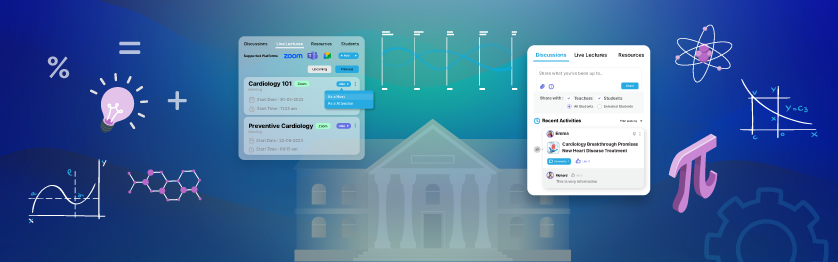

Higher education is undergoing rapid digital transformation in 2026. Universities and colleges are increasingly adopting digital tools to improve learning experiences, streamline administration, and support hybrid and online education models. Traditional classroom-only approaches are no longer enough to meet the expectations of modern students who demand flexible, personalized, and technology-driven learning environments.
A learning management system for higher education has become a core part of modern academic infrastructure. Institutions use these platforms to manage courses, deliver content, track student progress, and improve collaboration between faculty and students. As universities compete to provide better learning experiences and operational efficiency, learning management systems are playing a central role in shaping the future of higher education.
Key Takeaways
- Understand why universities are adopting digital learning platforms
- Learn the major advantages of using an LMS in higher education
- Discover key features institutions should prioritize
- Explore best practices for successful LMS implementation
- See how LMS platforms support long-term academic growth
The Growing Need for Digital Learning in Universities
Universities today serve diverse student populations with different learning styles and schedules. Many students balance academic responsibilities with part-time jobs or remote learning needs. Institutions must provide flexible learning options that work both on-campus and online.
Managing academic content manually or through disconnected systems creates inefficiencies. Faculty members often struggle with distributing materials, tracking assignments, and managing grades across multiple platforms.
A centralized learning management system for higher education allows institutions to bring academic activities into a single environment. Course content, assignments, discussions, and assessments can be managed in one place, making learning more structured and accessible.
Digital learning platforms also support hybrid education models where students can participate both online and in person. This flexibility is becoming a standard expectation in modern universities.
Centralized Course Management
One of the biggest advantages of an LMS is centralized course management. Faculty members can upload lecture notes, videos, and assignments into one organized platform.
Students no longer need to search through emails or multiple websites to find course materials. Everything they need is available within a single portal.
Centralized systems improve consistency across courses. Departments can standardize course templates, grading methods, and academic workflows.
This structured environment makes academic management easier for both faculty and students.
Improved Student Engagement
Student engagement is one of the biggest challenges in higher education. Large classrooms and limited interaction often make it difficult for instructors to monitor participation.
Learning management systems offer tools that encourage interaction and collaboration. Discussion forums, quizzes, and group activities help students stay involved in the learning process.
Interactive features such as multimedia content and online assessments improve knowledge retention. Students can learn at their own pace while still staying connected to instructors.
Institutions that implement a strong learning management system for higher education often see improved participation and better academic outcomes.
Flexible and Accessible Learning
Flexibility is a major advantage of digital learning platforms. Students can access course materials anytime and from anywhere.
This accessibility is especially important for:
- Distance learners
- Working students
- International students
- Hybrid learning environments
Mobile-friendly platforms allow students to participate in courses using smartphones or tablets. This ensures continuous learning even outside the classroom.
Flexible access also helps students review materials multiple times, improving understanding and performance.
Efficient Academic Administration
Universities handle large volumes of academic data, including enrollments, grades, attendance records, and course schedules.
Manual administration consumes significant time and increases the risk of errors.
An LMS automates many administrative tasks such as:
- Assignment submissions
- Grading workflows
- Attendance tracking
- Course scheduling
- Notifications and reminders
Automation reduces administrative workload and improves accuracy.
Faculty members can spend more time teaching and mentoring students instead of managing paperwork.
Data-Driven Insights and Analytics
Modern universities rely on data to improve student success. Learning management systems provide valuable insights into academic performance and engagement.
Administrators can track:
- Course completion rates
- Assignment submission patterns
- Student participation
- Performance trends
These insights help institutions identify struggling students early and provide timely support.
Analytics also help departments improve course design and teaching strategies.
Data-driven decision-making improves both academic quality and institutional performance.
Seamless Integration with Campus Systems
Universities often use multiple digital systems such as Student Information Systems, admissions platforms, and finance software.
An LMS works best when it integrates with these systems. Integration eliminates data silos and reduces duplicate data entry.
When LMS and SIS platforms work together:
- Student enrollments update automatically
- Grades sync with transcripts
- Attendance data remains consistent
- Reports become more accurate
Integrated systems provide a unified academic ecosystem that supports institutional efficiency.
Scalability for Institutional Growth
Universities continue to expand through new programs, departments, and online courses. Technology infrastructure must support this growth.
Modern LMS platforms are built to scale with institutional needs. Whether a university has 500 students or 50,000, the system can handle increasing workloads.
Cloud-based systems allow institutions to add users and courses without major infrastructure investments.
Scalability ensures long-term sustainability and protects technology investments.
Key Features to Look for in an LMS
Choosing the right platform requires careful evaluation. Institutions should look for features that support both academic and operational needs.
Course Content Management
The system should allow instructors to easily upload and organize course materials.
Assessment and Grading Tools
Automated grading and customizable assessments improve efficiency and accuracy.
Communication Tools
Built-in messaging and announcements improve interaction between students and faculty.
Reporting and Analytics
Real-time dashboards help administrators track academic performance.
Mobile Accessibility
Students and faculty should be able to access the system from any device.
Integration Capabilities
The LMS should integrate with SIS, CRM, and virtual classroom tools.
Institutions should prioritize usability and scalability when evaluating platforms.
Best Practices for Successful LMS Implementation
Implementing a new system requires planning and collaboration.
Define Institutional Goals
Universities should identify what they want to achieve before selecting a platform. Goals may include improving student engagement or reducing administrative workload.
Involve Faculty in Selection
Faculty members are primary users of the system. Their input ensures the platform meets real academic needs.
Provide Structured Training
Training sessions help faculty and staff adopt the system more effectively.
User adoption increases when instructors feel comfortable using the platform.
Start with a Pilot Program
Testing the system with a small group of courses helps identify challenges early.
Pilot programs allow institutions to refine workflows before full deployment.
Monitor Performance
Institutions should track adoption rates and academic outcomes after implementation.
Continuous improvement ensures long-term success.
FAQ
What is a learning management system for higher education?
A learning management system for higher education is a digital platform that allows universities to manage courses, deliver learning materials, track student progress, and facilitate communication between instructors and students.
How does an LMS benefit universities?
An LMS improves academic management, increases student engagement, automates administrative tasks, and provides data insights that help universities improve learning outcomes.
How long does it take to implement an LMS?
Implementation time varies depending on the size of the institution. Most universities can implement an LMS within one to three months with proper planning and training.
Can a learning management system support hybrid learning?
Yes, modern LMS platforms support hybrid learning by allowing students to access materials online while attending in-person classes. They also support virtual classrooms and digital assignments.
What features should universities prioritize in an LMS?
Universities should prioritize course management tools, assessment features, reporting dashboards, mobile access, integration capabilities, and ease of use.
Transform Higher Education with the Right LMS
Universities that invest in modern digital learning platforms gain a significant advantage in academic delivery and operational efficiency. A well-implemented LMS supports flexible learning, improves engagement, and enables institutions to make better decisions using real-time data.
Institutions seeking a reliable and future-ready platform often choose Classe365, which provides an integrated solution designed to simplify academic management, enhance student experiences, and support the evolving needs of higher education institutions.