

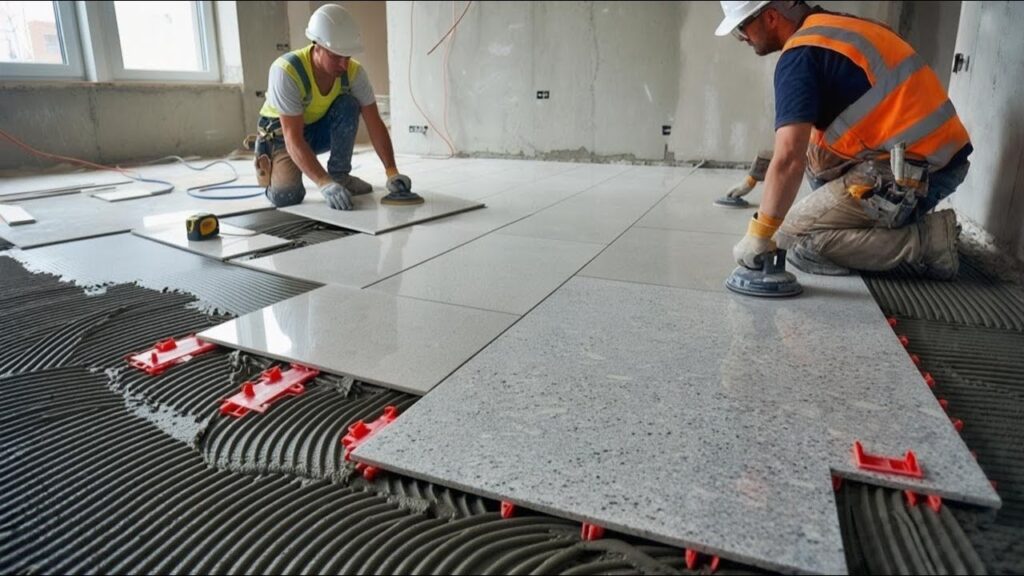
Uneven tiles. Cracking grout. A shower that looks fine for a month—then starts leaking into the wall. These problems rarely come from the tile itself. They come from rushed prep, vague quotes, or the wrong installer.
For businesses, shopping malls, eCommerce facilities, and property teams, tile affects safety, cleaning, and first impressions. This guide helps compare bids, spot quality, and avoid expensive rework—especially as 2026 projects lean toward large-format porcelain and low-maintenance finishes.
What Does a Tile Work Contractor Do?
A Tile Work Contractor does more than “set tile.” The best pros build a complete system so the surface stays flat, clean, and durable.
· Tile installation: floors, walls, showers, and backsplashes.
· Surface prep: flattening/leveling, underlayment or backer board, and moisture protection where needed.
· Grouting/sealing: selecting the right grout and sealing when required.
· Repairs/re-tiling: replacing broken tiles, fixing hollow spots, and correcting failed joints.
A Tile Work Contractor may also advise on slip resistance, stain resistance, and the right material for high traffic (porcelain), wet zones (proper membranes), and premium looks (stone that may need sealing).
Tile Work Contractor vs Handyman vs General Contractor
A Tile Work Contractor is usually the safest choice for showers, wet rooms, commercial kitchens, and large floors where flatness and movement joints matter.
A handyman may be fine for a simple backsplash in a dry area. A general contractor can coordinate trades, but the tile work should still be handled by a dedicated tile crew on anything high-risk or high-visibility.
17 Questions to Ask a Tile Work Contractor Before Hiring
These questions are designed to protect the budget, the timeline, and the finish. Clear answers now prevent surprises later.
1) Are they licensed and insured (where required)?
They should provide proof and explain local requirements for the site type.
2) How will the surface be prepped and made flat?
They should mention checks for dips/high spots and a specific leveling plan.
3) What waterproofing system will be used for showers or wet areas?
They should explain membrane type, seams, corners, and penetrations.
4) Which mortar/thinset and grout will be used—and why?
The answer should match the tile type and the environment (wet, heat, traffic).
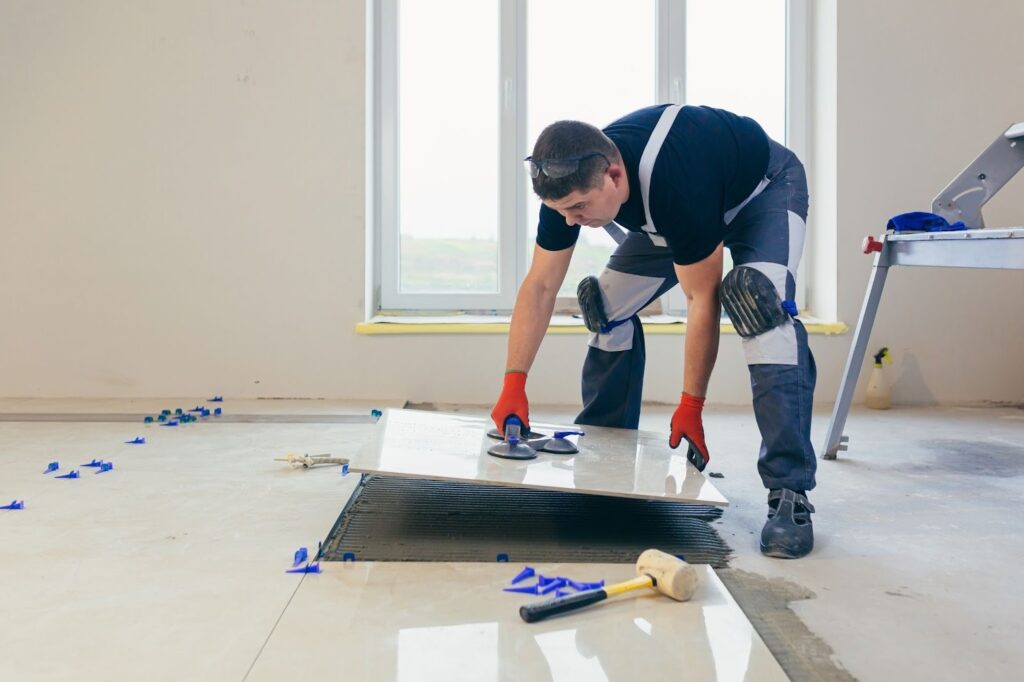
5) Will leveling clips/spacers be used?
This matters most for large-format tile and tight grout lines.
6) How will corners, edges, and transitions be finished?
Expect a plan for trims, thresholds, and clean transitions to other flooring.
7) How will drains and shower slope be handled?
They should describe slope checks and drain alignment—not guesswork.
8) How will dust and disruption be controlled?
Look for barriers, protection for finishes, and a cleanup plan.
9) Who buys materials—and which brands are recommended?
The contract should state who purchases what and who covers breakage/waste.
10) What is the timeline and daily working schedule?
They should include prep, cure time, and when the area can be used again.
11) What warranty is included for labor and materials?
Labor terms should be written. Materials should follow manufacturer terms.
12) What causes delays, and how will updates be shared?
They should mention substrate surprises, drying times, and lead times.
13) Can recent photos and references be shared?
Look for similar jobs: large floors, showers, or commercial restrooms.
14) Do they follow recognized installation standards (like TCNA methods)?
They should be able to explain “how” they build, not just “what” they install.
15) How will movement joints/expansion gaps be handled?
This protects tile from cracking or tenting as buildings move.
16) What is the change-order process if surprises show up?
Extra repairs should be approved in writing before the work continues.
17) Who supervises the crew on-site each day?
There should be one person accountable for layout, waterproofing, and punch list.
Tile Installation Checklist (Use This to Judge Quality)
A quick walk-through can reveal a lot—without technical jargon.
· Flat and flush surface: minimal lippage at tile edges.
· Straight layout: consistent lines and clean borders.
· Clean cuts: around drains, corners, outlets, and fixtures.
· Consistent grout joints: even spacing and neat tooling.
· Movement joints present: not “grouted solid” everywhere.
· Wet-area proofing completed before tile: ask for photos or inspection notes.
When quality issues show up, they usually trace back to prep office intranet consulting Sydney. That’s why a Tile Work Contractor should be evaluated on the steps you can’t see once the tile is installed.
Cost of Hiring a Tile Work Contractor (What Impacts Price)
Searches like “tile work contractor near me” and “tile contractor near me” often lead to three very different quotes. That’s normal—because the scope underneath the tile varies a lot.
Average cost factors
· Tile type: porcelain and stone can raise cutting/setting requirements.
· Pattern complexity: herringbone, diagonals, and mosaics add labor and waste.
· Subfloor repair/leveling: more prep usually means a longer-lasting result.
· Shower waterproofing and shower-pan work: membranes, niches, and benches add time.
· Demolition/disposal: removing old tile and thinset can be labor-heavy.
Price ranges (wide on purpose)
In many markets, installation commonly lands around $5–$15 per sq ft for labor-only, with higher totals for demo, repairs, and wet-area systems. The best comparison tool is an itemized quote.
Ask bids to break out:
· Demo/disposal
· Substrate prep/leveling
· Waterproofing (if needed)
· Tile setting
· Grout/caulk and cleanup
· Sealing (if needed)
· Trim/transitions
Red Flags to Avoid (Don’t Ignore These)
· Quote provided without a site visit or real measurements.
· No clear plan for shower waterproofing in wet areas.
· Full payment requested upfront (milestones are safer).
· No written scope, materials list, or timeline.
· Extremely low price with vague details.
· Refusal to share references or recent photos.
How to Get an Accurate Quote (Template)
Owners can send this message to a Tile Work Contractor and request an itemized estimate:
What to send
· Space type + size (sq ft; include wall height for showers)
· Tile link/photo + tile size
· Pattern choice (straight, brick, herringbone, diagonal)
· Grout color/type preference
· Trim preference (metal edge, bullnose, miter)
· Notes on existing cracks, hollow spots, or moisture issues
What to ask for
· Itemized pricing (demo, prep, waterproofing, install, grout/caulk, sealing)
· Start date + estimated duration (including cure time)
· Payment schedule tied to milestones
Best Tiles for Bathrooms, Kitchens, and Floors (Quick Recommendations)
· Bathrooms: use slip-resistant floor tile; shower floors often perform best with mosaics for drainage.
· Kitchens and food areas: porcelain is durable and easy to clean; epoxy grout can help reduce staining.
· High-traffic floors: large-format porcelain is popular in 2026 because fewer grout lines can simplify maintenance—if the floor is prepped correctly.
· Natural stone: premium look, but it may need sealing and gentler cleaners.
Many property teams ask for tile installation services that reduce downtime. A Tile Work Contractor should recommend materials and a schedule that fit the site’s operating hours.
FAQ (Fast Answers for “People Also Ask”)
How long does tile installation take?
Backsplashes often take 1–2 days. Floors and showers usually take longer because prep and cure time are critical.
Does grout need to be sealed?
Many cement-based grouts benefit from sealing. Some premium or epoxy products may not require it.
Which grout is best: sanded, unsanded, or epoxy?
Sanded is common for wider joints, unsanded for narrow joints, and epoxy for high-stain/high-moisture zones.
Can tile be installed over existing tile?
Sometimes. It depends on bond strength, flatness, and moisture risk. Many Tile Work Contractor teams prefer removal when failure risk is high.
How should tile and grout be maintained?
Use pH-neutral cleaners, avoid harsh acids, and repair cracks quickly to keep moisture out.