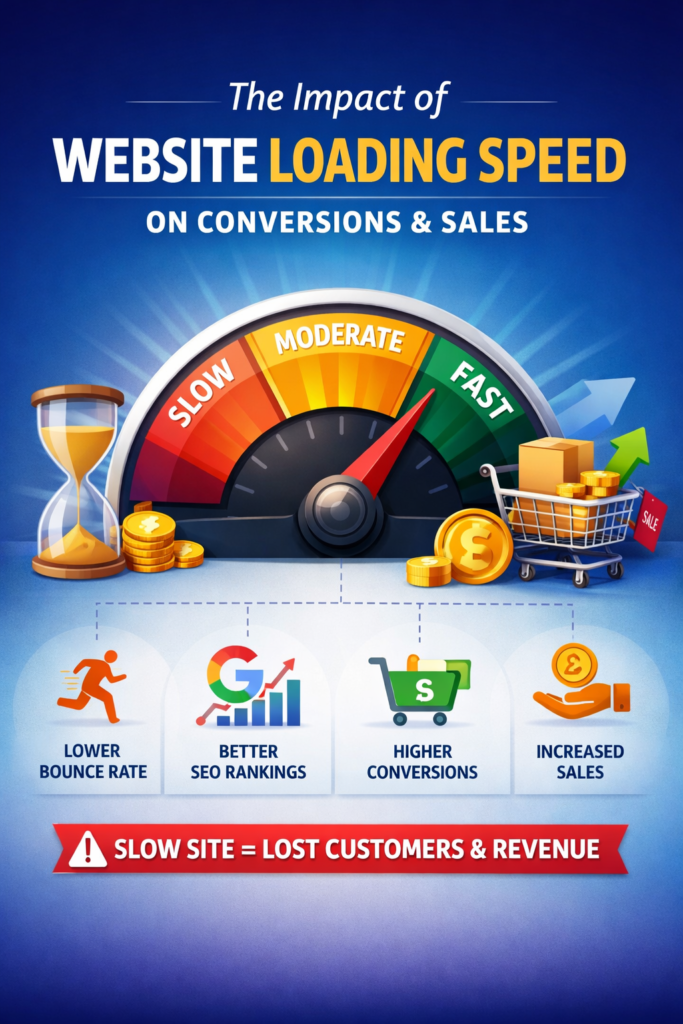

In today’s digital marketplace, speed is everything. Customers expect instant access to information, products, and services. If your website doesn’t load quickly, users won’t hesitate to leave and visit a competitor. That’s why Website LoadingSpeed has become one of the most critical factors influencing conversions, customer satisfaction, and overall sales performance.
A slow website doesn’t just frustrate visitors, it directly impacts your revenue. In contrast, a fast-loading website creates a smooth, enjoyable experience that encourages users to stay longer, explore more, and complete purchases.
Let’s explore how website loading speed affects conversions and sales and why optimizing it should be a top priority for every business.
Why Website Loading Speed Matters More Than Ever
Internet users today have extremely short attention spans. Studies show that most visitors expect a website to load within two to three seconds. If it takes longer, the probability of them leaving increases dramatically.
A delay of just one second can reduce customer satisfaction and significantly lower conversion rates. When pages load slowly, users feel frustrated, and frustration leads to abandonment.
Fast websites, on the other hand:
- Build instant trust
- Improve engagement
- Reduce bounce rate
- Increase average session duration
- Encourage repeat visits
In short, speed equals credibility. And credibility equals sales.
First Impressions Shape Buying Decisions
Your website is often the first interaction potential customers have with your brand. That first impression happens within seconds. If your website loads quickly and smoothly, users perceive your business as professional and reliable.
However, if it lags or freezes, customers may question your quality, security, or reliability. Even if your product is excellent, a slow website can create doubt.
Website Loading Speed directly influences how people perceive your brand and perception drives purchasing decisions.
The Direct Link Between Speed and Conversions
Conversion rate optimization isn’t only about design and marketing copy. Performance plays a massive role.
Here’s how speed impacts conversions:
1. Reduced Bounce Rates
When visitors land on a fast website, they are more likely to explore additional pages. A slow-loading homepage, however, often leads to immediate exits.
2. Better User Flow
Smooth navigation encourages users to move effortlessly from one page to another. Delays interrupt the buying journey.
3. Faster Checkout Process
For eCommerce websites, checkout speed is critical. Slow payment pages increase cart abandonment rates. Even small delays can cost thousands in lost revenue.
Improving Website Loading Speed creates a frictionless journey from landing page to checkout and that frictionless experience leads to higher conversions.
Website Loading Speed and SEO Performance
Search engines prioritize user experience, and speed is a major ranking factor. Google’s algorithm considers page speed when determining search rankings.
Faster websites benefit from:
- Higher search engine rankings
- Better crawl efficiency
- Improved Core Web Vitals scores
- Increased organic traffic
When your website loads quickly, search engines reward you with better visibility. More visibility means more traffic and more traffic means more potential sales.
Slow websites not only lose customers but also lose ranking positions to faster competitors.
Mobile Speed is Even More Critical
Mobile traffic now dominates internet usage worldwide. Mobile users expect fast, responsive websites that load instantly, even on slower networks.
If your mobile site is slow:
- Visitors abandon pages quickly
- Engagement drops
- Sales decrease
Mobile optimization is no longer optional. Businesses must prioritize mobile-first design and fast-loading pages to stay competitive.
A responsive design combined with optimized Website Loading Speed ensures a seamless experience across all devices.
How Slow Speed Impacts Revenue
Let’s talk numbers. Research consistently shows that improving website speed increases revenue.
For example:
- Faster sites experience higher conversion rates
- Customers spend more time browsing
- Average order values increase
- Cart abandonment decreases
Even a 1-second improvement in Website Loading Speed can significantly boost revenue for high-traffic websites.
On the other hand, slow websites lead to:
- Lost leads
- Decreased customer trust
- Lower repeat purchases
- Negative brand perception
Speed is not just a technical detail, it’s a revenue-driving factor.
What Causes Slow Website Loading Speed?
Understanding the causes of slow performance is the first step toward improvement. Common issues include:
- Large, uncompressed images
- Excessive plugins or scripts
- Poor-quality hosting services
- Lack of browser caching
- Unoptimized code
- Heavy animations
- Slow server response time
Often, businesses focus on adding features without considering their impact on performance. Overloading a website with unnecessary elements can slow it down significantly.
Practical Ways to Improve Website Loading Speed
Optimizing speed requires both technical expertise and ongoing maintenance. Here are proven strategies to enhance performance:
Optimize Images
Compress images without sacrificing quality. Large image files are one of the biggest causes of slow loading.
Use Reliable Hosting
Invest in high-quality hosting with strong server performance and uptime reliability.
Enable Caching
Browser caching stores certain elements locally, reducing load time for returning visitors.
Minify Code
Remove unnecessary spaces, characters, and unused scripts from HTML, CSS, and JavaScript files.
Use a Content Delivery Network (CDN)
CDNs distribute website content across multiple servers worldwide, ensuring faster delivery to users in different locations.
Regular Maintenance
Updating plugins, themes, and software ensures optimal performance and security.
Website optimization isn’t a one-time task; it requires continuous monitoring and improvement.
User Experience: The Hidden Sales Driver
A fast website improves more than just technical performance. It enhances the entire user experience.
When users enjoy browsing your site:
- They stay longer
- They trust your brand
- They are more likely to recommend your business
- They return for future purchases
Customer experience directly impacts lifetime value. And Website Loading Speed plays a central role in shaping that experience.
Competitive Advantage in a Crowded Market
In competitive industries, even small improvements can make a big difference. If two businesses offer similar products at similar prices, customers will choose the one that provides a smoother, faster experience.
Speed becomes a silent competitive advantage.
Businesses that prioritize Website Loading Speed:
- Stand out from competitors
- Build stronger online reputations
- Gain higher customer retention rates
- Increase overall profitability
In a world where customers expect instant results, speed is power.
Long-Term Business Growth Through Performance Optimization
Investing in website performance isn’t just about short-term gains. It’s about building a strong digital foundation for long-term growth.
A fast website supports:
- Marketing campaigns
- SEO strategies
- Paid advertising performance
- Brand credibility
- Customer loyalty
Without optimized speed, even the best marketing strategies can fail.
Website Loading Speed is the backbone of online success.
Final Thoughts
In the digital age, speed determines success. Website Loading Speed directly influences user satisfaction, search engine rankings, conversion rates, and overall sales performance.
A slow website drives customers away. A fast website builds trust, improves engagement, and increases revenue.
If your website isn’t loading within seconds, you’re potentially losing valuable customers every day. Optimizing performance is not just a technical upgrade it’s a strategic investment in your business growth.