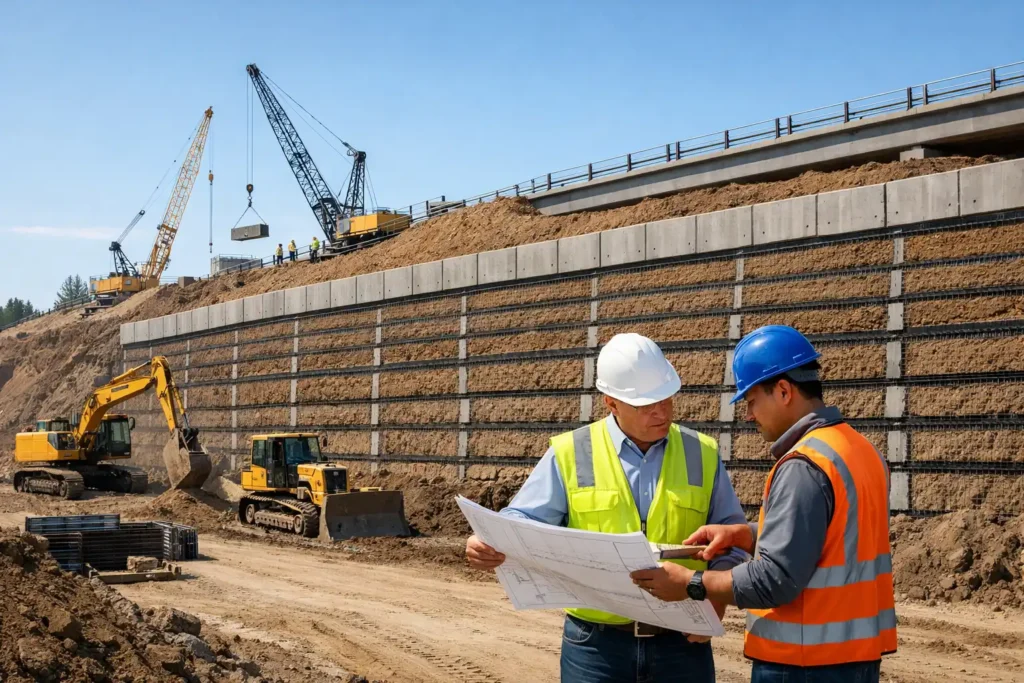

Infrastructure development is one of the most important aspects of economic growth and urban expansion. From highways and railways to industrial facilities and commercial buildings, every major construction project depends on strong structural foundations. One critical engineering component that supports these structures is the retaining wall.
Modern construction projects rely on advanced Retaining Wall Solutions, particularly RS Wall Solutions, to stabilize soil, prevent erosion, and create durable support systems for infrastructure. These engineering systems are designed to ensure safety, longevity, and structural integrity in challenging terrains. In this article, we will explore the importance of retaining walls, the benefits of RS wall systems, and why they are widely used in infrastructure and civil engineering projects
Understanding Retaining Wall Solutions
A retaining wall is a specially designed structure used to hold back soil when there is a difference in ground elevation. It prevents soil movement and ensures that slopes or elevated land areas remain stable.
Retaining walls are commonly used in situations such as:
- Construction on sloped terrain
- Highway and railway embankments
- Bridge approaches
- Landscape development projects
- Industrial infrastructure construction
Without proper retaining wall systems, soil can shift due to gravity, water pressure, or environmental factors. This movement can damage buildings, roads, and other infrastructure.
Modern Retaining Wall Solutions are designed to address these challenges by providing reliable support systems that maintain soil stability.
What Are RS Wall Solutions?
RS Wall Solutions refer to modern reinforced soil retaining wall systems used in infrastructure projects. These systems combine engineered soil reinforcement with structural facing elements such as concrete panels or blocks.
The reinforced soil technology distributes pressure across the entire structure, making RS walls highly stable and efficient.
RS wall systems are particularly popular in large-scale construction projects because they offer several advantages compared to traditional retaining walls.
Importance of Retaining Walls in Infrastructure
Retaining walls play a vital role in maintaining the stability of infrastructure projects. As cities expand and transportation networks grow, construction increasingly occurs in challenging environments such as hillsides and uneven landscapes.
Retaining walls allow engineers to safely build infrastructure while controlling soil movement.
Key infrastructure sectors that depend on retaining wall systems include:
Transportation Infrastructure
Highways, flyovers, and railway tracks often pass through areas with steep slopes or embankments. Retaining walls prevent soil collapse and protect these transportation systems.
Urban Development
In cities, retaining walls are used for basement structures, parking facilities, and landscape elevation management.
Industrial Projects
Factories, warehouses, and large industrial facilities require stable ground conditions before construction begins. Retaining walls help ensure the structural safety of these projects.
Bridge Construction
Bridge abutments and approaches often require retaining walls to maintain ground stability and support heavy loads.
Types of Retaining Wall Systems Used in Construction
Engineering companies use different types of retaining wall systems depending on the project requirements and soil conditions.
Gravity Retaining Walls
Gravity walls rely on their weight to resist soil pressure. These walls are usually constructed from concrete, stone, or masonry materials.
They are suitable for smaller retaining applications.
Reinforced Soil Retaining Walls
Reinforced soil walls combine soil with reinforcement materials such as geogrids or steel strips. This creates a strong composite structure capable of supporting heavy loads.
RS wall systems commonly use this technology.
Cantilever Retaining Walls
Cantilever retaining walls use reinforced concrete structures to hold back soil. These walls are commonly used in infrastructure projects where strong structural support is required.
Anchored Retaining Walls
Anchored retaining walls use cables or anchors inserted deep into the ground to provide additional support.
This type of retaining wall is often used in steep slopes or high-load environments.
Key Benefits of RS Wall Solutions
Modern RS Wall Solutions offer several advantages that make them ideal for infrastructure and civil engineering projects.
Strong Structural Stability
RS wall systems distribute soil pressure effectively, ensuring strong structural support for roads, railways, and buildings.
Cost Efficiency
Compared to traditional concrete retaining walls, RS wall systems require fewer materials and reduce construction time, making them more cost-effective.
Faster Construction
Prefabricated panels and modular components allow engineers to install RS wall systems quickly and efficiently.
Long-Term Durability
These retaining wall systems are designed to withstand environmental stresses such as water pressure, soil movement, and temperature variations.
Flexible Design
RS wall systems can be adapted to different terrains and project requirements, including curved walls and high embankments.
Applications of Retaining Wall Solutions
Retaining wall systems are widely used across many sectors of infrastructure development.
Common applications include:
- Highway embankments
- Railway tracks and embankments
- Bridge abutments
- Flood protection structures
- Industrial construction sites
- Landscape and urban development projects
These applications highlight how important retaining wall systems are in maintaining infrastructure stability.
Engineering Expertise Required for Retaining Walls
Designing and constructing retaining walls requires significant engineering expertise. Engineers must carefully evaluate multiple factors before building a retaining wall.
Important considerations include:
- Soil type and strength
- Load-bearing capacity
- Water drainage systems
- Environmental conditions
- Structural safety requirements
Engineering companies perform detailed geotechnical analysis to ensure the retaining wall design meets safety standards.
Companies like A&T Engineering Pvt. Ltd. specialize in providing professional infrastructure engineering services, including advanced retaining wall systems.
If you want to explore detailed information about modern Retaining Wall Solutions, you can review the engineering services offered by industry experts.
Technology Used in Modern Retaining Wall Construction
Technological advancements have improved the way retaining walls are designed and built.
Some important technologies used in modern retaining wall construction include:
- Computer-aided design (CAD) software
- Geotechnical analysis tools
- Reinforced soil technology
- Prefabricated structural components
These technologies help engineers design safer, stronger, and more efficient retaining wall systems.
Sustainable Infrastructure and Retaining Wall Systems
Sustainability has become an important aspect of modern infrastructure development. Retaining wall systems are now designed to minimize environmental impact while maintaining structural strength.
Sustainable retaining wall design may involve:
- Eco-friendly construction materials
- Efficient drainage systems
- Reduced soil disturbance during construction
- Long-lasting infrastructure solutions
These practices help create environmentally responsible infrastructure projects.
Future of Retaining Wall Solutions
As infrastructure development continues to grow worldwide, retaining wall technologies will continue to evolve.
Future innovations may include:
- Smart monitoring systems for structural health
- Advanced reinforcement materials
- Faster modular construction methods
- Environmentally sustainable engineering solutions
Engineering companies that adopt innovative retaining wall systems will play an important role in shaping modern infrastructure.
Conclusion
Retaining walls are essential components of infrastructure and construction projects. They stabilize soil, prevent erosion, and support structures built on slopes or uneven terrain.
Modern RS Wall Solutions provide advanced engineering benefits, including stronger structures, faster installation, and cost-efficient construction. These systems are widely used in highways, railways, industrial facilities, and urban development projects.
As infrastructure demands continue to increase, retaining wall systems will remain a key element of safe and sustainable construction.
To explore professional retaining wall engineering services and modern infrastructure solutions, you can learn more about Retaining Wall Solutions offered by experienced infrastructure companies.
Read Next Post – Why Manual Admission Processes Fail Without an Admissions CRM