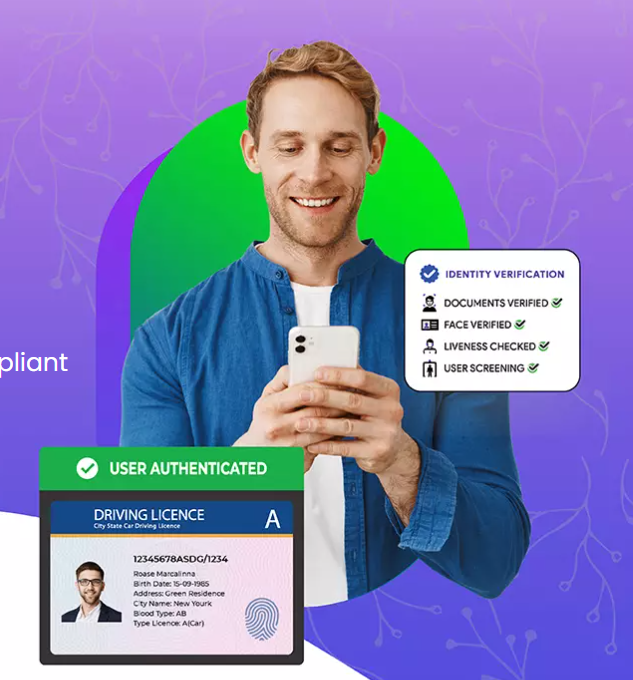

In today’s digital-first world, businesses are rapidly moving online—whether it’s banking, fintech, e-commerce, healthcare, or government services. While this shift brings convenience and speed, it also increases the risk of identity fraud, data breaches, and unauthorized access. This is where online identity verification and face liveness detection play a crucial role.
Modern identity verification solutions ensure that users are genuine, documents are authentic, and transactions are secure. By combining AI-driven document checks with advanced biometric technologies like face liveness detection, organizations can build trust while meeting regulatory compliance requirements.
In this blog, we’ll explore what online identity verification is, how face liveness detection works, its benefits, use cases, and why it has become essential for secure digital onboarding.
What Is Online Identity Verification?
Online identity verification is the process of confirming a user’s identity digitally, without requiring physical presence. It uses advanced technologies such as AI, machine learning, OCR (Optical Character Recognition), and biometrics to verify identity documents and match them with the user.
The typical online identity verification process includes:
- Capturing an identity document (passport, Aadhaar, PAN, driving license, etc.)
- Extracting and validating document data
- Verifying document authenticity
- Matching the user’s face with the document photo
- Performing liveness detection to prevent spoofing
This automated process allows businesses to verify customers quickly while reducing manual errors and operational costs.
Understanding Face Liveness Detection
Face liveness detection is a biometric security feature used to ensure that the person attempting verification is physically present and not using a fake image, video, or mask.
Unlike simple face recognition, liveness detection focuses on detecting real human traits and behaviors to prevent fraud attempts such as:
- Printed photo attacks
- Video replays
- Deepfake videos
- 3D masks
- Screen-based spoofing
Face liveness detection is a critical layer in online identity verification systems, especially in high-risk industries.
Types of Face Liveness Detection
1. Active Liveness Detection
This method requires users to perform specific actions, such as:
- Blinking
- Smiling
- Turning their head
- Following on-screen instructions
While effective, active liveness detection can sometimes affect user experience if not implemented smoothly.
2. Passive Liveness Detection
Passive liveness detection works silently in the background. It analyzes facial features, skin texture, depth, light reflection, and micro-movements without asking the user to perform any action.
This method offers:
- Faster verification
- Better user experience
- Higher completion rates
Most modern identity verification platforms prefer AI-based passive liveness detection.
Why Online Identity Verification Is Important
With the rise of digital fraud, traditional verification methods are no longer sufficient. Online identity verification provides several key advantages:
1. Fraud Prevention
Identity fraud costs businesses billions every year. Online identity verification combined with face liveness detection blocks fake identities and impersonation attempts.
2. Faster Customer Onboarding
Manual KYC processes can take days. Automated identity verification reduces onboarding time to seconds, improving customer satisfaction.
3. Regulatory Compliance
Industries like banking and fintech must comply with KYC, AML, and data protection regulations. Digital identity verification ensures compliance with global standards.
4. Cost Efficiency
Automation reduces the need for manual verification teams, saving operational costs while increasing accuracy.
Role of Face Liveness Detection in Identity Verification
Face liveness detection strengthens online identity verification by ensuring that biometric authentication is secure and reliable.
Key benefits include:
- Prevents spoofing and deepfake attacks
- Enhances biometric accuracy
- Reduces false acceptance rates
- Builds trust in digital platforms
- Supports remote onboarding
By combining face recognition with liveness detection, businesses can create a robust identity verification ecosystem.
Use Cases of Online Identity Verification and Face Liveness Detection
1. Banking and Fintech
Banks and fintech companies use online identity verification to:
- Open digital bank accounts
- Verify borrowers
- Prevent financial fraud
- Ensure AML and KYC compliance
2. Cryptocurrency and Trading Platforms
Crypto exchanges rely on face liveness detection to prevent fake accounts, money laundering, and unauthorized transactions.
3. E-commerce and Marketplaces
Identity verification helps marketplaces reduce fake sellers, fraudulent buyers, and chargeback risks.
4. Healthcare
Hospitals and telemedicine platforms use identity verification to:
- Verify patients remotely
- Protect medical records
- Prevent insurance fraud
5. Government and Public Services
Digital identity verification enables secure access to government services, subsidies, and online portals.
SEO Benefits for Businesses Offering Identity Verification Solutions
For companies providing identity verification services, creating content around keywords like online identity verification, face liveness detection, KYC verification, and biometric authentication helps:
- Improve search engine rankings
- Attract B2B leads
- Build industry authority
- Increase organic traffic
- Educate potential clients
Well-structured SEO content not only drives traffic but also builds trust with decision-makers searching for secure verification solutions.
Key Features to Look for in an Identity Verification Solution
When choosing an online identity verification platform, businesses should consider:
- AI-powered document verification
- Passive face liveness detection
- High accuracy and low false positives
- Global document support
- Fast verification speed
- API and SDK integration
- Data privacy and security compliance
A scalable and reliable solution ensures long-term success and fraud prevention.
Future of Online Identity Verification and Liveness Detection
The future of identity verification lies in AI-driven automation, behavioral biometrics, and deepfake-resistant technologies. As fraud techniques evolve, verification systems will become more intelligent and adaptive.
Emerging trends include:
- Advanced AI-based liveness detection
- Multimodal biometrics (face + voice)
- Continuous authentication
- Privacy-first verification models
Businesses that adopt modern identity verification technologies today will be better prepared for tomorrow’s digital challenges.
Conclusion
Online identity verification and face liveness detection have become essential tools for secure digital onboarding. They protect businesses from fraud, ensure regulatory compliance, and provide a seamless user experience.
By integrating AI-powered verification systems, organizations can confidently verify users remotely while maintaining speed, accuracy, and security. As digital interactions continue to grow, identity verification will remain at the core of trust in the online ecosystem.