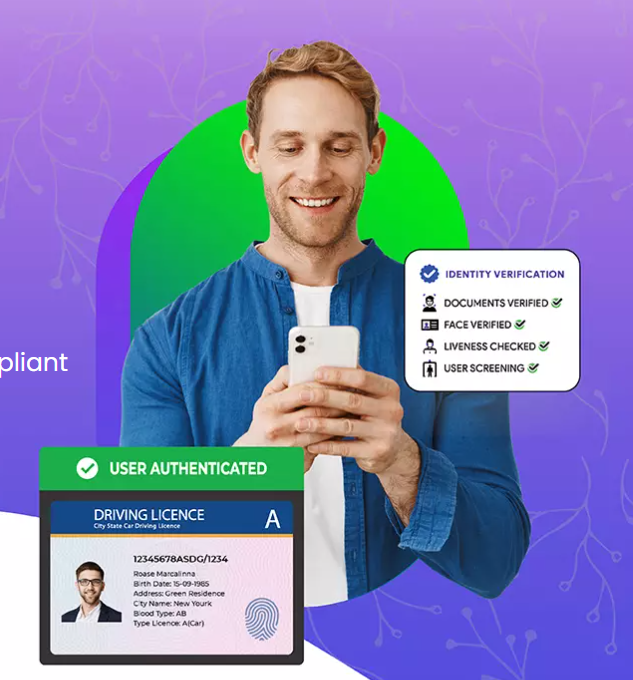

As digital services continue to replace physical processes, businesses face a growing challenge: how to verify users remotely while maintaining strong security, regulatory compliance, and a smooth customer experience. Traditional identity checks based only on document scanning and one-time passwords are no longer sufficient to stop advanced fraud, identity theft, and deepfake attacks.
This is where NFC verification and a modern voice verification system play a crucial role. Together, these technologies allow organizations to authenticate both the identity document and the real person behind the device, creating a powerful and reliable digital identity verification framework.
In this in-depth guide, we explore how NFC verification and voice verification systems work, why they are becoming essential for KYC and onboarding, and how businesses can successfully implement them at scale.
Understanding NFC Verification in Digital Identity
NFC verification uses Near Field Communication technology to read encrypted data directly from the embedded chip inside government-issued identity documents such as e-passports and smart ID cards.
The global standards that make this secure and interoperable are developed by industry bodies such as NFC Forum, which defines how devices and secure elements communicate using NFC technology.
Unlike visual document scanning, NFC verification does not rely on images or printed text. Instead, it accesses original data stored securely within the chip by the issuing authority.
Why NFC verification is fundamentally more secure
NFC verification offers several technical advantages over conventional document capture:
- The data is retrieved directly from the chip, not from a photo
- The chip data is digitally signed by the issuing authority
- Encrypted access prevents unauthorized reading
- Security mechanisms verify that the document has not been cloned or altered
As a result, NFC verification provides cryptographic proof that the document is genuine.
How NFC Verification Works Step by Step
A typical NFC verification workflow during digital onboarding looks like this:
- The user is prompted to place their e-passport or NFC-enabled ID card near a smartphone
- The mobile device establishes a secure communication channel with the document chip
- The system reads protected data such as name, date of birth, document number, and biometric information
- Digital signatures are validated
- The data is securely transferred into the identity verification system
This process ensures that the identity information originates from the official source and has not been manipulated.
What Is a Voice Verification System?
A voice verification system is a biometric authentication technology that verifies an individual based on the unique acoustic and behavioral characteristics of their voice.
Every human voice contains distinct features influenced by physical factors such as vocal tract shape and speaking behavior. These characteristics are analyzed and transformed into a biometric template, commonly called a voiceprint.
A voice verification system is typically used to:
- Verify whether a person is who they claim to be
- Authenticate returning users without passwords
- Secure high-risk transactions and sensitive operations
How a Voice Verification System Works
A modern voice verification system generally follows these stages:
- The user speaks a phrase or engages in natural conversation
- Audio signals are captured and processed
- Acoustic features are extracted
- A biometric voiceprint is generated or compared with an existing template
- The system calculates a confidence score
- Access is approved or rejected
Advanced systems also include:
- Anti-spoofing detection
- Replay attack prevention
- Detection of synthetic and AI-generated voices
- Behavioral voice analysis
This ensures reliable authentication even in environments such as call centers and mobile applications.
Why Voice Verification Is Becoming Critical in 2026 and Beyond
Password-based authentication is increasingly vulnerable to phishing, credential leaks, and social engineering. At the same time, contact centers remain one of the most targeted channels for account takeover fraud.
Voice verification systems solve multiple business problems:
- They reduce the average handling time in call centers
- They eliminate repetitive security questions
- They improve customer satisfaction
- They significantly reduce impersonation attempts
For remote-first service models, voice verification offers a balance between security and user convenience.
The Power of Combining NFC Verification and Voice Verification Systems
On their own, both technologies deliver strong protection. However, when combined, they create a highly resilient identity verification workflow that validates both the document and the human user.
NFC verification confirms
- The document is authentic
- The data originates from a trusted issuing authority
- The document has not been cloned
Voice verification confirms
- The user interacting with the system is the legitimate account holder
- The session is protected from impersonation
- Ongoing access remains secure
Together, they establish a multi-layered identity assurance model.
How the Combined Workflow Looks in Real Life
A typical onboarding and authentication journey may look like this:
- The user registers through a mobile or web application
- NFC verification reads and validates the identity document
- The system extracts verified personal data
- The user performs biometric enrollment using voice
- A voiceprint is securely stored
- Future logins, support calls, and high-risk actions use voice verification
This layered approach significantly reduces fraud exposure while maintaining a smooth user experience.
Key Industry Use Cases
1. Digital KYC and Remote Onboarding
Banks, fintech companies, and digital lenders use NFC verification to securely capture document data and eliminate forged IDs. A voice verification system then enables continuous authentication for future interactions.
This approach supports:
- Faster customer onboarding
- Reduced manual review
- Higher regulatory confidence
2. Call Centers and Customer Support
Voice verification systems enable passive or active authentication during live conversations. Once the identity is confirmed, sensitive requests such as account changes or payment approvals can be processed securely.
When combined with NFC-based onboarding, contact centers gain full trust in both document origin and caller identity.
3. Fintech, Wallets, and Payment Platforms
For digital wallets and payment services, NFC verification ensures legitimate onboarding, while voice verification secures:
- Transaction approvals
- Account recovery
- High-value fund transfers
This combination drastically reduces fraud related to stolen credentials and SIM swap attacks.
4. Travel, Immigration, and Mobility Services
NFC verification enables fast and accurate reading of e-passports and travel documents. Voice verification supports self-service kiosks and remote travel services where physical presence is limited.
5. Telecom and Subscription-Based Services
Telecom providers rely heavily on remote customer verification. NFC verification protects against identity misuse during SIM registration, while voice verification secures account management over phone support.
Regulatory and Compliance Benefits
The combined use of NFC verification and voice verification system strongly supports:
- KYC and customer due diligence requirements
- Anti-money laundering controls
- Auditability and traceability
- Risk-based onboarding strategies
Since NFC data is digitally signed and voice biometrics is inherently linked to a living person, the overall verification process becomes significantly more defensible during compliance reviews.
Security Advantages Over Traditional Methods
Compared to image-based document capture and SMS-based authentication, this combined approach delivers:
- Strong cryptographic document validation
- Reduced vulnerability to deepfake images
- Protection against credential stuffing
- Lower exposure to social engineering
- Ongoing authentication instead of one-time checks
This shift from static verification to continuous biometric trust is becoming a core strategy for digital identity platforms.
Challenges and Best Practices for Implementation
While the benefits are significant, successful deployment requires careful planning.
Best practices include:
- Using certified and standardized NFC reading libraries
- Implementing strong encryption for biometric templates
- Applying privacy-by-design principles
- Ensuring transparent user consent flows
- Maintaining fallback verification options
Scalability, latency, and cross-device compatibility must also be addressed for enterprise-level deployments.
Implementing NFC and Voice Verification Through a Unified Platform
To simplify integration and operational complexity, many organizations choose identity verification platforms that support both NFC verification and voice verification within a single workflow.
One such enterprise-ready solution is Accura Scan, which provides organizations with tools for secure document verification, biometric authentication, and advanced fraud prevention.
Using unified platforms allows businesses to:
- Reduce development time
- Maintain consistent security policies
- Deploy multi-factor identity verification at scale
- Support both mobile and web environments
The Future of Digital Identity Verification
As AI-generated fraud techniques continue to evolve, businesses must move beyond isolated security checks. NFC verification offers cryptographic trust in physical identity documents, while a voice verification system delivers real-time biometric confirmation of the person using the service.
In the future, digital identity ecosystems will increasingly rely on:
- Multi-modal biometrics
- Continuous authentication
- Zero-trust security models
- Seamless customer experiences
NFC and voice verification will remain key pillars of this transformation.
Conclusion
NFC verification and voice verification systems together create a highly secure, scalable, and user-friendly digital identity framework. NFC verification establishes trust in official identity documents, while voice verification confirms the presence and identity of the real user throughout their journey.
For organizations operating in banking, fintech, telecom, travel, and enterprise services, combining these technologies is no longer just a security upgrade—it is a strategic investment in long-term digital trust, regulatory compliance, and customer confidence.
By adopting NFC-based document authentication and AI-driven voice verification systems, businesses can build a future-ready identity infrastructure that protects users, prevents fraud, and supports frictionless digital growth.