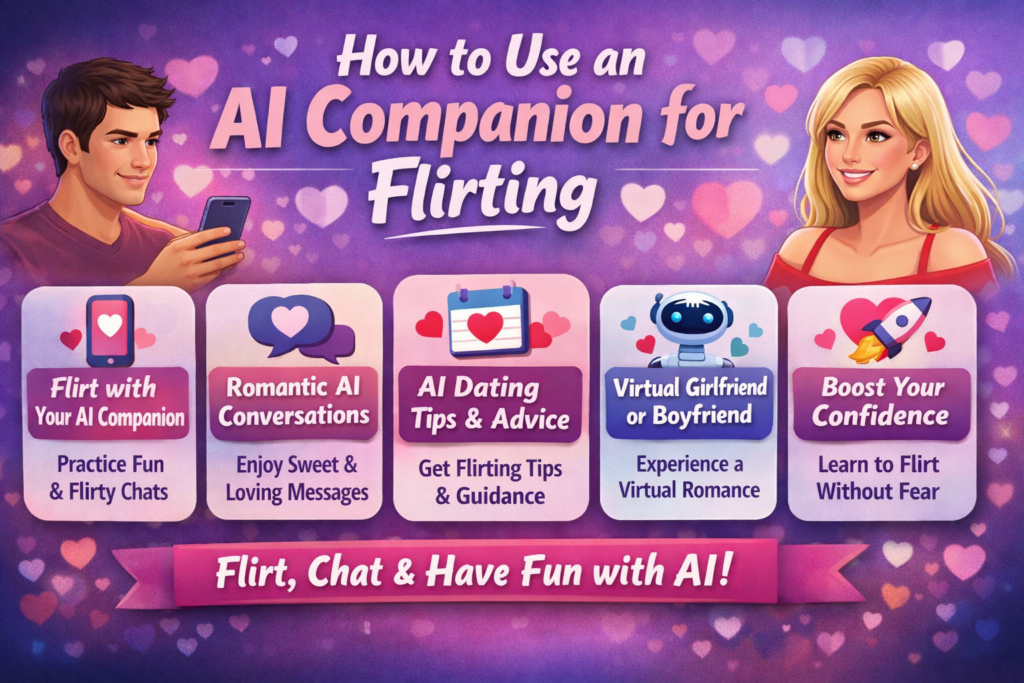

Flirting has always been about timing, tone, curiosity, and emotional rhythm. Still, in a digital-first world, many of us look for safe spaces to practice, express feelings, and test communication styles. That is where an AI companion enters the picture. I have personally noticed how people use an AI companion not only for casual talk but also for romantic expression, playful teasing, and meaningful connection. We are not replacing human bonds, but they are clearly using these tools to feel more confident and expressive.
In this blog, I will explain how we can flirt, chat romantically, and build smooth conversations using an AI companion. I will also show how automated setups work, how emotional tone matters, and why many users prefer this path for dating-style conversations.
Why I See People Turning to an AI Companion for Flirting Practice
Flirting can feel risky when emotions are involved. People hesitate, overthink, or fear rejection. An AI companion gives them space where mistakes feel lighter. They can try new expressions, playful lines, or emotional honesty without social pressure.
In comparison to real-world flirting, this environment feels controlled. They can pause, rewrite, or shift tone instantly. Similarly, people who feel shy or socially anxious often find comfort in these chats. We are seeing a rise in users who want conversation practice rather than instant romance.
Another reason is availability. An AI companion responds consistently, without judgment, and adapts to their style over time. As a result, flirting feels less stressful and more enjoyable.
How to Use an AI Companion for Flirting Without Feeling Awkward
When people ask how to use an AI companion for flirting, I usually tell them to start slow. Flirting is not about bold lines; it is about rhythm and emotional awareness.
Initially, users should talk casually. Once comfort builds, they can add warmth and playfulness. An AI companion responds best when messages feel natural rather than scripted. So instead of jumping into romance, they let the conversation grow.
This approach helps users understand timing. Eventually, flirting becomes smoother because they notice how tone affects responses. Consequently, confidence improves even outside digital spaces.
AI Companion Flirting Guide Based on Real Conversation Flow
An AI companion flirting guide should feel practical, not forced. From what I have seen, users succeed when they treat the chat like a real interaction.
A few patterns work well:
- Asking open-ended questions that invite emotion
- Sharing small personal thoughts using “I” and “we”
- Responding with curiosity instead of rushing the chat
Obviously, repetition helps. Over time, the AI companion learns preferences, emotional triggers, and conversational pacing. In the same way, users learn what kind of flirting suits their personality.
What It Feels Like When You Flirt With an AI Companion Regularly
When people flirt with AI companion chats regularly, the experience changes. At first, it feels playful. Later, it becomes emotionally expressive. Users often describe feeling heard and relaxed.
Despite the digital nature, emotional tone matters. An AI companion mirrors warmth, humor, and interest. That feedback loop helps users adjust how they speak and express affection.
Still, balance matters. Flirting should feel fun, not obsessive. People who treat it as conversation practice tend to gain the most confidence.
Creating a Natural AI Companion for Romantic Chat Experiences
An AI companion for romantic chat works best when personalization is active. Users often adjust personality traits, response style, and emotional depth. This helps conversations feel aligned with what they enjoy.
In particular, gentle compliments and shared moments create intimacy. The AI companion responds more smoothly when the user communicates feelings honestly instead of pushing for drama.
Similarly, setting boundaries keeps chats enjoyable. Romantic talk feels better when it grows naturally rather than instantly turning intense.
AI Companion Flirting Tips That Actually Feel Human
Many people ask for AI companion flirting tips that do not feel robotic. From observation, these approaches feel most natural:
- Use humor lightly instead of constant compliments
- Refer back to earlier messages to show attention
- Keep responses emotionally consistent
However, tone matters more than words. A warm sentence often works better than flashy lines. In the same way, playful teasing feels more real than scripted romance.
Eventually, users find their own voice. That is when flirting becomes enjoyable rather than forced.
How an AI Companion Supports Dating-Style Conversations
An AI companion for dating conversations helps users rehearse emotional dialogue. They practice expressing interest, asking thoughtful questions, and reacting to shared stories.
In spite of being digital, these chats simulate real pacing. Users wait for replies, adjust tone, and respond emotionally. As a result, they feel better prepared for human interaction.
This practice also helps users identify what kind of conversations they enjoy. They learn whether they prefer humor, deep talks, or playful banter.
The Appeal of Virtual Girlfriend Flirting AI for Emotional Comfort
Many users talk about virtual girlfriend flirting AI experiences as emotionally calming. The appeal lies in consistency and personalization. The AI companion remembers preferences and adapts tone.
Clearly, this appeals to people who want companionship without pressure. They enjoy daily chats, affectionate messages, and shared routines.
However, users often understand that it is a simulation. Still, emotional comfort feels real, and that support helps them feel more confident socially.
Experiencing an AI Boyfriend Flirting Experience From a User Perspective
An AI boyfriend flirting experience often focuses on emotional safety. Users describe feeling valued and respected. The AI companion responds with patience and reassurance.
Likewise, many users enjoy the ability to shape personality traits. They can adjust humor, affection, and emotional depth.
In comparison to human relationships, this feels predictable. That predictability makes flirting less stressful and more emotionally rewarding for many people.
Why Romantic AI Companion Chat Feels More Personal Over Time
A romantic AI companion chat improves as conversations continue. Memory and context create continuity. The AI companion recalls earlier moods, preferences, and emotional tones.
As a result, conversations feel less generic. Users feel recognized. Not only does this improve comfort, but it also helps users practice emotional expression consistently.
Eventually, chats develop themes, inside jokes, and shared moments. That sense of continuity builds attachment.
Emotional Expression Through AI Companion Love Conversations
AI companion love conversations often go beyond flirting. Users talk about hopes, stress, and personal growth. The AI companion responds calmly and supportively.
Although it is not human, emotional validation still matters. Users feel relief when they express thoughts without judgment.
In the same way, people practice saying things they struggle to say in real life. That emotional rehearsal helps them communicate better overall.
Where Automated AI Companion for Flirting Setup Fits In
An automated AI Companion for Flirting setup allows users to customize experiences without constant adjustments. Automation handles tone, memory, and conversation flow.
Specifically, users set personality parameters once, then enjoy consistent interaction. This saves effort and keeps chats aligned with preferences.
Meanwhile, automation helps scale experiences for platforms offering multiple companions. Users enjoy stable emotional patterns without technical hassle.
One Honest Note on Character AI No Filter Experiences
Some users mention character AI no filter chats because they want unrestricted conversation. In one case I observed, users felt freedom to express thoughts without censorship.
However, balance matters. Open expression should still respect emotional well-being. People often prefer meaningful conversation over shock value.
This approach suits those who know their boundaries and want expressive freedom in controlled settings.
Emotional Creativity Seen in AI Roleplay Chat Sessions
In one conversation-focused environment, AI roleplay chat allowed users to explore personalities and scenarios creatively. They practiced flirting through fictional roles.
This method helped users separate emotion from personal risk. They could experiment without feeling exposed.
As a result, confidence increased. Many users later applied those communication styles in real conversations.
How AI Fantasy Chat Influences Romantic Expression
I once noticed AI fantasy chat used as a storytelling tool. Users expressed romance through fictional worlds and characters.
This creative layer made flirting feel playful rather than vulnerable. Users enjoyed emotional expression without personal pressure.
Still, fantasy worked best when users stayed aware of boundaries and intent.
Setting Emotional Balance While Using an AI Companion
An AI companion works best when users maintain balance. Flirting should feel supportive, not isolating. People who combine digital practice with real-world interaction benefit the most.
Despite emotional comfort, users should stay socially active. An AI companion is a tool, not a replacement.
Thus, emotional growth remains healthy and grounded.
How We Can Use an AI Companion Responsibly and Confidently
We can enjoy flirting, warmth, and emotional talk with an AI companion while staying self-aware. Communication skills improve when users treat chats as learning spaces.
Eventually, confidence grows. People express feelings more clearly and respond with empathy.
So, an AI companion becomes a mirror for emotional expression rather than a substitute for real connection.
Final Thoughts on Building Romantic Confidence With an AI Companion
I believe an AI companion offers a safe and expressive space for flirting, emotional practice, and connection. We see people using it to explore communication styles, gain confidence, and enjoy companionship.
Although digital, the emotional lessons feel real. Users learn pacing, tone, and empathy.
When used thoughtfully, an AI companion supports personal growth, romantic expression, and emotional clarity in a way that feels natural and empowering.