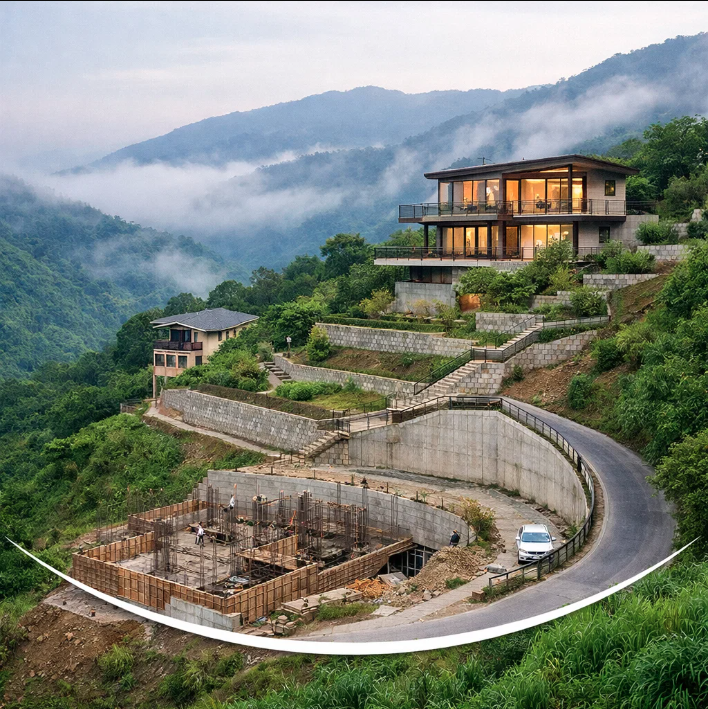

Designing structures on uneven land is both exciting and challenging. Unlike flat surfaces, sloping terrain demands careful planning, smart engineering, and creative thinking. Every decision—from foundation type to drainage—plays a critical role in ensuring long-term stability and safety.
In many parts of India, especially hilly regions, people face common problems. Soil instability, water runoff, landslides, and uneven load distribution often create risks. Poor planning can lead to cracks, structural failure, or expensive repairs later.
So, how do you overcome these challenges? With proper planning, expert evaluation, and the right construction techniques, building on slopes can be safe, durable, and even visually stunning. This is where professional guidance becomes essential.
Understanding the Basics of Slope Construction
Before starting any project, it’s important to understand the terrain. Not all slopes are the same. Some are gentle, while others are steep and unstable.
Here are key factors to consider:
- Soil type and strength
- Slope gradient and direction
- Water flow and drainage patterns
- Seismic activity in the region
A detailed site study ensures that your structure adapts to the land, not the other way around.
Smart Planning for Stability and Safety
Proper planning is the backbone of any successful building structure design. Without it, even the strongest materials can fail.
Key Planning Strategies:
- Step Cutting Technique
The land is cut into steps or terraces to create level surfaces. - Retaining Walls
These walls hold back soil and prevent erosion or landslides. - Deep Foundations
Pile or pier foundations help anchor the structure into stable soil layers. - Drainage Systems
Proper water flow management prevents soil weakening.
Next, engineers carefully balance loads to avoid pressure buildup on one side of the building.
Why Structural Analysis is Non-Negotiable
Many people underestimate the importance of calculations. But in reality, structural analysis and design ensures your building can handle environmental forces like wind, rain, and earthquakes.
For example:
- Load distribution must be even across the slope
- Materials must match terrain conditions
- Stress points must be reinforced properly
Without proper analysis, the structure may look fine initially but fail over time.
Common Mistakes You Should Avoid
Let’s be honest—many construction failures happen due to avoidable mistakes.
❓ Are you planning without a soil test?
❓ Ignoring water drainage paths?
❓ Using flat-land designs on sloping sites?
If yes, you could be risking both safety and money.
Avoid These Errors:
- Skipping professional consultation
- Poor foundation selection
- Inadequate retaining structures
- Ignoring long-term maintenance
In addition, always plan for extreme weather conditions.
Our Services / What We Offer
We provide complete solutions to make your slope construction safe and efficient. Our building structure design service covers every stage of your project.
Our offerings include:
- Site analysis and soil testing
- Custom slope-friendly design planning
- Foundation and retaining wall design
- Drainage and water management systems
- Structural safety checks and approvals
- 3D visualization for better understanding
Next, we ensure every design aligns with safety standards and client expectations.
Benefits of Proper Slope Design
Choosing the right approach offers long-term advantages.
Key Benefits:
- ✅ Enhanced structural safety and durability
- ✅ Reduced risk of landslides and soil erosion
- ✅ Better water management and drainage
- ✅ Cost savings on future repairs
- ✅ Improved aesthetic appeal and property value
For example, a well-designed slope house can offer breathtaking views and natural ventilation.
Why Choose Us
Working with an experienced structural design consultant makes a big difference.
Here’s why clients trust us:
- ✔ Experienced team with technical expertise
- ✔ Focus on safety, quality, and compliance
- ✔ Customized solutions for every terrain
- ✔ Transparent communication and support
- ✔ Proven track record across multiple regions
We don’t just design—we ensure your vision stands strong for years.
Our Process
We follow a simple and effective step-by-step approach:
Step 1: Site Evaluation
We study the terrain, soil, and environmental conditions.
Step 2: Design Planning
We create a customized structure plan based on slope conditions.
Step 3: Engineering & Execution Support
We provide detailed drawings and assist during construction.
Next, we monitor progress to ensure everything meets quality standards.
Serving Across India
We proudly extend our expertise to growing regions, serving India’s expanding cities like Delhi, Mumbai, Pune, Banglore, West Bengal, Uttar Pradesh, Guwahati. Each location has unique terrain challenges, and we adapt accordingly.
Conclusion
Designing on hilly or sloping terrain may seem complex, but with the right approach, it becomes an opportunity rather than a challenge. From proper planning to expert execution, every step matters.
At Elite Blueprints Consultancy, we believe in delivering safe, innovative, and efficient solutions. We work closely with you to turn difficult terrains into strong and beautiful structures. Our goal is to make your construction journey smooth, reliable, and future-ready.
📲 Ready to help your child unlock their full potential? Enquire with us now!
📞 Call Us Today: +91-82500-86323, +91-70291-21017
🌐 Visit: www.ebcsiliguri.com
📍 Based in Siliguri | Serving India
People Also Ask (FAQs)
1. What is the best foundation for sloping land?
Pile or pier foundations are often best as they reach stable soil layers and provide strong support.
2. Is it expensive to build on a slope?
Yes, initial costs may be higher due to additional engineering, but it reduces long-term risks and repairs.
3. How do you prevent landslides during construction?
By using retaining walls, proper drainage systems, and soil stabilization techniques.
4. Can I use a normal house design on a slope?
No, slope-specific designs are required to ensure safety and structural balance.
5. How long does slope construction planning take?
It depends on site complexity, but typically takes a few weeks for proper analysis and design.