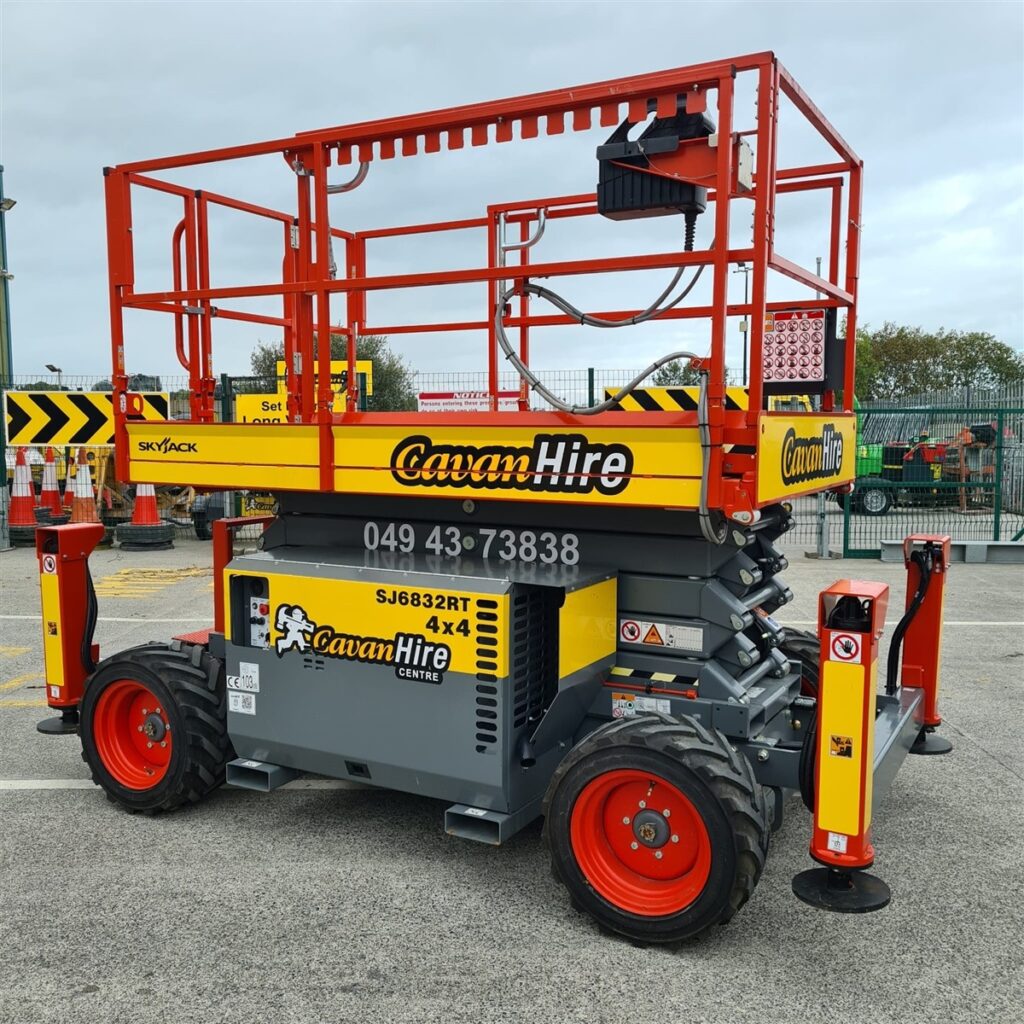

Rough terrain scissor lifts are powerful aerial work platforms designed specifically for outdoor and uneven job sites. They are commonly used in construction, industrial maintenance, and large-scale infrastructure projects where stable vertical access is required. One of the most important considerations before renting or purchasing a lift is its maximum height capability. Different projects require different working heights, depending on the structure being built or maintained. Understanding how high a rough terrain scissor lift can reach helps contractors choose the right equipment. In this guide, we’ll explore height ranges, influencing factors, and safety considerations.
What Is a Rough Terrain Scissor Lift?
Definition and Purpose
A rough terrain scissor lift is a heavy-duty lifting platform built to operate on uneven, muddy, or sloped surfaces. Unlike electric indoor lifts, these machines are equipped with reinforced tires and powerful diesel engines. Their primary purpose is to provide safe vertical access to elevated work areas outdoors. Construction sites often rely on them for framing, installation, and finishing tasks. They are also widely used in oil & gas, mining, and infrastructure projects. Their rugged build makes them ideal for demanding environments.
Key Features
Rough terrain scissor lifts come with several advanced features that enhance performance and stability. Most models include four-wheel drive systems for superior traction on uneven ground. They are fitted with foam-filled or solid rough-terrain tires to prevent punctures. Many units include hydraulic outriggers that increase stability at maximum height. The platforms are spacious, allowing multiple workers and materials to be lifted together. Additionally, they offer high weight capacities compared to standard electric scissor lifts.
How High Can a Rough Terrain Scissor Lift Reach?
Standard Working Heights
Most rough terrain scissor lifts offer platform heights ranging from 20 feet to 50 feet. When calculating working height, manufacturers typically add around 6 feet to platform height to account for operator reach. For example, a lift with a 40-foot platform height usually provides a 46-foot working height. Mid-range models between 32 and 40 feet are the most commonly used on construction sites. These heights are sufficient for building facades, roofing, and structural installations. The exact height depends on the specific make and model.
Maximum Height Models Available
High-capacity rough terrain scissor lifts can reach platform heights of 53 feet or more. These advanced models are designed for large-scale commercial and industrial projects. They feature reinforced frames and powerful hydraulic systems to ensure safe elevation. Brands may vary slightly in their maximum reach specifications. Taller models often include enhanced stabilization systems for safety. Choosing a maximum-height model depends on job requirements and site conditions.
Platform Height vs Working Height – What’s the Difference?
Platform height refers to the height of the lift’s floor where workers stand. Working height, on the other hand, includes the operator’s vertical reach above the platform. Manufacturers usually calculate working height by adding approximately 6 feet to the platform height. This distinction is important when planning high-elevation tasks. Contractors must ensure the working height meets project demands. Understanding this difference prevents underestimating the lift’s required capacity.
Factors That Affect Maximum Reach
Lift Model and Design
Different lift models are engineered for different height capabilities. Heavy-duty industrial designs typically reach higher than compact models. The strength of the hydraulic system plays a major role in elevation limits. Engine power also impacts how smoothly the lift operates at full extension. Structural reinforcement ensures stability at higher levels. Choosing the right model ensures safe and efficient performance.
Surface Conditions
Uneven or sloped surfaces can affect how high a lift can safely operate. Most rough terrain lifts are designed to handle challenging ground conditions. However, excessive slope angles may require outriggers for stabilization. Soft or muddy terrain can also impact performance. Operators must assess ground stability before raising the platform. Proper site preparation ensures safe maximum reach operation.
Load Capacity
The total weight on the platform affects lift efficiency and safety. Exceeding weight limits can compromise stability at full height. Most rough terrain scissor lifts support between 500 kg and 1,000 kg. Carrying heavy materials along with multiple workers requires careful load calculation. Staying within recommended capacity ensures safe elevation. Always check manufacturer guidelines before operation
Rough Terrain vs Electric Scissor Lift Height Comparison
Rough terrain scissor lifts are built for outdoor performance, while electric lifts are designed mainly for indoor use. Electric models generally offer lower platform heights compared to heavy-duty rough terrain versions. Outdoor lifts also provide better stability at greater heights due to reinforced frames. Diesel-powered systems generate more lifting strength. Electric lifts are quieter but less suitable for uneven ground. Choosing between the two depends on environment and height requirements.
Common Industries That Need High-Reach Rough Terrain Lifts
Construction companies frequently use high-reach lifts for framing and exterior finishing. Industrial plants rely on them for equipment maintenance and installation. Infrastructure projects such as bridges and highways require elevated access solutions. Oil and gas operations use them in remote outdoor environments. Large warehouses use them for exterior repairs and structural work. Their versatility makes them essential across multiple industries.
Safety Considerations at Maximum Height
Operating at full height requires strict adherence to safety protocols. Outriggers should be deployed when necessary to enhance stability. Wind speed must be monitored, as strong winds can impact balance. Operators should always be trained and certified to use aerial lifts. Fall protection systems and guardrails must be properly secured. Regular maintenance checks ensure equipment reliability at high elevations.
Why Choose FERAQuip for Rough Terrain Scissor Lifts?
FERAQuip offers a wide range of rough terrain scissor lifts with varying height capacities. Their equipment is regularly inspected and maintained to ensure safety compliance. They provide expert consultation to help clients select the correct lift model. Whether for short-term rental or long-term projects, FERAQuip ensures dependable performance. Competitive pricing and responsive customer support add extra value. Choosing FERAQuip means investing in reliability and safety.
FAQs
1. What is the tallest rough terrain scissor lift available?
Some models reach up to 53 feet platform height or more.
2. How is working height calculated?
Working height equals platform height plus approximately 6 feet.
3. Can rough terrain scissor lifts handle uneven ground?
Yes, they are specifically designed for rough and sloped surfaces.
4. What weight can these lifts carry?
Most models support between 500 kg and 1,000 kg.
5. Are rough terrain lifts safe at full height?
Yes, when operated correctly with proper safety measures in place.