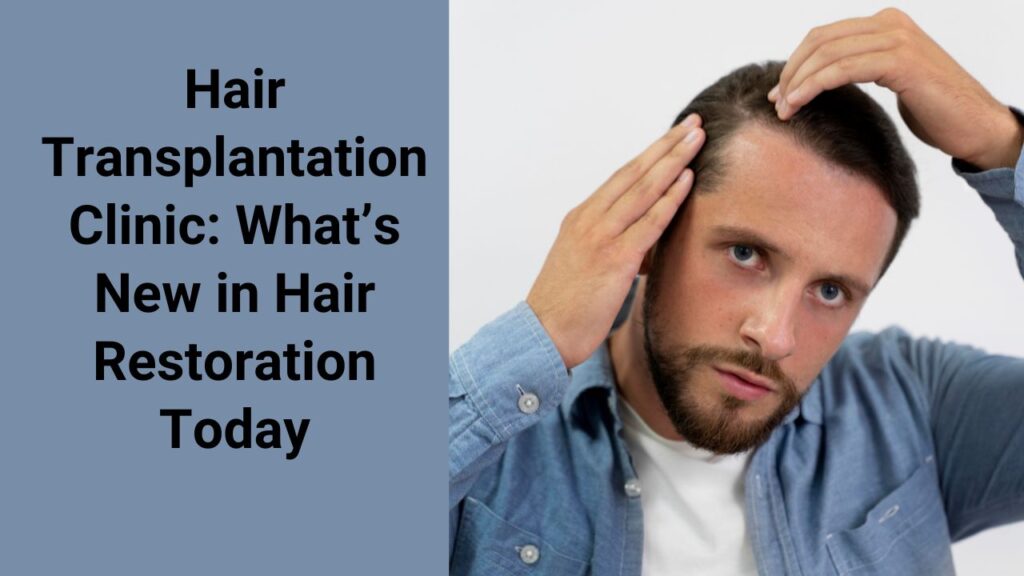

Hair loss is one of those issues that everyone faces at some point in their lives, and, as we all know, it can play an effective role in shaping our self-confidence and self-image more than we might imagine. Although hair loss may begin gradually, our quest for a natural hairline has led many to turn to contemporary solutions. Indeed, visiting a hair transplantation clinic is no longer just for those experiencing hair loss; it is for those seeking a medical advancement in hair restoration.
Over the years, there have been tremendous changes in hair restoration procedures, especially with proven methods such as FUE and FUT. These methods have been improved to yield better results, with little or no downtime required and long-term benefits. Before you decide on hair restoration procedures, you can understand how these methods work and the latest developments in these procedures.
Understanding the Core Techniques: FUE and FUT
Hair restoration in modern times is dominated by two tried-and-tested methods: Follicular Unit Extraction and Follicular Unit Transplantation. A professional hair transplant center will recommend either of these methods based on your pattern of hair loss.
Follicular Unit Extraction (FUE)
FUE consists of the removal of individual hair follicles directly from the donor area, which in most cases is the back of the head. They are then transplanted to the hair-thinning or balding areas. FUE has been recognized for its minimally invasive characteristics and the absence of a linear scar.
Over the years, technology in FUE devices has improved, enabling a more precise and effective procedure. Hair follicles can be extracted more accurately to promote a high rate of growth.
Follicular Unit Transplantation (FUT)
FUT, often referred to as the strip method, involves extracting a small strip of scalp from the donor area and dissecting it into separate follicular units. These units are then implanted into the target area.
While FUT may involve a linear scar, modern techniques have significantly minimized its visibility. Many patients choose FUT when they require a larger number of grafts in a single session, making it a practical option offered by a well-equipped hair transplantation clinic.
What’s New in FUE and FUT Today
Although FUE and FUT have been around for years, ongoing refinements have improved their effectiveness and patient experience.
Enhanced Precision and Graft Handling
Today’s procedures focus heavily on preserving the integrity of each graft. Advanced extraction and implantation tools minimize damage, leading to higher growth rates and more natural results.
Improved Hairline Design
Hairline design has become more artistic and customized. Specialists at a modern hair transplantation clinic carefully consider facial structure, age, and hair density to create a hairline that looks completely natural.
Combination Approaches
In some cases, clinics combine FUE and FUT techniques to maximize graft availability and achieve optimal density. This hybrid approach is particularly useful for patients with extensive hair loss.
Minimally Invasive Experience and Faster Recovery
One of the most noticeable advancements in hair repair is the overall patient experience. Procedures are now more comfortable, and recovery times are shorter.
Reduced Discomfort During Procedures
With refined anesthesia techniques and advanced surgical methods, patients undergoing FUE or FUT experience minimal discomfort. This has made visiting a hair transplantation clinic far less intimidating than it once was.
Quicker Healing Process
FUE typically allows faster healing due to its minimally invasive nature, while FUT recovery has also improved with better stitching techniques. Most patients can return to their routine within a few days, depending on the procedure.
Achieving Natural and Long-Lasting Results
The ultimate goal of any hair restoration technique is to reach results that look and feel natural. Modern advancements in FUE and FUT have made this more achievable than ever.
Natural Growth Patterns
Surgeons now focus on implanting hair at the correct angle and direction, ensuring that the transplanted hair blends seamlessly with existing hair.
Better Density Without Overharvesting
A skilled hair transplantation clinic carefully manages donor areas to maintain a natural appearance while achieving sufficient coverage in the recipient area.
Trusted Expertise and Modern Standards
With increasing awareness, patients are also becoming more selective about where they undergo treatment. Selecting the right clinic plays a crucial role in achieving successful outcomes.
Clinics such as Beverly Hills Hair Restoration in Palm Desert are known for following advanced FUE and FUT protocols while maintaining consistent quality standards. When selecting a clinic, it’s important to focus on experience, patient reviews, and the ability to deliver natural results through proven techniques.
Conclusion
This has led to hair restoration evolving into a highly refined practice, with FUE and FUT forming the core of contemporary practice. These procedures, coupled with ongoing developments in the field, have now resulted in procedures that are both safe and natural-looking. Consulting a hair transplant clinic is now equivalent to benefiting from years of development and practice geared towards providing a successful outcome.
It is the personalization aspect and the patient-centric comfort that have made these developments significant. Whether it is FUE or FUT, and whether it concerns the long-term health of patients’ hair, patients can now look forward to answers specifically tailored to their needs. Hair restoration is set to become a viable option for those looking to regain their locks and confidence, thanks to growing awareness and developments in this field.