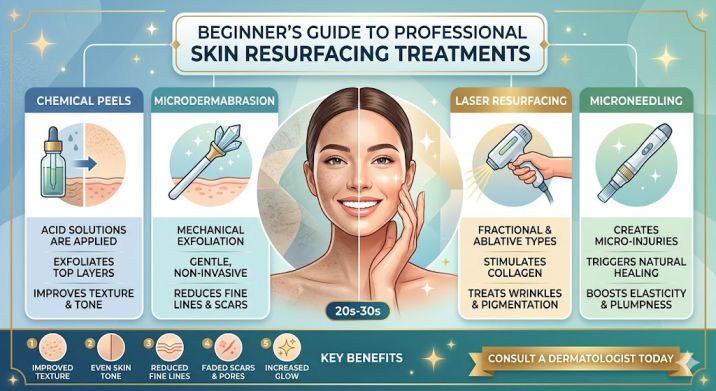

Skin resurfacing treatments have become increasingly popular among people who want smoother brighter skin. Many individuals struggle with dull complexion, uneven texture, fine lines or acne scars. While home skincare products may help maintain skin health they often cannot repair deeper skin damage. Professional resurfacing treatments are designed to gently renew the skin and stimulate natural repair processes.Dermatology clinics now offer several modern techniques that improve skin texture without requiring surgery. These procedures focus on removing dead skin cells, improving hydration and encouraging collagen production. According to the American Academy of Dermatology minimally invasive cosmetic procedures continue to grow in popularity because they provide visible improvements with limited recovery time.
Understanding Skin Resurfacing Treatments
Skin resurfacing refers to procedures that remove damaged surface cells and encourage new healthy skin growth. These treatments are designed to improve tone texture and overall skin clarity.Unlike traditional facials which mainly focus on cleansing, resurfacing procedures work at a deeper level. They target skin renewal processes that help repair visible damage caused by sun exposure, aging and environmental stress.Research published in the Journal of Clinical and Aesthetic Dermatology explains that skin resurfacing treatments can stimulate collagen production which plays a key role in maintaining firm and smooth skin.Because collagen naturally decreases with age resurfacing treatments can help restore a healthier skin structure over time.
Why Skin Texture Changes With Age
Skin naturally renews itself every few weeks. However this renewal process becomes slower as people grow older. Dead skin cells begin to accumulate on the surface and the skin may appear dull or rough.
Several factors contribute to uneven skin texture
- Sun exposure
- Acne scars
- Dehydration
- Pollution and environmental stress
- Natural loss of collagen and elastin
Dermatology specialists emphasize that skin resurfacing treatments work by encouraging the skin to shed damaged cells while stimulating the production of new healthy tissue.This process can gradually improve the appearance of the skin and restore brightness.
Hydration Based Resurfacing Treatments
One of the most beginner friendly resurfacing treatments is hydra dermabrasion. This technique uses water based exfoliation combined with nourishing serums that penetrate the skin.During the treatment a specialized device removes dead skin cells, unclogs pores and infuses the skin with hydrating ingredients. Many patients explore hydra dermabrasion facial therapy when searching for information about a hydrodermabrasion facial treatment because it provides both exfoliation and hydration in one session.The American Society for Dermatologic Surgery explains that hydration based resurfacing treatments can help restore the skin barrier while improving brightness and smoothness.Because the treatment is gentle it is often recommended for individuals new to professional skincare procedures.
Collagen Stimulation Treatments
While hydration facials improve the outer skin layer, collagen stimulation procedures work deeper within the skin. These treatments create microscopic channels in the skin which trigger the body’s natural healing response.As the skin repairs itself new collagen fibers form. Collagen helps improve elasticity reduce fine lines and smooth uneven texture.People researching microneedling or microchanneling procedures near Chicago often learn about these treatments when exploring options for acne scars or skin texture improvement.Clinical findings supported by the National Institutes of Health show that controlled micro stimulation can increase collagen production and improve skin elasticity over time.Although results appear gradually patients often notice smoother skin after several sessions.
Why Dermatologists Combine Different Treatments
Modern dermatology clinics frequently combine multiple resurfacing treatments to address different skin concerns. Hydration based exfoliation treatments improve surface brightness while collagen stimulation procedures rebuild deeper skin layers.When used together these treatments can improve several aspects of skin health including
- Skin smoothness
- Pore appearance
- Hydration levels
- Skin tone and clarity
Many dermatologists recommend combination therapy because it provides balanced improvements across different layers of the skin.The Mayo Clinic also notes that personalized treatment plans often produce the most effective results since every individual has unique skin concerns.
What Beginners Should Know Before Starting Treatment
People considering professional skin resurfacing often have questions about safety and expectations. Dermatologists usually begin with a consultation to evaluate the patient’s skin type and medical history.
During the consultation specialists may discuss
- Skin sensitivity
- Previous cosmetic treatments
- Current skincare routine
- Sun exposure habits
This evaluation helps determine which resurfacing method will be most effective and safe.Patients are often advised to avoid excessive sun exposure and follow post treatment skincare instructions to maintain results.
Lifestyle Habits That Support Skin Renewal
Professional resurfacing treatments can improve skin quality but daily habits also influence long term results. Dermatologists recommend maintaining a skincare routine that supports skin repair.
Helpful habits include
- Applying sunscreen daily
- Drinking enough water
- Eating nutrient rich foods
- Avoiding excessive sun exposure
- Using gentle skincare products
According to the World Health Organization ultraviolet radiation is a leading cause of premature skin aging. Protecting the skin from sun damage helps maintain smoother and healthier skin over time.When combined with professional treatments healthy habits can greatly improve skin appearance.
The Future of Skin Resurfacing
Aesthetic medicine continues to evolve as researchers develop new ways to repair damaged skin. Emerging treatments focus on regenerative approaches that stimulate the body’s natural healing processes.Scientists are exploring technologies such as growth factor therapies, peptide based skincare and advanced laser resurfacing. These innovations aim to improve skin quality while maintaining natural skin structure.Experts believe that future skin resurfacing treatments will become even safer and more effective as research continues.
Conclusion
Professional skin resurfacing treatments offer an effective way to improve dull uneven skin. Hydration based exfoliation procedures and collagen stimulation therapies are among the most widely recommended options today.Hydration treatments help restore glow and smoothness while collagen stimulation procedures rebuild deeper skin layers. Together these treatments can significantly improve skin texture tone and overall appearance.With guidance from qualified skincare professionals and healthy daily habits individuals can achieve lasting improvements and healthier looking skin.
FAQs
What is a hydrodermabrasion facial treatment
This treatment gently exfoliates the skin while delivering hydrating serums. It helps remove dead skin cells, improve brightness and refresh the complexion.
Is skin resurfacing safe for beginners
Many resurfacing treatments are designed to be gentle and safe for beginners when performed by trained dermatology professionals.
How does collagen stimulation improve skin quality
Collagen stimulation triggers the skin’s natural repair process which increases collagen production and improves elasticity and texture.
How long does it take to see results
Some treatments provide immediate brightness while collagen stimulating procedures may show gradual improvements over several weeks.
Can resurfacing treatments help acne scars
Yes many resurfacing treatments are used to improve acne scars because they encourage skin regeneration and collagen formation.