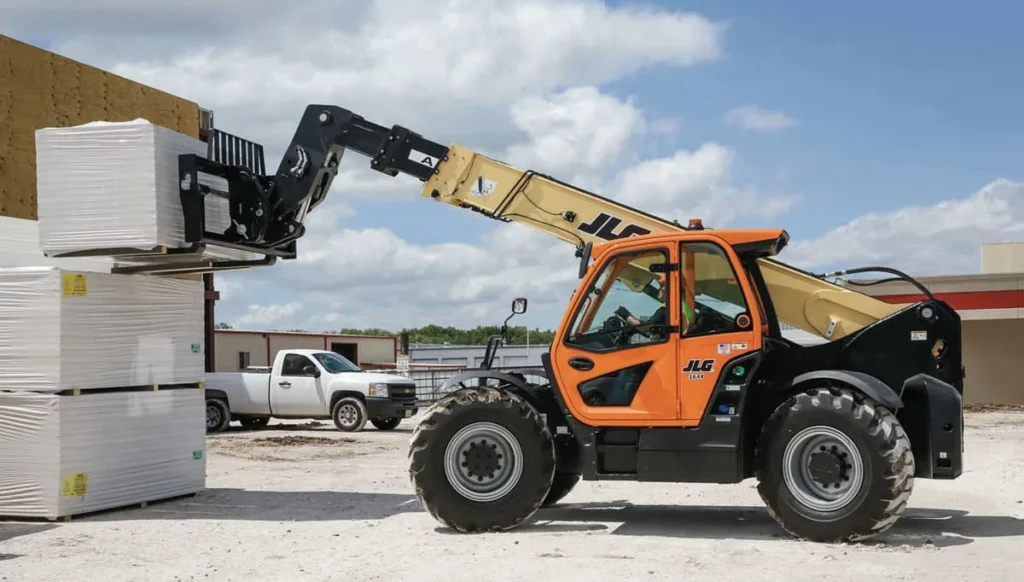

Telehandlers are versatile material-handling machines widely used across construction, agriculture, warehousing, and industrial sectors. Businesses often ask whether one telehandler can safely and efficiently handle both indoor and outdoor tasks. The answer depends on factors such as machine size, power type, emissions, and working environment. Understanding where and how telehandlers perform best helps avoid safety risks and operational inefficiencies. This article explains the suitability of telehandlers for indoor and outdoor use in detail. It also highlights key considerations to help you choose the right equipment for your site.
What Is a Telehandler?
A telehandler, also known as a telescopic handler, is a lifting machine equipped with a telescopic boom that can extend forward and upward. It combines features of forklifts, cranes, and wheel loaders into one versatile unit. Telehandlers can lift heavy loads to significant heights and place them accurately. They support a wide range of attachments, making them suitable for multiple tasks. Unlike forklifts, telehandlers can work on uneven terrain and reach over obstacles. This flexibility makes them popular across many industries.
Are Telehandlers Suitable for Indoor Use?
Space and Maneuverability Considerations
Indoor environments often have limited space, narrow aisles, and tight corners. Standard telehandlers may struggle in confined areas due to their size and turning radius. Compact telehandlers are better suited for indoor use as they offer improved maneuverability. Operators must ensure enough clearance for safe boom movement and load placement. Poor maneuverability can increase the risk of collisions with walls, racking, or workers. Proper site assessment is essential before using a telehandler indoors.
Emission and Power Options
Most traditional telehandlers run on diesel engines, which produce exhaust emissions unsuitable for enclosed spaces. Indoor use typically requires electric or low-emission telehandlers to maintain air quality. Electric telehandlers eliminate exhaust fumes and reduce carbon footprint. Hybrid models also offer a balance between power and emissions control. Adequate ventilation is mandatory if diesel telehandlers are used temporarily indoors. Choosing the right power option is critical for worker health and regulatory compliance.
Floor Load and Surface Safety
Telehandlers are heavier than forklifts, which can put significant pressure on indoor floors. Warehouse floors must be assessed for load-bearing capacity before operation. Improper weight distribution can damage flooring or cause structural issues. Non-marking or solid tyres are recommended for indoor surfaces. Smooth operation and controlled movements reduce floor stress. Floor safety is a key factor when deciding indoor telehandler suitability.
Noise Levels and Workplace Safety
Noise levels are more noticeable in enclosed indoor environments. Diesel telehandlers can generate high noise, affecting worker comfort and communication. Electric telehandlers operate much more quietly, improving workplace conditions. Reduced noise also lowers fatigue and increases overall productivity. Safety alarms and warning systems must still be clearly audible. Managing noise is an important part of indoor telehandler safety planning.
Are Telehandlers Suitable for Outdoor Use?
Performance on Rough Terrain
Telehandlers excel in outdoor environments, especially on uneven or rough terrain. They are equipped with large, rugged tyres and strong suspension systems. This allows stable operation on construction sites, farms, and open yards. Four-wheel drive improves traction on mud, gravel, and slopes. Outdoor performance is one of the telehandler’s biggest advantages. This makes them ideal for demanding site conditions.
Weather and Environmental Conditions
Outdoor telehandlers are designed to handle rain, heat, dust, and wind. Enclosed cabs protect operators from harsh weather conditions. High-quality machines have weather-resistant components for long-term durability. Proper maintenance ensures reliable performance in extreme environments. Visibility systems help operators work safely in poor weather. Telehandlers are built to remain productive outdoors year-round.
Lifting Height and Reach Advantages
The telescopic boom gives telehandlers superior reach compared to forklifts. This allows operators to place loads at height or over obstacles. Outdoor sites often require lifting materials onto scaffolding, roofs, or upper floors. Telehandlers can handle these tasks efficiently. Their reach reduces the need for repositioning the machine repeatedly. This improves productivity and site efficiency.
Common Outdoor Applications
Telehandlers are widely used on construction sites for moving pallets and materials. In agriculture, they handle feed, bales, and farm supplies. Warehousing yards use telehandlers for container loading and unloading. Landscaping and industrial projects also rely on their versatility. Outdoor tasks benefit from their strength and adaptability. These applications highlight their outdoor suitability.
Key Differences Between Indoor and Outdoor Telehandler Use
Indoor use prioritizes compact size, low emissions, and quiet operation. Outdoor use focuses on power, terrain handling, and reach capability. Attachments may vary depending on the environment. Safety requirements differ due to space constraints and exposure to weather. Floor protection matters indoors, while stability matters outdoors. Understanding these differences ensures safe and efficient operation.
Attachments That Improve Indoor and Outdoor Versatility
Telehandlers support forks, buckets, lifting hooks, and work platforms. Fork attachments are common indoors for pallet handling. Buckets and grabs are more popular for outdoor material movement. Personnel platforms allow safe access to heights in both environments. Attachment selection directly impacts safety and efficiency. Proper matching of attachments improves telehandler versatility.
Safety Guidelines for Indoor and Outdoor Operation
Operator training is mandatory for safe telehandler use. Load limits must never be exceeded, especially with extended booms. Indoors, ventilation and pedestrian management are crucial. Outdoors, ground stability and weather conditions must be checked. Regular inspections reduce the risk of accidents. Following safety guidelines protects both operators and site workers.
Factors to Consider Before Choosing a Telehandler
Assess whether your work is primarily indoor, outdoor, or mixed-use. Consider lift height, load capacity, and attachment needs. Choose the appropriate power type for emissions and efficiency. Evaluate site conditions such as space, flooring, and terrain. Budget and operating costs also matter. Proper evaluation ensures the right telehandler choice.
When a Telehandler May Not Be the Best Choice
Telehandlers are not ideal for very tight indoor spaces. Low-ceiling warehouses may restrict boom movement. Forklifts may be more efficient for repetitive indoor pallet tasks. Scissor lifts may be safer for vertical access indoors. Choosing the wrong machine can reduce efficiency and increase risks. Alternative equipment should be considered where appropriate.
Why Choose FERAQuip for Telehandler Hire?
FERAQuip provides a wide range of modern telehandlers suitable for both indoor and outdoor use. Their fleet includes compact, low-emission, and high-performance machines. All equipment is well-maintained and compliant with safety standards. FERAQuip also offers expert guidance to help select the right telehandler. Flexible hire options make projects cost-effective. With FERAQuip, you get reliability, safety, and expert support.
Conclusion
Telehandlers can be suitable for both indoor and outdoor use when the right model is selected. Indoor environments require compact, low-emission, and low-noise machines. Outdoor sites benefit from the telehandler’s power, reach, and terrain capability. Understanding site requirements is key to safe operation. With proper planning, one telehandler can serve multiple purposes. Choosing a trusted provider like FERAQuip ensures optimal performance and safety.
FAQs
1. Can telehandlers be used indoors?
Yes, compact or electric telehandlers can be used indoors with proper ventilation and floor assessment.
2. Are electric telehandlers better for indoor use?
Yes, they produce zero emissions and operate quietly, making them ideal for enclosed spaces.
3. Are telehandlers suitable for rough outdoor terrain?
Yes, telehandlers are designed for uneven and challenging outdoor conditions.
4. Can one telehandler handle both indoor and outdoor tasks?
Yes, with the right size, power type, and attachments, mixed-use operation is possible.
5. Is telehandler hire more cost-effective than buying?
Yes, hiring reduces upfront costs, maintenance responsibilities, and storage concerns.