

Organizing a trip from the “Land of the Rising Sun” to the beautiful archipelagos of the Philippines has never been simpler. Although Japanese nationals have always enjoyed visa-free entry for short stays in the Philippines, the launch of the Philippines eVisa process has completely transformed the way in which travelers organize longer stays and multiple entries.
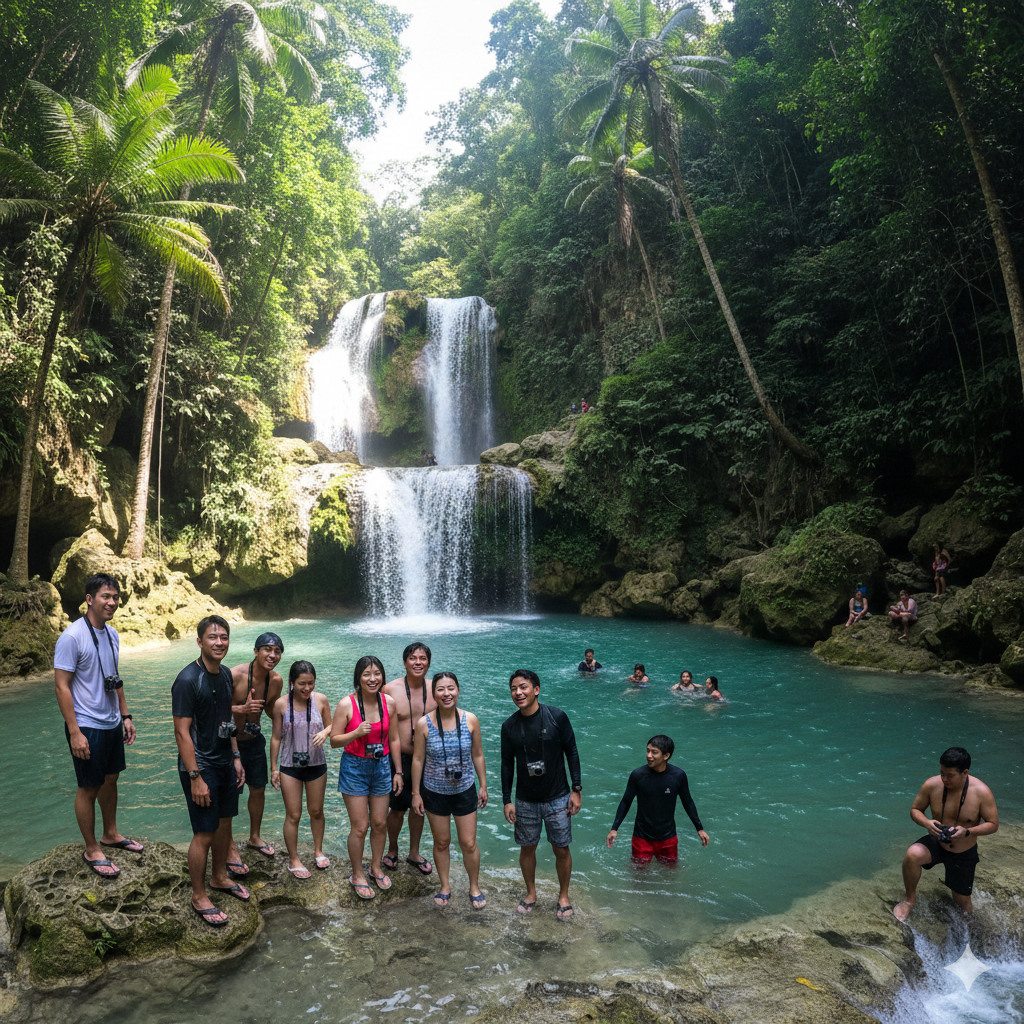
Whether you are off to Boracay for a relaxing holiday or Manila for a business conference, the facility to apply for Philippines e-visa from Japan has made the trip much easier.
Do Japanese Nationals Require a Visa to Enter the Philippines?
Yes, for stays up to 30 days. But if your stay is longer than a month or if you are planning multiple entries within a year, then you will have to apply for a Philippines Temporary Visitor’s Visa (9a) through the eVisa website. This will enable you to avoid the long queues at the embassy in Tokyo.
What Kinds of Philippines eVisas Are Available to Japanese Citizens?
Based on your visit frequency and stay period, you can apply for any of the three main electronic visa types available within the Philippines Temporary Visitor Visa system:
| Visa Type | Number of Entries | Max. Stay Per Visit | Validity Period |
| Temporary Visitors Visa | Single Entry | 30 Days | 90 Days |
| Temporary Visitors Visa | Multiple Entry | 30 Days | 180 Days |
| Temporary Visitors Visa | Multiple Entry | 30 Days | 1 Year |
Should I Apply for a Single or Multiple Entry eVisa?
The decision to apply for a single entry or multiple entry visa depends on your travel itinerary:
- Single Entry Visa: This is suitable for those who are traveling to the Philippines for a single holiday or business trip. The visa will no longer be valid once you leave the Philippines.
- Multiple Entry Visa: This is ideal for businessmen or tourists who wish to use the Philippines as a central location to visit other countries in Southeast Asia.
What Documents are Needed to Apply for a Philippines e-visa from Japan?
To make the application process easier, you will need to scan the following documents. Make sure that all Japanese documents are translated into English.
- Passport Bio Page: A scanned copy of the information page of your passport (valid for at least 6 months).
- Passport Photo: A recent digital photo with a white background, taken according to immigration regulations.
- Accommodation Proof: Hotel reservations, Airbnb booking, or an invitation letter if staying with a local.
- Travel Itinerary: Return or onward flight tickets.
- Proof of Funds: Recent bank statements or proof of income to demonstrate your financial capability during your stay.
What Payment Options are Available for Japanese Applicants?
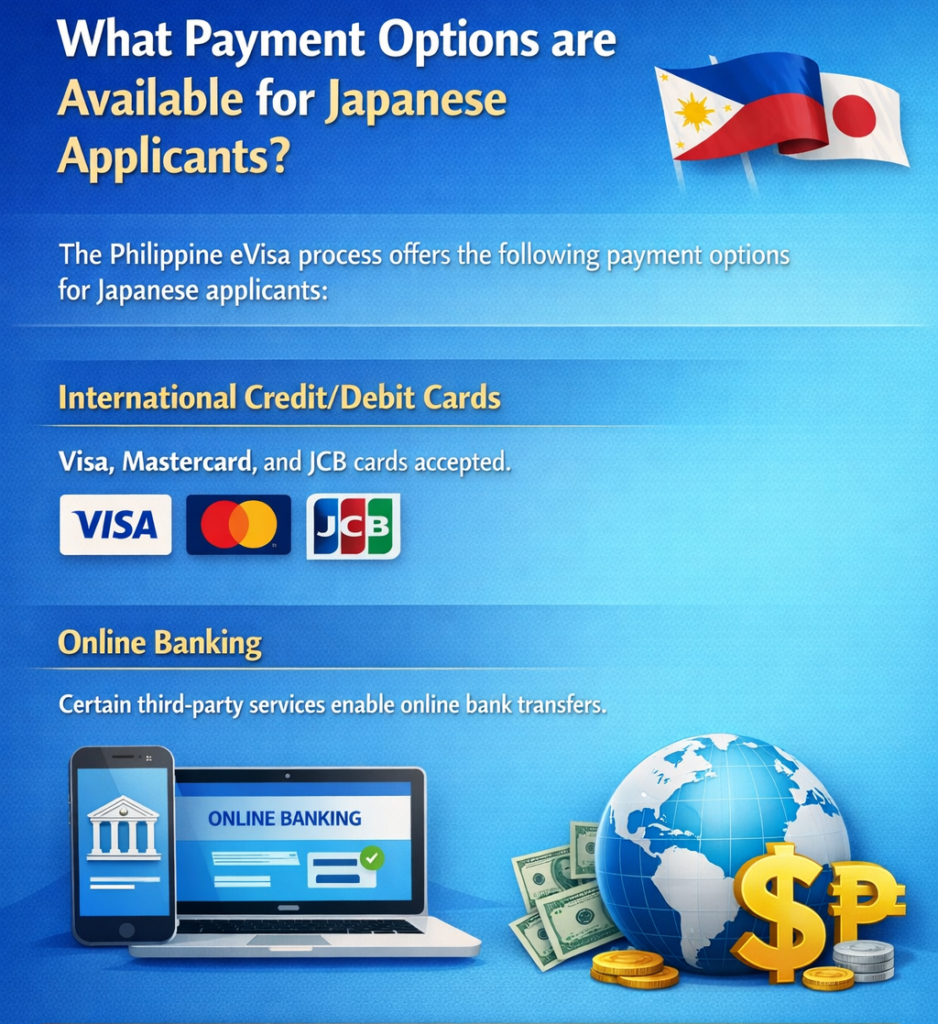
The Philippine eVisa process has incorporated contemporary payment options to support Japanese applicants. You can pay through:
- International Credit/Debit Cards: Visa, Mastercard, and JCB cards are accepted.
- Online Banking: Certain third-party services enable online bank transfers.
- Note: Charges are processed in USD or PHP equivalent. Make sure your card is enabled for international online transactions to prevent payment failure.
How Long Does the eVisa Approval Process Take?
- Standard Processing: 10 to 17 Working Days.
- Rush Processing: 7 to 15 Working Days.
- Super Rush Processing: 5 to 7 Working Days.
Is There Still a Philippines Visa on Arrival Option for Japanese?
Yes, the 30-day visa-free entry for Japanese citizens is effectively a Philippines Visa on Arrival privilege where your passport is simply stamped at the airport. However, if you plan to stay longer than 30 days, relying on an extension after arrival can be a bureaucratic hurdle. Applying for a 59-day or 90-day eVisa before you leave Japan is recommended.
What are the Key Immigration Rules I Should Know?
The Philippine Bureau of Immigration (BI) has imposed stricter guidelines for 2026:
- Passport Validity: Your passport should be valid for 6 months beyond your date of departure.
- Onward Travel: You will not be allowed to board in Japan if you do not have a confirmed onward flight out of the Philippines.
- eTravel QR Code: This is still a non-negotiable requirement for entry, aside from your visa.
Can I Legally Work in the Philippines with a Tourist eVisa?
No. A 9a Philippines Temporary Visitor’s Visa prohibits employment or receiving compensation from a Philippine source.
- Business Meetings: You can attend conferences, negotiations, and site visits.
- Employment: If you plan to work, you must apply for a 9(g) Pre-Arranged Employment Visa from your employer. Working on a tourist eVisa may cause deportation.
Do I Need a Transit Visa if I Have a Layover in Manila?
If you are a Japanese national transiting from a Philippine airport (such as NAIA) to another country:
- Less than 24 hours: If you stay within the international transit area and your baggage is checked through, you do not need a visa.
- Leaving the airport: If you need to go through immigration to switch terminals or spend the night in a hotel, you will need to apply for a 9(b) Transit Visa or avail of your visa-free entry privilege of 30 days.
Is the Philippines a Safe Destination for Japanese Tourists in 2026?
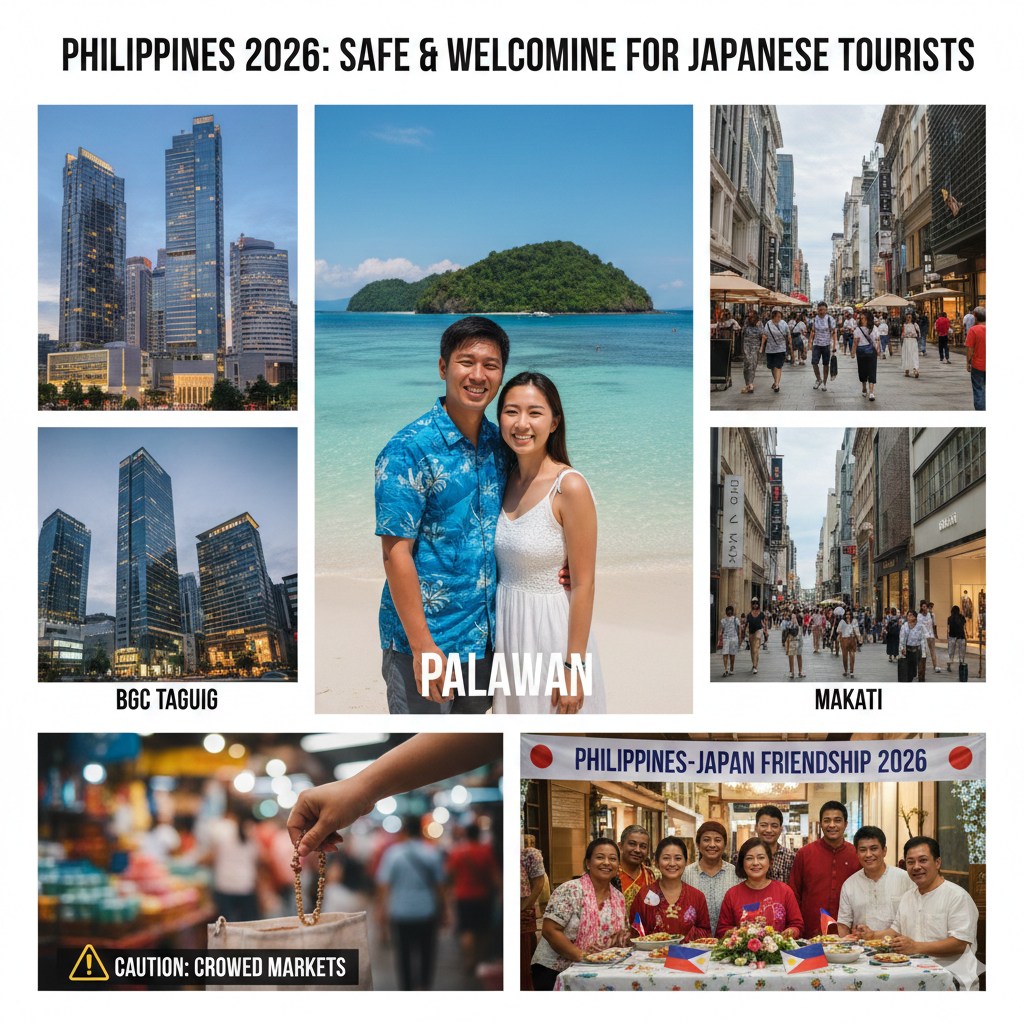
The Philippines continues to be one of the favorite holiday spots for Japanese tourists, with more than a million visitors every year.
- Tourist Areas: Areas such as BGC (Taguig), Makati, Cebu, and Palawan are rated very safe with strong security presence.
- Caution Advised: The usual safety precautions apply—avoid wearing flashy jewelry when visiting crowded public markets.
- Local Attitudes: Is a significant year for Philippines-Japan relations, and this has led to increased hospitality for Japanese tourists.
Do eVisa Agents (visa-philippines.info) Help Simplify the Process?
Of course, many applicants are wondering if it is worth paying an extra fee for using a service like visa-philippines.info when they apply for a Philippines e-visa from Japan.
- Complexity Reduction: The agents will review your photo size, translate your documents, and correct mistakes that would otherwise cause a rejection by the government.
- Customer Support: Although the official government website does not have a “live chat” feature, the agents are available 24/7 to help with technical issues.
- Peace of Mind: First-time visitors can rest assured that the service will make their application “Immigration-Ready” before submission.
Is the Philippine eTravel Registration Mandatory?
Even with the Philippines Temporary Visitor’s Visa, all travelers are required to register on the eTravel platform within 72 hours of arrival. This is a different health and arrival declaration. Registration is free, and you will receive a QR code that you need to present at the boarding gate.
What is the Refund Policy for Philippines eVisas?
The cost of visas and services is non-refundable after the process has started.
- Non-Approval: In case of non-approval of your visa by the immigration authorities, the consular fee becomes non-refundable since it includes the cost of the background check.
- Cancellation: In case of cancellation before the application reaches the “Processing” stage, you may be eligible for a partial refund.
Frequently Asked Questions (FAQs)
Q: Can I extend my stay using the eVisa?
The eVisa is non-extensible and non-convertible. If you want to stay longer, you need to apply for a regular visa sticker or an extension at a Bureau of Immigration office in the Philippines.
Q: Is the eVisa valid for work?
No, the Philippines Temporary Visitor’s Visa is only valid for tourism and short-term business. If you plan to work, you need to apply for a 9g Working Visa.
Q: What will happen if I lose my passport after acquiring the eVisa?
The eVisa is tied to your passport number. If you acquire a new passport, your existing eVisa will no longer be valid, and you need to apply for a new one.
What is the Final Checklist Before Departing for the Philippines?
Before leaving for Narita or Haneda airport, make sure you have:
- Printed copy of your eVisa for the Philippines.
- eTravel QR Code.
- Passport valid for at least 6 months.
- Return flight ticket.
Enjoy a Seamless Experience
Our global strategy has helped many travelers acquire their visas with a high success rate. With 24/7 support and experienced visa consultants, we make the immigration process easier for you so that you can enjoy your tropical vacation.