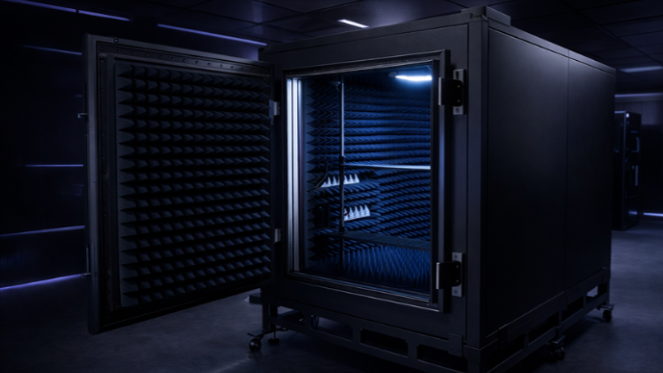

In 2026, wireless innovation is moving faster than ever. From 5G and emerging 6G research to IoT, automotive radar, and smart devices, the demand for faster and more flexible validation environments has skyrocketed. Traditional large anechoic facilities still play a vital role, but many organizations are now turning toward compact and portable solutions to keep pace with evolving testing needs.
This shift is especially noticeable in rf chamber testing, where mobility, scalability, and cost efficiency have become just as important as raw performance. Engineers, labs, and manufacturers are looking for ways to maintain measurement accuracy while reducing infrastructure overhead. Compact and portable RF chambers are stepping in to fill that gap.
Their growing popularity is not a passing trend—it reflects a broader transformation in how wireless products are developed, validated, and deployed in real-world conditions.
Key Takeaways
- Compact RF chambers offer lab-grade performance with significantly lower space and infrastructure requirements.
- Portable designs enable faster deployment for field testing, pilot projects, and temporary setups.
- Modern solutions support advanced wireless technologies including 5G, IoT, and automotive radar.
- Choosing the right chamber requires careful evaluation of shielding, frequency range, and scalability.
- Organizations can accelerate product validation cycles by integrating modular RF chamber strategies.
The Changing Landscape of Wireless Testing
Wireless ecosystems are becoming more complex every year. Devices must operate across multiple bands, environments, and use cases. As a result, testing requirements have expanded beyond what many legacy facilities were designed to handle.
Historically, companies invested heavily in large, fixed chambers. While highly accurate, these installations often require:
- Significant floor space
- Long construction timelines
- High capital investment
- Limited flexibility once installed
Today’s development cycles are shorter and more iterative. Teams need environments that can adapt quickly without compromising measurement integrity. This is one of the key reasons compact and portable RF chambers are gaining traction.
Why Flexibility Is Driving Adoption
One of the biggest drivers behind the rise of compact solutions is operational flexibility.
Modern product teams rarely work from a single static location. Manufacturing lines, R&D labs, and field validation sites may all require access to controlled RF environments. Portable chambers allow organizations to bring rf chamber testing closer to where development and production actually happen.
This flexibility enables:
- Faster troubleshooting during production
- On-site validation for new deployments
- Temporary test environments for pilot programs
- Easier scaling across multiple facilities
Instead of moving devices to the chamber, teams can increasingly move the chamber to the devices.
Space Constraints Are a Growing Reality
Real estate costs and lab space limitations are pushing many organizations to rethink traditional infrastructure models.
Large anechoic chambers can occupy substantial floor area, which is not always practical—especially for startups, university labs, or urban R&D centers. Compact RF chambers are specifically designed to deliver high performance within a much smaller footprint.
This space efficiency makes advanced rf chamber testing accessible to a wider range of users, including:
- Emerging wireless startups
- Academic research institutions
- Contract test laboratories
- Automotive electronics teams
- IoT device manufacturers
The result is broader adoption across industries that previously found full-scale chambers cost-prohibitive.
Faster Deployment for Modern Development Cycles
Speed-to-market is now a critical competitive factor. Traditional chamber construction can take months, sometimes longer when custom builds are required.
Portable RF chambers dramatically reduce deployment timelines. Many solutions are delivered pre-configured and can be operational within days rather than months.
This rapid readiness is particularly valuable for:
- 5G and private network rollouts
- Prototype validation phases
- Compliance pre-testing
- Short-term research projects
- Field trials in remote locations
Organizations that streamline their rf chamber testing workflow often see measurable improvements in development velocity.
Cost Efficiency Without Compromising Accuracy
Budget pressures are another major reason behind the shift toward compact solutions. Building and maintaining large chambers involves not only upfront capital but also ongoing operational expenses.
Portable and modular chambers help reduce:
- Construction costs
- Facility modification requirements
- Energy consumption
- Maintenance overhead
- Long-term infrastructure risk
Importantly, modern engineering has closed much of the performance gap. High-quality compact chambers now deliver excellent shielding effectiveness, low reflectivity, and reliable repeatability suitable for many advanced applications.
Key Features to Look for in Compact RF Chambers
Not all portable solutions are created equal. Organizations evaluating options should focus on several critical technical factors.
Shielding Performance
Effective RF isolation remains the foundation of accurate measurements. Look for verified shielding effectiveness across the required frequency bands.
Frequency Coverage
Ensure the chamber supports both current and future testing needs, especially for mmWave and emerging wireless standards.
Absorber Quality
High-performance absorbers minimize reflections and improve measurement reliability. Material quality directly impacts test accuracy.
Modular Design
Scalable architectures allow organizations to expand capabilities without replacing the entire system.
Automation Compatibility
Modern labs increasingly rely on automated workflows. Chambers that integrate easily with positioning systems and test software provide long-term value.
Best Practices for Implementation
Organizations can maximize the benefits of compact chambers by following a structured deployment strategy.
First, clearly define your primary test use cases. Whether the focus is OTA validation, EMC pre-compliance, or antenna characterization, requirements will vary.
Second, plan for future growth. Wireless standards evolve quickly, so selecting a slightly more capable chamber often pays off over time.
Third, integrate the chamber into automated workflows early. Automation improves repeatability and reduces operator variability.
Fourth, validate performance after installation. Even high-quality systems benefit from baseline verification to ensure measurement confidence.
Finally, train technical teams thoroughly. Proper usage and maintenance are essential to sustaining long-term accuracy.
Common Challenges to Consider
Despite their advantages, compact chambers are not a universal replacement for large facilities. Understanding limitations helps organizations make informed decisions.
One common challenge is internal volume. Very large devices or full-vehicle testing may still require full-size chambers.
Another consideration is ultra-high precision research. Some advanced certification scenarios may demand the extremely low reflectivity of premium full-scale chambers.
Thermal management can also become important in smaller enclosures, particularly during high-power testing.
The key is aligning chamber capabilities with actual test requirements rather than assuming one size fits all.
The Road Ahead for Portable RF Solutions
Looking forward, the momentum behind compact and portable chambers is expected to accelerate. Several trends are fueling this growth:
- Expansion of private 5G networks
- Growth in connected vehicles
- Proliferation of IoT devices
- Rise of edge computing hardware
- Increased need for field validation
As wireless ecosystems diversify, testing infrastructure must become more distributed and adaptable. Portable chamber technology is well positioned to support this transition.
Frequently Asked Questions
What is the main advantage of compact RF chambers?
The primary benefit is flexibility. Compact chambers provide controlled RF environments without requiring large permanent facilities, enabling faster deployment and lower infrastructure costs.
Are portable RF chambers accurate enough for professional testing?
Yes—modern designs offer excellent shielding and absorber performance. For many applications, portable solutions provide highly reliable rf chamber testing results when properly specified and installed.
Who typically uses compact RF chambers?
They are widely used by wireless device manufacturers, automotive electronics teams, research institutions, IoT developers, and contract test labs seeking scalable testing infrastructure.
Can portable chambers support 5G and mmWave testing?
Many advanced models are designed for high-frequency operation, including sub-6 GHz and mmWave bands. Always verify frequency specifications during selection.
How do I choose the right size chamber?
Start by evaluating the largest device you plan to test, required measurement distances, and future expansion needs. Leaving some headroom often prevents costly upgrades later.
Do compact chambers replace traditional anechoic chambers?
Not entirely. Large chambers remain essential for certain applications, but compact solutions are increasingly handling a significant portion of day-to-day validation work.
Ready to Modernize Your RF Testing Strategy?
Compact and portable RF chambers are redefining how organizations approach wireless validation. By combining mobility, efficiency, and reliable performance, these solutions enable faster innovation without the heavy burden of traditional infrastructure.
Teams that adopt a flexible testing strategy today will be better prepared for the increasingly complex wireless landscape ahead. For organizations seeking advanced, scalable solutions backed by deep engineering expertise, Orbis Systems continues to deliver innovative approaches that support the next generation of wireless testing demands.