
Providing a high end experience at an outdoor venue requires a thorough understanding of the technical infrastructure that supports luxury amenities. While the rolling hills and vineyards of Northern California offer a stunning backdrop, they often lack the immediate utility hookups found in the permanent buildings. To ensure that your guests enjoy a seamless experience, it is essential to plan for the specific water, power, and spatial requirements of a mobile facility.
Early coordination is the key to a successful setup. By identifying your utility sources and measuring your available space well in advance, you can avoid last minute complications and ensure that the VIP restroom rentals in Napa, CA are fully operational the moment your first guest arrives. This technical preparation is what allows for the modern comforts of flushing toilets, bright lighting, and climate control in even the most remote locations.
Electrical Requirements for Modern Luxury Units
The sophisticated features of a VIP trailer, from the air conditioning to the hands free faucets, all rely on a steady and reliable source of electricity. Most standard luxury units require at least one dedicated 20 amp circuit with a 110 volt outlet. Larger trailers with multiple stalls or high capacity cooling systems may require two or three separate circuits to ensure that the breakers do not trip during peak usage.
Powering Climate Control and Lighting
The HVAC system is typically the largest power consumer, especially during a warm afternoon in the valley. It is important that these circuits are not shared with other high draw equipment like catering ovens or large speaker systems. If your venue does not have permanent power nearby, a quiet, event grade generator can provide a reliable alternative. These generators are designed to run for extended periods and can be placed discreetly away from the festivities to maintain the quiet ambiance of the vineyard.
Freshwater Access and Pressure Standards
A consistent supply of water is necessary for the flushing toilets and the handwashing stations. The most efficient way to provide this is through a standard three quarter inch garden hose connected to a clean, potable water source. Ideally, the water pressure should be between 30 and 60 PSI to ensure that the sinks and toilets function correctly and provide a high quality experience for your guests.
Managing Self Contained Water Systems
For events held in more secluded areas where a hose connection is not feasible, many trailers feature onboard freshwater tanks. These tanks can typically hold several hundred gallons of water, which is often sufficient for a single day event. If your gathering spans multiple days or has a very large guest list, you may need to arrange for a water truck to refill the tanks periodically. Confirming these details with your provider allows you to choose the best configuration for your specific site and crowd size.
Calculating Spatial Needs and Site Access
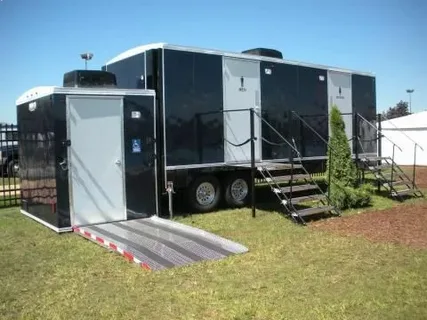
The physical footprint of a restroom trailer is significant and requires careful consideration during site planning. A typical mid sized unit can be 15 to 25 feet long and about 10 feet wide when the entry steps are fully extended. You must also account for the height clearance, which is usually around 12 feet, ensuring that there are no low hanging tree branches or power lines that could obstruct the delivery.
This sense of seclusion allows attendees to use the facilities with total peace of mind. The separation of men and women’s sections with private entries further enhances this feeling of exclusivity. When guests feel that their personal space is respected, their overall satisfaction with the event increases significantly.
Ensuring a Level Foundation and Turning Radius
Level ground is non negotiable for the proper operation of the plumbing and drainage systems. A flat, stable surface such as a paved driveway or a compacted gravel pad is ideal. If the unit must be placed on grass, it is important to ensure the ground is dry and firm to prevent the trailer from sinking or shifting. Additionally, the delivery truck needs ample room to maneuver, usually requiring a turning radius of at least 50 to 60 feet. Providing a clear, unobstructed path to the final placement area ensures a quick and safe setup process.
Strategic Placement for Discretion and Convenience
While technical needs are paramount, the placement of the trailer also affects the overall flow and aesthetic of your event. The units should be located in a spot that is easy for guests to find but far enough away from the main dining or dance floor to maintain privacy. Placing the trailer within 100 feet of your water and power sources helps minimize the length of unsightly hoses and extension cords running across the property.
Integrating Facilities into the Event Layout
Clever use of landscaping or decorative screens can help the trailer blend into the surroundings. Many hosts choose to place the facilities near a natural hedge or behind a cluster of trees to provide a sense of seclusion. Ensuring that the path to the restrooms is well lit and free of obstacles is also vital for guest safety, especially as the evening progresses. By balancing the technical requirements with a focus on guest convenience, you can create a site plan that supports a high level of hospitality without sacrificing the visual appeal of your venue.