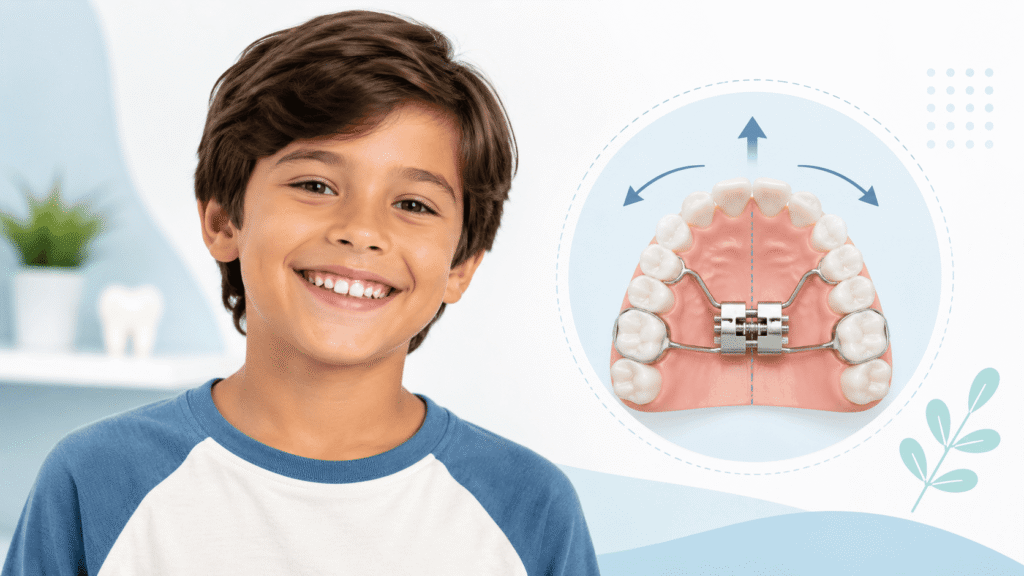

Parents often expect orthodontic treatment to begin during the teenage years, when braces become more common. In many cases, that is true. But some orthodontic problems are easier to identify and manage earlier, while a child’s jaw is still growing. One of the most common early orthodontic tools used for jaw development is a palate expander.
A palate expander is not recommended for every child. It is used when the upper jaw is too narrow, when the bite does not fit correctly, or when there is not enough room for permanent teeth to come in properly. For parents, the idea of an appliance that widens the upper jaw can sound intimidating at first. In reality, palate expanders are widely used in orthodontics and are often part of a carefully planned early treatment approach.
Understanding what a palate expander does, why timing matters, and what signs parents should watch for can make the process feel much clearer.
What Is a Palate Expander?
A palate expander is an orthodontic appliance designed to gradually widen the upper jaw, also called the maxilla. It usually sits along the roof of the mouth and is attached to the upper teeth. The appliance applies gentle pressure over time, guiding the two halves of the upper jaw apart while a child is still growing.
This is possible because a child’s upper jaw has not fully fused yet. During childhood, the bones of the palate are still flexible enough to respond to controlled orthodontic pressure. As the expander creates more width, new bone gradually forms in the expanded area.
The goal is not simply to create a wider smile. A palate expander can improve the way the upper and lower teeth fit together, create space for crowded teeth, and support healthier jaw growth. In some children, it can also reduce the need for more complicated orthodontic treatment later.
Orthodontists may use different types of expanders depending on the child’s age, jaw structure, and treatment needs. Some are fixed in place, while others may be removable. The right option depends on a detailed evaluation.
Why Would a Child Need a Palate Expander?
Children may need a palate expander when the upper jaw is too narrow for the lower jaw or for the developing permanent teeth. This can affect chewing, tooth eruption, bite balance, and long-term alignment.
One of the most common reasons is a crossbite. A crossbite happens when some of the upper teeth sit inside the lower teeth when the child bites down. This may affect one side of the mouth or both sides. If left untreated, the child may shift the lower jaw to one side to bite comfortably. Over time, that shift can contribute to uneven jaw growth or facial asymmetry.
Another common reason is severe crowding. When the upper jaw is narrow, there may not be enough space for permanent teeth to erupt in the right position. Expanding the palate can create additional room and may reduce the need for tooth extraction in some cases.
A palate expander may also be recommended when teeth are impacted or blocked from erupting correctly. By widening the upper arch, the orthodontist may create a better path for developing teeth.
For parents looking for more detailed treatment information, Mellion Orthodontics provides a helpful overview of palate expanders for kids and adults, including why an orthodontist may recommend this appliance when crossbite or severe crowding is present.
When Are Palate Expanders Usually Recommended?
Palate expanders are most often recommended during childhood, usually before the upper jaw bones fully mature. The exact age varies from child to child, but many evaluations happen around age seven. At this stage, children usually have a mix of baby teeth and permanent teeth, giving the orthodontist a clearer view of jaw growth, bite development, and tooth eruption patterns.
Early evaluation does not mean every child needs early treatment. Many children are simply monitored until the right time for braces or aligners. However, when a narrow upper jaw, crossbite, or major crowding is present, earlier treatment may be more practical than waiting until the teenage years.
This is why orthodontic timing matters. Certain jaw growth problems are easier to guide while the bones are still developing. Once growth slows or the palate becomes more mature, expansion may become more complex and may require different treatment options.
Signs Parents Should Watch For
Parents do not need to diagnose orthodontic issues at home, but they can watch for signs that an orthodontic evaluation may be useful.
A child may need an orthodontic assessment if the upper teeth appear to bite inside the lower teeth, if the lower jaw shifts to one side when biting, or if the child has obvious crowding as permanent teeth come in. Other signs may include difficulty chewing, uneven tooth wear, mouth breathing, speech changes, or teeth that appear blocked from erupting.
Some children do not complain because they adapt to their bite. A crossbite or narrow jaw may not cause pain at first, but it can still affect development. That is why a professional evaluation is important. Orthodontists are trained to spot growth patterns that may not be obvious to parents.
What Happens During the Evaluation?
During an orthodontic evaluation, the orthodontist examines the child’s teeth, bite, jaw width, facial growth, and eruption pattern. Digital X-rays or scans may be used to see how permanent teeth are developing below the gumline.
The orthodontist will look for problems such as posterior crossbite, severe crowding, blocked teeth, jaw shifts, and upper jaw narrowness. If a palate expander is recommended, the orthodontist will explain why it is needed, how long it may be worn, and what parents should expect during treatment.
A good consultation should not feel rushed. Parents should understand the purpose of the appliance, the expected outcome, and how expansion fits into the child’s overall orthodontic plan. In many cases, expansion is only one phase of treatment. Braces or aligners may still be needed later to fine-tune tooth alignment.
Families in Ohio who want a child’s bite and jaw development reviewed can also explore Mellion Orthodontics’ information on orthodontics and braces for kids, which explains why early orthodontic visits can be valuable even when full treatment is not needed right away.
How Does a Palate Expander Work?
A palate expander works gradually. Once the appliance is fitted, parents may be instructed to turn a small key in the expander according to the orthodontist’s directions. This activates the appliance in small increments.
Each turn creates gentle pressure across the upper jaw. Over time, the upper arch becomes wider. Some children may feel pressure around the nose, cheeks, or teeth after an adjustment, but this usually settles quickly.
A small gap may appear between the front teeth during expansion. This can surprise parents, but it is often a normal sign that the appliance is working. The gap may close naturally or later during braces treatment.
After the active expansion phase, the appliance often stays in place for a retention period. This allows new bone to stabilize in the expanded area. Removing the appliance too early could allow the jaw to narrow again, so follow-up appointments are important.
Is a Palate Expander Painful?
Most children describe the feeling as pressure rather than pain. There may be some soreness when the appliance is first placed or after activation. Speech may sound slightly different for a few days, and eating may feel unusual at first. These changes usually improve as the child adapts.
Soft foods can make the first few days easier. Parents may also need to remind children to chew carefully and clean around the appliance. Sticky, hard, or chewy foods may damage the expander and should usually be avoided.
Good oral hygiene is especially important. Food can collect around the appliance, so children need guidance with brushing, rinsing, and keeping the roof of the mouth clean. Younger children may need supervision until they become comfortable with the routine.
How Long Does a Child Wear a Palate Expander?
Treatment time depends on the child’s age, growth pattern, jaw width, and reason for expansion. The active expansion stage may be relatively short, but the appliance may remain in place longer to hold the new width while the bone stabilizes.
Some children may wear an expander for several months. Others may need a longer plan depending on the complexity of the bite. The orthodontist will give a more accurate timeline after reviewing the child’s case.
It is important for parents to remember that a palate expander is not a one-size-fits-all appliance. Two children of the same age may have different treatment timelines because their jaw growth, bite patterns, and tooth development are different.
What Are the Benefits of Early Palate Expansion?
The main benefit of early palate expansion is that it works with natural growth. When used at the right time, an expander can correct upper jaw narrowness before it leads to more serious bite problems.
It may improve crossbite, create room for permanent teeth, reduce crowding, support better bite balance, and lower the risk of uneven jaw growth. In some cases, early expansion may simplify later orthodontic treatment.
That does not mean it replaces braces or aligners in every case. Many children who receive expanders still need braces later. However, the later stage may become more straightforward because the jaw width has already been corrected.
The long-term value is functional as well as cosmetic. A balanced bite can make chewing more comfortable, reduce uneven tooth wear, and support healthier oral development.
What Parents Should Ask Before Treatment
Before starting palate expansion, parents should ask why the appliance is being recommended, what problem it is expected to correct, how long the child may wear it, and whether braces may still be needed later.
It is also useful to ask how the expander will be cleaned, what foods should be avoided, how often appointments are needed, and what symptoms are normal during adjustment.
A clear plan builds confidence. Parents should leave the consultation understanding the purpose of treatment and how success will be measured.
Final Thoughts
Palate expanders play an important role in early orthodontic care when a child’s upper jaw is too narrow, when a crossbite is present, or when severe crowding affects the eruption of permanent teeth. They are not recommended for every child, but when the timing and diagnosis are right, they can guide jaw development in a way that may prevent more complicated problems later.
The best step for parents is not to wait for every permanent tooth to come in before asking questions. An early orthodontic evaluation can identify whether the child needs treatment now, later, or not at all. For children who do need a palate expander, early care can create a stronger foundation for a healthier bite, better alignment, and more confident growth.
Read more here!