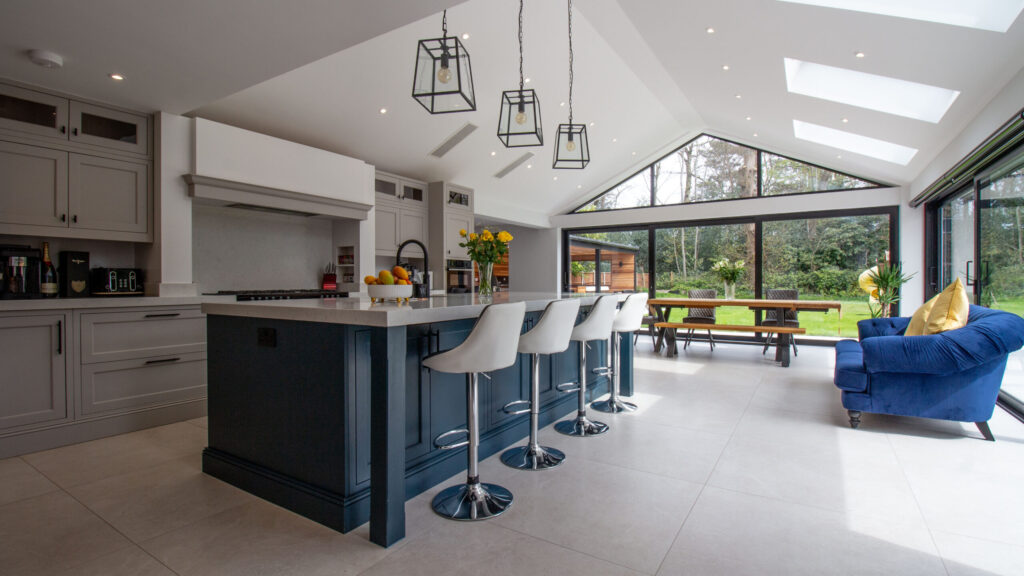

When homeowners and property developers across the UK set out to undertake a construction or renovation project in the capital, finding a contractor who combines creative vision with technical excellence is rarely a straightforward task. London Design and Build has established itself as one of London’s most trusted names in the industry, offering a fully integrated service that takes projects from initial concept through to polished completion. Whether you are planning a rear extension, a full-scale refurbishment, or a new residential development, understanding what a specialist firm brings to the table and how to plan your project strategically can make the difference between a stressful experience and a seamless one.
Start With a Solid Brief, Then Refine It
The most common reason design and build projects run over budget or over schedule is a poorly defined brief. Before engaging any contractor, take time to document exactly what you want to achieve. Are you seeking additional living space, improved energy efficiency, higher resale value, or a fundamental change in how your property functions day to day? Each objective demands a different design and construction approach.
An experienced design-and-build firm will ask probing questions at this early stage, not to complicate matters, but because ambiguities identified in week one cost a fraction of what they cost to resolve in week eight. Skilled firms use this discovery phase to surface planning constraints, structural considerations, and material lead times that will shape the entire project from start to finish.
The Case for an Integrated Design-and-Build Approach
Traditionally, clients hired an architect to produce drawings and then separately tendered those drawings to builders. This split model introduces friction at every stage. Builders who had no input into the design may find certain elements difficult or expensive to execute, and the client often ends up mediating disputes between two parties pulling in different directions.
The integrated design-and-build model eliminates this gap entirely. Designers and builders work from the same set of assumptions, share project management systems, and carry joint accountability for outcomes. For complex London projects specifically, where regulatory demands and site constraints add layers of difficulty, this coherence shows clearly in the finished result. Structural decisions inform design choices from the outset. Materials are specified with both aesthetics and buildability in mind. Programme risks are identified and managed collaboratively rather than passed back and forth between separate parties.
Key Project Types and What to Consider
Rear Extensions and Open-Plan Transformations
Opening up the ground floor and extending to the rear remains one of the most popular improvements among London homeowners. The critical design decisions centre on structural support, typically a steel RSJ beam, glazing strategy for the rear elevation, and underfloor heating beneath new flooring. Bi-fold or sliding doors can blur the boundary between interior and garden beautifully, but their weight, track design, and weather-sealing requirements mean specification must be handled with precision.
Loft Conversions
A well-executed loft conversion can add a bedroom and ensuite bathroom while increasing a property’s value considerably. Permitted development rights cover many standard loft conversions, but party wall agreements, fire escape routes, and staircase design all require careful expert attention. The best results are achieved when the loft is treated as a genuine, fully considered room from the outset, not a space squeezed beneath the rafters as an afterthought.
Full Refurbishments
Whole-property refurbishments demand exceptional coordination across trades, timelines, and budgets. From rewiring and replumbing to plastering, decorating, and bespoke joinery, every element must be sequenced correctly to avoid costly rework. An integrated team that designs and builds simultaneously ensures that decisions made on the drawing board actually translate to quality on site.
Basement Conversions
London’s Victorian and Edwardian terraces frequently sit on foundations that can accommodate a basement conversion, creating usable space without altering the roofline or rear garden. Waterproofing strategy, natural light via light wells, and adequate ventilation are non-negotiable requirements. When executed well, a basement conversion can become the most striking and distinctive space in the entire property.
Managing the Process Effectively
Even with a capable contractor in place, clients who remain engaged throughout tend to achieve significantly better outcomes. Attend site meetings regularly. Review progress against the agreed programme. Raise concerns promptly and in writing, rather than allowing them to accumulate into larger disputes.
Equally, resist the temptation to make significant design changes mid-build. Variations are the single most common driver of cost overruns and programme delays. If a change is genuinely necessary, request a formal variation order that documents the cost and time impact clearly before any new work begins.
Choosing the Right Partner for Your London Project
Credentials matter enormously, but so does compatibility. Ask prospective contractors for references from projects of similar scope and complexity. Where possible, view completed work in person rather than relying solely on portfolio images. Pay close attention to how a firm communicates during the tender process, as responsiveness and clarity at that stage are reliable predictors of how they will behave when challenges arise on site.
London Design and Build has built its reputation on precisely this kind of consistent, transparent, and expert delivery. For clients who want their project to feel less like a gamble and more like a carefully guided process, partnering with a firm that integrates design thinking with construction expertise from the very first conversation is the most reliable route to a result that is as technically accomplished as it is visually outstanding.
