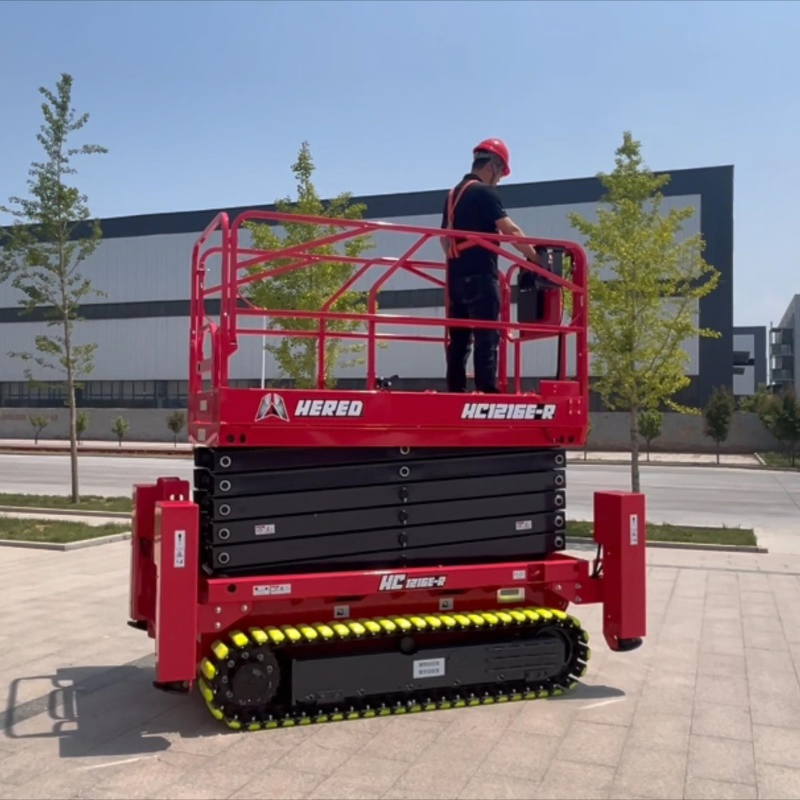

Crawler scissor lifts play a critical role in modern construction, maintenance, and industrial access projects where stability and elevation are essential. With growing pressure to improve efficiency, reduce operating costs, and meet environmental standards, equipment buyers are increasingly comparing electric and diesel-powered models. Each option brings unique strengths depending on jobsite conditions, runtime needs, and budget priorities. Understanding efficiency goes beyond fuel usage and includes maintenance, productivity, and environmental impact. This article explores whether electric crawler scissor lifts truly outperform diesel models in real-world efficiency. By comparing performance, costs, and applications, decision-makers can make smarter equipment investments.
What Are Crawler Scissor Lifts?
Definition and Purpose
Crawler scissor lifts are mobile elevated work platforms designed with track-based mobility instead of traditional wheels. These tracks allow the lift to move smoothly across uneven, soft, or rough terrain while maintaining stability. They are commonly used in construction sites, industrial facilities, warehouses, and infrastructure projects. Their scissor mechanism enables vertical lifting, making them ideal for tasks requiring straight-up access. Crawler lifts are especially useful where ground conditions are challenging. Their design prioritizes safety, balance, and controlled movement.
Key Components
The core components of a crawler scissor lift include the lifting platform, scissor arms, crawler tracks, control system, and power source. The platform provides a secure workspace for operators and tools. Scissor arms are responsible for vertical elevation and load distribution. Crawler tracks enhance traction and reduce ground pressure. The power system—electric motor or diesel engine—determines performance characteristics. Together, these components ensure reliable lifting and movement in demanding environments.
Overview: Electric vs Diesel Models
Electric Crawler Scissor Lifts
Electric crawler scissor lifts operate using battery-powered electric motors, offering smooth and precise lifting performance. These models are known for high energy efficiency and minimal power loss. Modern electric lifts often use lithium-ion or advanced lead-acid batteries for longer runtimes. They are particularly suitable for indoor and urban projects due to zero on-site emissions. Lower noise levels improve operator comfort and site safety. Electric models are increasingly popular as sustainability standards rise.
Diesel Crawler Scissor Lifts
Diesel crawler scissor lifts are powered by combustion engines designed for heavy-duty outdoor operations. They deliver strong torque and consistent power output, making them suitable for demanding tasks. Diesel models excel in remote areas where electricity access is limited. They can operate for long periods without refueling interruptions. These lifts are often preferred for large-scale construction and infrastructure projects. However, they produce emissions and require more intensive maintenance.
Efficiency Comparison
Energy Efficiency
Electric crawler scissor lifts convert a higher percentage of energy into usable work compared to diesel engines. Electric motors experience less energy loss through heat and friction. This results in smoother lifting and reduced power waste. Diesel engines, while powerful, lose energy through combustion inefficiencies. Electric systems also support regenerative technologies in some models. Overall, electric lifts are more energy-efficient in controlled environments.
Operational Costs
Electric models generally cost less to operate due to lower electricity prices compared to diesel fuel. They also require fewer consumables such as oil, filters, and engine fluids. Diesel lifts incur ongoing fuel expenses and higher servicing costs. Over time, electric lifts can significantly reduce operating budgets. Maintenance intervals are also longer for electric units. This makes electric crawler scissor lifts more cost-efficient in the long run.
Productivity and Performance
Diesel models often provide uninterrupted runtime, which is ideal for long shifts. Electric lifts depend on battery capacity and charging schedules, which may affect productivity. However, electric models offer smoother acceleration and precise control. Torque delivery in electric motors is instant, improving lifting responsiveness. Advances in battery technology have reduced downtime concerns. Productivity now depends largely on jobsite planning rather than power type alone.
Environmental Impact
Emissions
Electric crawler scissor lifts produce zero emissions at the point of use, making them ideal for indoor and environmentally sensitive sites. Diesel models emit carbon dioxide and other pollutants during operation. These emissions can impact worker health and regulatory compliance. Many cities now enforce strict emission limits. Electric lifts help companies meet sustainability goals. This makes them a future-proof choice.
Noise Pollution
Electric models operate much more quietly than diesel-powered lifts. Reduced noise improves communication on busy jobsites. This is especially important in residential and indoor environments. Diesel engines generate higher sound levels that may require additional safety measures. Quieter operation also reduces operator fatigue. Electric lifts provide a more comfortable working experience.
Sustainability and Regulations
Governments worldwide are tightening emissions and noise regulations for construction equipment. Electric crawler scissor lifts align well with these evolving standards. Many green building projects now require low-emission machinery. Diesel models may face restrictions in certain zones. Investing in electric equipment supports long-term compliance. Sustainability is becoming a key efficiency metric.
Cost-Benefit Analysis
Purchase Price Comparison
Electric crawler scissor lifts often have a higher initial purchase cost due to battery technology. Diesel models are usually cheaper upfront. However, purchase price alone does not reflect true efficiency. Buyers must consider long-term expenses. Electric lifts often recover costs through savings over time. Initial investment balances out with operational benefits.
Lifecycle Costs
Over the equipment lifecycle, electric lifts typically incur lower total costs. Reduced fuel, maintenance, and downtime contribute to savings. Diesel lifts require regular engine servicing and part replacements. Electric systems have fewer moving components. This leads to longer service life. Lifecycle efficiency strongly favors electric models.
Resale and Depreciation
Electric crawler scissor lifts are gaining higher resale value as demand increases. Sustainability-focused buyers prefer electric equipment. Diesel models may depreciate faster due to regulatory pressures. Market trends suggest growing interest in electric fleets. Resale potential improves total return on investment. This adds to overall efficiency.
Use Case Scenarios
Best Situations for Electric Models
Electric crawler scissor lifts are best suited for indoor facilities, warehouses, and urban construction sites. They perform well where emissions and noise are restricted. Projects with predictable schedules benefit from planned charging. They are ideal for maintenance, installation, and finishing tasks. Smooth operation enhances safety. Electric models shine in controlled environments.
Best Situations for Diesel Models
Diesel crawler scissor lifts remain valuable for outdoor and remote projects. Sites without reliable power access benefit from diesel operation. They handle heavy loads and long shifts efficiently. Rough terrain and large-scale construction favor diesel strength. These models excel where endurance is critical. Diesel still has a place in demanding conditions.
Future Trends and Innovations
Battery technology is rapidly advancing, improving electric lift runtime and charging speed. Lithium-ion and solid-state batteries are becoming more common. Hybrid and alternative fuel models are emerging. Telematics and smart monitoring enhance efficiency tracking. Automation is improving performance optimization. The future clearly leans toward electrification.
Why Choose FERAQuip?
FERAQuip offers a carefully selected range of high-performance crawler scissor lifts designed for efficiency and reliability. Their electric and diesel models meet modern safety and environmental standards. FERAQuip focuses on durable engineering and operator-friendly controls. Expert guidance helps customers choose the right equipment for their needs. After-sales support ensures long-term performance. With FERAQuip, efficiency meets confidence.
Conclusion
Electric crawler scissor lifts generally provide higher efficiency in terms of energy use, operating costs, and environmental impact. Diesel models still offer advantages in remote and heavy-duty applications. Efficiency depends on jobsite conditions, project duration, and compliance requirements. As battery technology advances, electric models continue to close performance gaps. For many modern projects, electric lifts are the smarter choice. Careful evaluation ensures maximum return on investment.
FAQs
Are electric crawler scissor lifts suitable for outdoor use?
Yes, many electric models are designed for outdoor applications with proper terrain conditions.
Do diesel crawler scissor lifts last longer than electric ones?
Both have similar lifespans, but electric models often require less maintenance.
How long does an electric scissor lift battery last?
Battery life typically supports a full working shift, depending on usage and capacity.
Are electric lifts more expensive to maintain?
No, electric lifts usually have lower maintenance costs than diesel models.
Which model is better for urban projects?
Electric crawler scissor lifts are better due to low noise and zero emissions.