
Cats are known for their graceful movements, sharp vision, and independent nature. But even the most resilient feline companions can face health issues—especially when it comes to their eyes. As a pet parent, understanding when your cat might need treatment is crucial to preventing discomfort and serious complications.
One of the most common concerns among cat owners is recognizing when eye drops for cats are necessary. Eye issues can start subtly but quickly escalate if left untreated. In this guide, we’ll walk you through the symptoms, causes, and care tips every cat owner should know to keep their feline’s eyes healthy and bright.
Why Eye Health Matters in Cats
Cats rely heavily on their vision for hunting, playing, and navigating their environment. Even indoor cats need clear vision to feel secure and confident. Eye problems can lead to irritation, infections, and even long-term damage if not addressed early.
While some issues are mild and temporary, others may require immediate veterinary attention. Knowing the warning signs can make all the difference.
Common Signs Your Cat May Need Eye Drops
Not all eye issues are obvious at first glance. Here are the most important symptoms that may indicate your cat needs treatment:
1. Excessive Tearing or Watery Eyes
If your cat’s eyes seem constantly wet or you notice tear stains, it could be a sign of irritation or blocked tear ducts. Occasional tearing is normal, but persistent moisture is not.
2. Redness or Inflammation
Red or bloodshot eyes often indicate inflammation. This could be caused by allergies, infections, or injury.
3. Discharge (Clear, Yellow, or Green)
Eye discharge is one of the most noticeable signs of a problem.
- Clear discharge may indicate allergies
- Yellow or green discharge often points to bacterial infection
If discharge is thick or recurring, it’s time to consider treatment options.
4. Squinting or Blinking Frequently
Cats may squint or blink excessively when their eyes are irritated or painful. This is a protective response and should not be ignored.
5. Pawing or Rubbing the Eyes
If your cat is constantly rubbing its eyes with paws or against furniture, it may be experiencing discomfort or itching.
6. Cloudy or Hazy Eyes
A cloudy appearance can signal serious conditions such as corneal ulcers or glaucoma. This symptom requires immediate veterinary attention.
7. Sensitivity to Light
If your cat avoids bright areas or keeps its eyes partially closed in light, it could be experiencing eye pain or inflammation.
Common Causes of Eye Problems in Cats
Understanding the root cause helps determine the right treatment. Here are some of the most common reasons cats develop eye issues:
1. Conjunctivitis (Pink Eye)
This is one of the most frequent eye conditions in cats. It causes redness, swelling, and discharge.
2. Allergies
Environmental allergens like dust, pollen, or cleaning chemicals can irritate your cat’s eyes.
3. Eye Infections
Bacterial or viral infections can lead to discharge, redness, and discomfort.
4. Foreign Objects
Dust, dirt, or small particles can get stuck in the eye, causing irritation.
5. Injury or Trauma
Scratches from other pets or accidents can damage the eye surface.
6. Breed-Specific Issues
Some of the best cat breeds, especially flat-faced breeds like Persians, are more prone to tear staining and eye infections due to their facial structure.
When Should You Use Eye Drops?
Not every eye issue requires medication, but there are clear situations where treatment becomes necessary.
Mild Cases (Monitor Closely)
- Occasional watery eyes
- Slight redness without discharge
- Minor irritation from dust
In these cases, gently cleaning the eye area with a damp cloth may be enough.
Moderate Cases (Consider Treatment)
- Persistent tearing
- Mild discharge
- Slight swelling
Here, using vet-recommended eye drops for cats can help relieve symptoms and prevent worsening.
Severe Cases (Visit a Vet Immediately)
- Thick discharge (yellow/green)
- Cloudy or swollen eyes
- Visible injury
- Extreme sensitivity to light
These conditions require professional diagnosis and prescription treatment.
Types of Eye Drops for Cats
Not all eye drops are the same. The type depends on the underlying condition.
1. Lubricating Drops
Used for dryness and mild irritation. These help keep the eye moist and comfortable.
2. Antibiotic Drops
Prescribed for bacterial infections. They help eliminate harmful bacteria causing discharge and inflammation.
3. Anti-inflammatory Drops
Used to reduce swelling and redness, often in cases of allergies or irritation.
4. Antiviral Drops
In cases of viral infections like feline herpesvirus, specialized medication may be required.
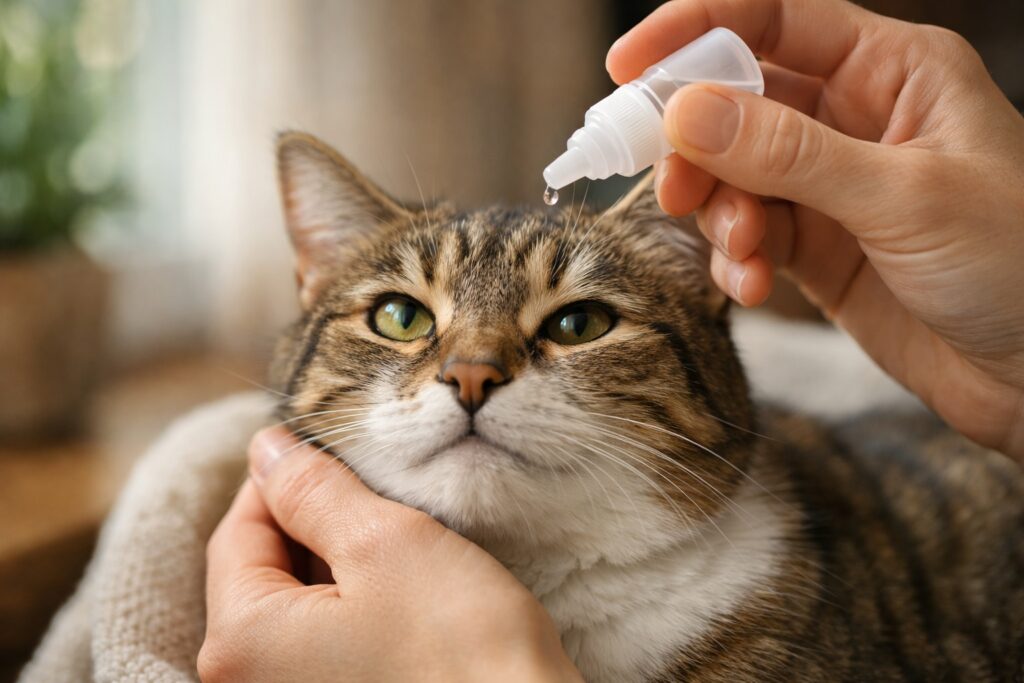
How to Safely Apply Eye Drops to Your Cat
Applying eye drops can be tricky, especially if your cat is not cooperative. Here’s a step-by-step guide:
- Stay Calm and Gentle
Your cat can sense your energy. Stay relaxed to keep them calm. - Wrap Your Cat in a Towel
This prevents scratching and helps you control movement. - Hold the Head Steady
Tilt the head slightly upward. - Apply Drops Carefully
Avoid touching the eye with the dropper. Place the drops gently. - Reward Your Cat
Give a treat or affection afterward to create a positive association.
Preventing Eye Problems in Cats
Prevention is always better than treatment. Here are some simple ways to keep your cat’s eyes healthy:
1. Regular Cleaning
Gently wipe away dirt or discharge using a soft, damp cloth.
2. Maintain a Clean Environment
Reduce dust, smoke, and allergens in your home.
3. Routine Vet Checkups
Regular visits help catch issues early.
4. Grooming
Long-haired cats need extra care to prevent hair from irritating their eyes.
5. Proper Nutrition
A balanced diet supports overall eye health and immunity.
Are Certain Cats More Prone to Eye Issues?
Yes, some cats are naturally more susceptible. While many of the best cat breeds are known for their beauty and temperament, some require extra eye care.
For example:
- Persian cats often experience tear staining
- Siamese cats may be prone to certain genetic eye conditions
Understanding your cat’s breed-specific needs helps you stay proactive.
Natural vs. Medicated Eye Care
Some pet owners prefer natural remedies, but it’s important to be cautious.
Safe Options:
- Saline solution (vet-approved)
- Warm water cleaning
Avoid:
- Human eye drops
- Herbal remedies without vet approval
Always consult a veterinarian before trying new treatments.
When to See a Vet
If symptoms persist beyond 24–48 hours or worsen, it’s time to seek professional help. Early diagnosis can prevent serious complications and ensure your cat remains comfortable.
Final Thoughts
Your cat’s eyes are not just beautiful—they’re essential to their well-being. Recognizing early symptoms and knowing when to use eye drops for cats can make a significant difference in their comfort and health.
By staying attentive and proactive, you can prevent minor issues from becoming major concerns. Whether you have one of the best cat breeds or a lovable mixed companion, proper eye care is a key part of responsible pet ownership.
FAQs
1. How do I know if my cat really needs eye drops?
If your cat shows symptoms like discharge, redness, or frequent squinting, it may need treatment. Persistent symptoms should always be checked by a vet.
2. Can I use human eye drops for my cat?
No, human eye drops can be harmful to cats. Always use products specifically designed for feline use.
3. How often should I clean my cat’s eyes?
You can gently clean your cat’s eyes once a day if needed, especially if they are prone to tearing or discharge.
4. Are eye infections in cats serious?
Some are mild, but others can lead to serious complications if untreated. Early care is essential.
5. What happens if I don’t treat my cat’s eye problem?
Untreated issues can worsen, leading to pain, vision loss, or chronic infections. Timely care ensures your cat stays healthy and comfortable.
Read more: Are You Buying the Wrong Cat Toys? Here’s What Cats Actually Love