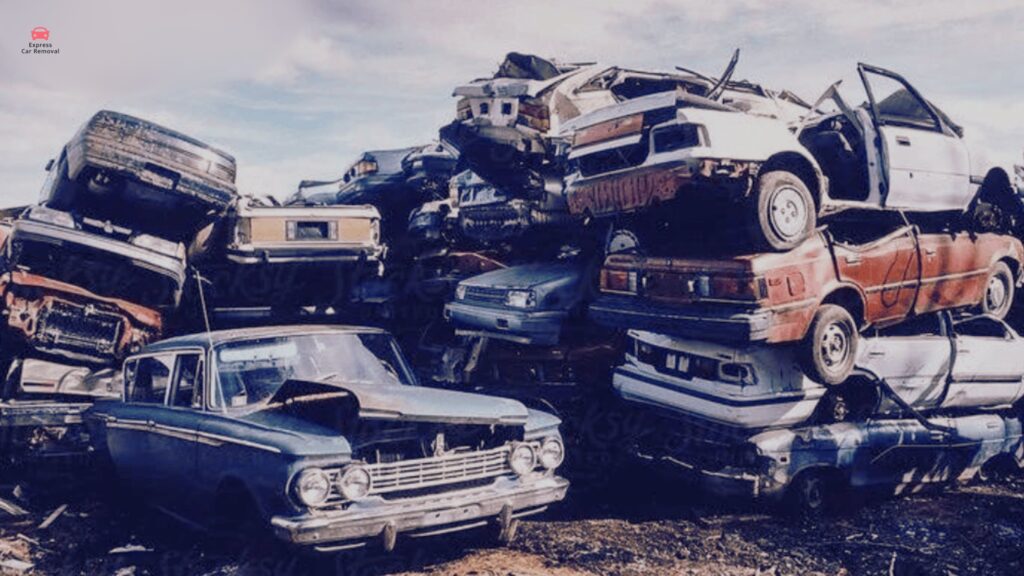

Most people breathe a sigh of relief the moment their old wreck gets loaded onto the tow truck and disappears down the street. The car is gone, the cash is in hand, and the driveway is finally clear. What far too many NSW vehicle owners do not realise, however, is that the moment the vehicle leaves their property, the clock starts ticking on one of the most overlooked legal obligations in the state’s motor vehicle transfer process: the Notice of Disposal. Failing to lodge it promptly, or at all, can expose former owners to fines, liability for offences committed in the vehicle, and months of administrative headaches they never anticipated. Scrap vehicle buyers in Sydney are legally obligated to process their end of the transaction correctly, but the responsibility to lodge a Notice of Disposal rests squarely with the seller.
This is not a bureaucratic technicality you can afford to ignore. In 2026, Service NSW has tightened its enforcement posture around vehicle disposal compliance, and the consequences of non-lodgement have become more tangible than ever. Whether your old vehicle went to a licensed dismantler, a cash-for-cars operator, or a charity collection service, the legal obligation is identical: you must notify the relevant authority that the vehicle has changed hands, and you must do it without delay.
Understanding exactly why this matters, and how to get it right, could save you from a situation that starts as a paperwork oversight and escalates into something far more serious.
What Is a Notice of Disposal and Where Does It Come From?
The Notice of Disposal is a formal notification submitted to Transport for NSW (TfNSW) informing the authority that you have transferred ownership or possession of a registered vehicle. It is governed under the Road Transport Act 2013 (NSW) and associated regulations, which impose a clear obligation on the disposing party to notify the relevant authority within a specified timeframe following the transfer.
The process exists for one fundamental reason: the vehicle registration system needs to reflect reality. When a car changes hands, whether through a private sale, a trade-in, or a scrap collection, the registered operator on record remains legally accountable for anything that happens with that vehicle until the record is updated. Toll notices, parking infringements, traffic camera fines, and even criminal incidents involving the vehicle can be directed to the last registered operator if the disposal has not been recorded.
In practical terms, the Notice of Disposal severs that legal link. It is your documentary evidence that ownership and responsibility transferred on a specific date, and without it, you are exposed.
The 2026 Enforcement Landscape: Why This Year Is Different
Service NSW and Transport for NSW have progressively modernised their vehicle registration and transfer systems, and 2026 marks a notable step in that evolution. The integration of digital toll networks, automated number plate recognition (ANPR) technology, and real-time infringement processing means that liability can now be attributed and pursued faster than at any previous point in the system’s history.
Where a fine or toll notice might once have taken weeks to work through manual processing channels, giving a former owner time to realise and correct a disposal oversight, the current system generates and dispatches liability attribution almost automatically. Former registered operators are receiving notices for vehicles they scrapped months earlier, and challenging those notices without a lodged Notice of Disposal on record is a significantly more difficult and time-consuming process.
The Roads and Maritime Services merger into Transport for NSW, combined with the agency’s investment in data integration, has also created stronger cross-referencing between scrap vehicle processing records and registration databases. This means inconsistencies, specifically vehicles being processed by dismantlers but still showing as registered to private individuals, are now flagged more reliably and more quickly.
What Can Go Wrong Without Immediate Filing
The scenarios that unfold when a Notice of Disposal is not filed promptly are remarkably consistent, and remarkably avoidable.
Toll liability is the most common issue. NSW operates an extensive network of electronic tolls, and vehicles without valid e-tags accumulate toll notices that are dispatched to the registered operator. If your scrapped vehicle is transported on a tow truck or driven briefly before demobilisation, tolls can accrue to your name. The onus falls on you to prove the vehicle was no longer yours at the time, and without a lodged disposal notice, that proof becomes far harder to establish.
Parking and traffic infringements follow the same logic. Automated systems do not distinguish between a legally transferred vehicle and one where paperwork has simply not been completed. If a number plate is captured in connection with an infringement after your disposal date, the notice goes to the registered operator of record.
Insurance complications represent another layer of risk that vehicle owners rarely anticipate. Once your vehicle has left your possession, your insurance coverage for that vehicle becomes legally ambiguous at best. If an incident occurs involving the vehicle, and the vehicle is still nominally registered in your name, the potential for being drawn into a liability dispute increases substantially.
Stamp duty and transfer liability can also become an issue in cases where vehicles are recorded as transferred to a new registered operator without a corresponding disposal notice from the previous owner. The transaction record becomes incomplete, and rectifying it retrospectively requires documentation that many people no longer retain.
How to Lodge Your NSW Notice of Disposal Correctly
The good news is that the actual process of lodging a Notice of Disposal is straightforward, provided you action it immediately after the vehicle leaves your possession.
Step one: Gather your information. You will need the vehicle’s registration number, the Vehicle Identification Number (VIN) or chassis number, the date of disposal, and the name and contact details of the party who collected the vehicle. If your car was collected by a licensed dismantler or scrap operator, they will typically be able to provide you with their business details and, in many cases, a Certificate of Destruction which supports your disposal record.
Step two: Lodge via Service NSW. The Notice of Disposal can be submitted online through the Service NSW portal, in person at any Service NSW service centre, or via the Service NSW mobile app. The online process takes under ten minutes and generates a confirmation reference that you should retain.
Step three: Retain your documentation. Print or save your lodgement confirmation. If you received a receipt from the scrap operator or dismantler, retain that as well. These documents form your evidentiary record of the disposal date and counterparty, and they are your protection if any subsequent liability dispute arises.
The critical timing point: NSW regulations specify that a Notice of Disposal must be lodged as soon as practicable after the vehicle is disposed of. Practically speaking, same-day or next-day lodgement is the standard you should hold yourself to. The longer the gap between vehicle collection and lodgement, the greater your exposure to the scenarios outlined above.
The Broader Compliance Picture for Scrap Vehicle Transactions
Scrapping a vehicle in NSW sits within a broader regulatory framework that extends beyond the Notice of Disposal requirement. Licensed vehicle dismantlers and scrap metal operators are subject to obligations under the Scrap Metal Industry Act 2016 (NSW), which governs how vehicles can be purchased, processed, and recorded. Understanding how these obligations interact with your own requirements as a seller helps clarify where your responsibilities end and where the operator’s begin.
One important point: the Certificate of Destruction that a licensed dismantler issues upon processing a vehicle is not a substitute for your Notice of Disposal. These are separate documents serving separate regulatory purposes. The Certificate of Destruction confirms the vehicle has been de-registered and processed; the Notice of Disposal confirms that you, as the registered operator, transferred possession on a specific date. Both matter, and neither replaces the other.
The NSW Environment Protection Authority (EPA) also maintains oversight of vehicle recycling and dismantling operations through its licensing framework, which means the facility receiving your vehicle is subject to compliance requirements of its own. Choosing a licensed, EPA-approved operator is not just good practice. It is part of ensuring the entire transaction sits within the legal framework.
The Cost of Inaction Versus the Simplicity of Compliance
The asymmetry here is worth pausing on. Lodging a Notice of Disposal costs nothing and takes less time than making a cup of tea. The consequences of failing to lodge one can include infringement notices running into hundreds of dollars, toll recovery demands, and in more serious cases, the time and stress of contesting liability for offences you had nothing to do with.
Service NSW’s online platform has made compliance genuinely simple. There is no reasonable justification, in 2026, for leaving this step incomplete. The moment your vehicle is collected, whether by a licensed dismantler, a not-for-profit organisation, or any other authorised party, open the Service NSW app and lodge the notice. It takes ten minutes and provides indefinite protection.
NSW vehicle owners who treat the Notice of Disposal as an afterthought are taking an unnecessary risk with their finances, their driving records, and in some cases their legal standing. The administrative burden is minimal. The protection it affords is substantial. That is a trade-off that makes itself.