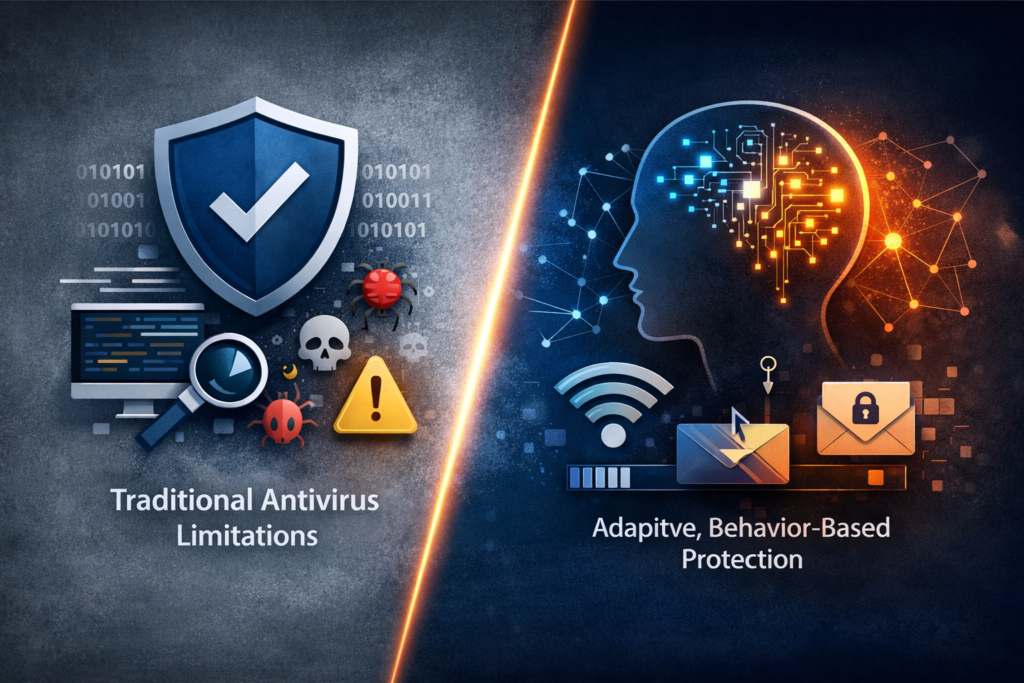

Cybersecurity has undergone a significant transformation over the past decade. What once involved easily identifiable viruses and suspicious files has evolved into a landscape of subtle, adaptive, and often invisible threats. Users today interact with a wide range of digital environments, including cloud platforms, public networks, and third-party applications, all of which introduce new types of risk.
Despite these changes, many systems still rely primarily on traditional antivirus software. While these tools continue to provide value, they are no longer sufficient on their own to address the complexity of modern cyber threats.
Understanding the limitations of traditional antivirus and the need for more adaptive protection is essential for individuals and organizations alike.
How Traditional Antivirus Operates
Traditional antivirus solutions are largely built on signature-based detection. This approach involves identifying known threats by comparing files and programs against a database of previously recorded malware signatures.
The process typically includes:
- Scanning files when they are downloaded, opened, or executed
- Matching file patterns against a threat database
- Flagging or removing files that meet known threat criteria
- Updating virus definitions regularly to stay current
This model has been effective in detecting widespread and well-documented threats. However, it depends heavily on prior knowledge. If a threat has not yet been identified and added to the database, it may go undetected.
In addition to signature detection, some traditional tools include heuristic analysis, which attempts to identify suspicious behavior. However, these methods are often limited in scope and can result in false positives or missed threats.
Key Challenges in Modern Threat Detection
As cyber threats evolve, several limitations of traditional antivirus have become more apparent.
Unknown and Emerging Threats
New malware variants are created continuously. These threats can spread rapidly before they are analyzed and added to antivirus databases. This delay creates a window of vulnerability during which systems remain exposed.
Zero-day attacks are a notable example. These exploits take advantage of previously unknown vulnerabilities and are often used before any official fix or detection method is available.
Phishing and Social Engineering
Many modern attacks rely on user interaction rather than malicious code alone. Phishing emails, fake login pages, and deceptive links are designed to appear legitimate and often do not contain identifiable malware.
Because these attacks rely on deception rather than known signatures, traditional antivirus solutions may not detect them effectively.
Fileless Attacks
Fileless malware operates without installing traditional files on a system. Instead, it uses existing system tools or runs directly in memory. This allows it to bypass many detection mechanisms that rely on file scanning.
These types of attacks are increasingly common and can be difficult to trace or remove.
Delayed Detection and Response
In many cases, threats are identified only after they have been executed. This reactive approach means that some level of damage may already have occurred before the system responds.
This delay can lead to data loss, unauthorized access, or performance issues.
The Changing Nature of Cyber Attacks
Cyber attacks today are less about forcing entry into systems and more about exploiting normal user behavior.
Common entry points include:
- Clicking on links that appear to come from trusted sources
- Downloading software from unofficial or compromised websites
- Connecting to unsecured public WiFi networks
- Opening attachments that appear safe but contain hidden risks
These actions are part of everyday digital activity, which makes distinguishing between safe and unsafe behavior more difficult.
Attackers increasingly focus on blending in with normal workflows, making detection more challenging for tools that rely solely on predefined rules or signatures.
The Need for a More Adaptive Approach
Given these challenges, cybersecurity strategies are shifting toward more adaptive and proactive methods.
Rather than focusing only on identifying known threats, modern approaches aim to:
- Monitor system activity in real time
- Detect unusual or suspicious patterns of behavior
- Prevent potentially harmful actions before they are completed
- Continuously adapt to new and evolving threats
This shift reflects the need to address not only what a threat is, but how it behaves and how it interacts with the system.
Reflex AI Antivirus and Adaptive Protection
Reflex Free AI Antivirus, developed by Hive Project, is designed to align with this evolving approach to cybersecurity.
Instead of relying solely on known threat signatures, it emphasizes behavior-based monitoring and real-time analysis. This allows it to identify potential risks based on activity patterns rather than waiting for confirmed threat identification.
Key aspects of this approach include:
- Observing how applications and processes behave within the system
- Identifying deviations from normal usage patterns
- Intervening before suspicious actions are completed
- Reducing reliance on frequent manual updates
This method helps address gaps left by traditional detection models, particularly in cases involving new or previously unseen threats.
Practical Use Cases
Understanding how modern protection applies in real-world scenarios can help illustrate its value.
Public WiFi Connections
Public networks are often unsecured, making them vulnerable to interception or unauthorized access. Users connecting to these networks may unknowingly expose sensitive information.
An adaptive security approach can monitor network behavior and identify unusual activity during these sessions.
Software Downloads
Downloading software from unofficial sources increases the risk of installing compromised files. These files may appear legitimate but contain hidden functionality that activates later.
Behavior-based analysis can help identify risks before the software is fully executed.
Email-Based Threats
Phishing emails continue to be a common method of attack. These messages often mimic trusted organizations and encourage users to click on links or provide information.
By analyzing interaction patterns, it becomes possible to detect suspicious behavior even when the content itself appears normal.
Background Processes and System Performance
Some threats operate quietly in the background, consuming system resources without obvious signs of infection. This can lead to slower performance and reduced system efficiency.
Monitoring system behavior can help identify and address these issues earlier.
Building a Layered Security Strategy
No single tool can provide complete protection against all types of cyber threats. A more effective approach involves combining multiple layers of security.
Users and organizations should consider:
- Keeping operating systems and applications updated
- Using trusted sources for downloads and installations
- Implementing secure network practices
- Monitoring system activity regularly
- Combining traditional antivirus with more adaptive security solutions
This layered approach helps reduce reliance on any one method and improves overall resilience.
The Role of User Awareness
Technology alone cannot eliminate all risks. User awareness remains a critical component of cybersecurity.
Understanding common attack methods and practicing safe behavior can significantly reduce exposure.
This includes:
- Verifying the source of emails and links
- Avoiding unnecessary downloads
- Using secure connections whenever possible
- Being cautious with unfamiliar requests or prompts
When combined with effective security tools, informed users contribute to a stronger overall defense.
Conclusion
The cybersecurity landscape has evolved beyond the capabilities of traditional, signature-based antivirus alone. While these tools continue to play a role, they must be supplemented with more adaptive and proactive approaches to remain effective.
Modern threats are dynamic, often relying on subtle techniques that bypass older detection methods. Addressing these risks requires a shift toward monitoring behavior, preventing suspicious actions, and adapting to new patterns in real time.
Solutions like Reflex AI Antivirus reflect this shift by focusing on how threats behave rather than relying solely on what is already known.
As digital environments continue to expand, adopting a more comprehensive and adaptive approach to security will be essential for maintaining system integrity and protecting sensitive information.