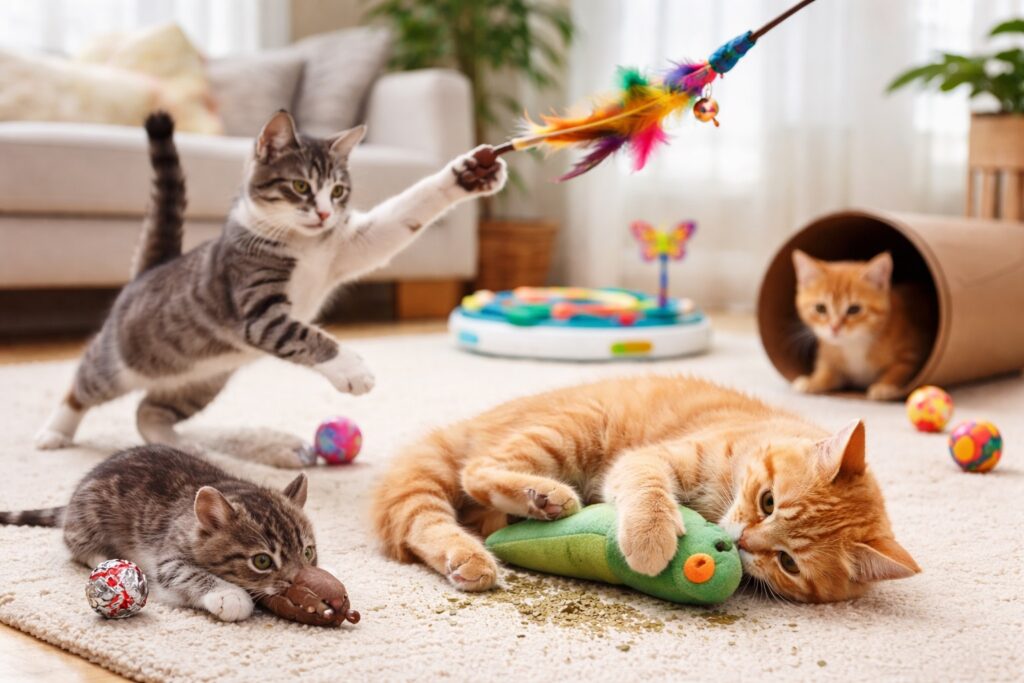

If you’ve ever bought a fancy toy for your cat—only to watch them ignore it completely while playing with a cardboard box instead—you are not alone. Many cat parents across the USA face the same frustration. The truth is, choosing the right cat toys isn’t about price, trends, or aesthetics—it’s about understanding your cat’s natural instincts.
In this guide, we’ll break down why some toys fail, what cats actually enjoy, and how you can make smarter choices that keep your feline active, engaged, and happy.
Why Most Cat Toys Fail
Many pet owners assume that all toys are created equal. But cats don’t think like humans—they think like hunters.
Here’s why many toys end up unused:
1. Lack of Movement
Cats are instinctive predators. Toys that don’t move or mimic prey behavior fail to capture their attention. A static plush toy might look cute to you, but to your cat, it’s just… there.
2. Too Predictable
If a toy behaves the same way every time, cats quickly lose interest. They thrive on unpredictability—just like chasing real prey.
3. Overly Complicated Designs
Some toys are packed with features but lack simplicity. Cats prefer straightforward play that triggers their hunting instincts.
4. Wrong Size or Texture
If a toy is too big, too small, or feels unnatural, your cat may avoid it entirely.
What Cats Actually Love (Based on Their Instincts)
To understand what works, you need to think like your cat. Every feline shares a common set of instincts:
- Stalk
- Chase
- Pounce
- Capture
The most effective toys tap into this natural sequence.
1. Interactive Toys That Move
Toys like feather wands or motorized mice mimic real prey. These are often considered among the best cat toys because they trigger active engagement.
2. Toys That Encourage Hunting Behavior
Anything that simulates birds, insects, or small animals can instantly grab your cat’s attention.
3. Lightweight and Easy to Bat
Cats love toys they can toss, bat, and carry. Lightweight objects often outperform heavy ones.
4. Textures That Feel “Real”
Soft fur-like materials or crinkly textures can mimic prey and stimulate interest.
The Role of Catnip: Why Cats Go Crazy for It
You’ve probably seen cats rolling, flipping, or zooming around after interacting with catnip—but what does catnip do to cats exactly?
Catnip contains a compound called nepetalactone, which interacts with your cat’s sensory neurons. This creates a temporary burst of excitement or euphoria.
Key Effects of Catnip:
- Increases playfulness and energy
- Encourages rolling, rubbing, and chasing
- Boosts mental stimulation
- Helps reduce boredom in indoor cats
However, not all cats respond to catnip—about 30–40% may not react at all due to genetics.
Types of Cat Toys That Actually Work
Let’s break down the types of toys that consistently perform well with cats:
1. Wand Toys
These are perfect for interactive play sessions. They allow you to mimic prey movements, making your cat feel like a hunter.
2. Puzzle Toys
Great for mental stimulation, these toys challenge your cat to solve problems to get treats.
3. Balls and Rolling Toys
Simple yet effective. Balls that make noise or move unpredictably are highly engaging.
4. Catnip Toys
Infused with catnip, these toys can spark excitement even in otherwise lazy cats.
5. Tunnels and Hideouts
Cats love hiding and ambushing. Tunnels give them the perfect environment to stalk and pounce.
Indoor Cats vs Outdoor Cats: Toy Preferences
Indoor Cats
Indoor cats rely heavily on toys for exercise and stimulation. Without proper engagement, they can become bored or overweight.
Best choices:
- Interactive toys
- Puzzle feeders
- Laser toys
- Climbing and chasing toys
Outdoor Cats
Outdoor cats naturally hunt and explore, so they may not depend as much on toys.
Best choices:
- Occasional enrichment toys
- Catnip-based toys
- Lightweight chase toys
Signs You’re Buying the Wrong Cat Toys
If you notice these behaviors, it’s time to rethink your choices:
- Your cat ignores new toys completely
- Toys are played with once and never again
- Your cat prefers random household items
- Increased boredom or destructive behavior
How to Choose the Right Cat Toys (Smart Buyer Tips)
Choosing the right toy doesn’t have to be complicated. Here’s a practical checklist:
✔ Observe Your Cat’s Personality
- Energetic cats → interactive toys
- Lazy cats → catnip or slow-moving toys
✔ Rotate Toys Regularly
Cats get bored quickly. Rotating toys keeps them feeling new and exciting.
✔ Prioritize Safety
Avoid toys with small detachable parts or sharp edges.
✔ Mix It Up
Provide a variety—chasing, batting, climbing, and puzzle toys.
✔ Play Together
No toy replaces human interaction. Daily playtime strengthens your bond.
Budget vs Expensive Toys: Does Price Matter?
Here’s the surprising truth: expensive doesn’t always mean better.
Many cats prefer:
- Paper balls
- Cardboard boxes
- String or shoelaces (supervised)
While premium options can be useful, understanding your cat’s preferences matters far more than price.
DIY Cat Toys That Cats Love
If you’re on a budget—or just love creativity—try these simple DIY ideas:
- Paper ball – lightweight and fun to chase
- Cardboard scratchers – great for claws
- Toilet paper roll puzzle – hide treats inside
- Sock stuffed with fabric – soft and tossable
These often outperform store-bought toys because they are unpredictable and engaging.
How Often Should You Replace Cat Toys?
Toys don’t last forever. Replace them when:
- They become damaged or unsafe
- Your cat loses interest completely
- They no longer stimulate activity
Regular updates keep your cat mentally and physically active.
Final Thoughts: It’s Not About the Toy—It’s About the Experience
At the end of the day, your cat doesn’t care about branding or price tags. They care about stimulation, movement, and fun.
The best approach is to:
- Understand your cat’s instincts
- Choose toys that mimic real prey
- Keep playtime interactive and varied
When you focus on what your cat truly enjoys, you’ll not only save money—you’ll also create a happier, healthier life for your furry companion.
FAQs
1. How do I know if my cat likes a toy?
Watch their behavior. If your cat chases, pounces, or returns to a toy repeatedly, it’s a good sign they enjoy it.
2. Why does my cat ignore new toys?
Cats can be cautious. Try introducing toys slowly or making them move to spark interest.
3. Are laser pointers safe for cats?
Yes, but always end playtime with a physical toy so your cat feels a sense of “catching” something.
4. How often should I play with my cat?
Ideally, 10–15 minutes of interactive play daily keeps your cat active and mentally stimulated.
5. Do all cats respond to catnip?
No, some cats don’t react to it due to genetics. Alternatives like silvervine can be effective.
Read more: How Do Pets Adjust To Losing A Long-Time Companion?