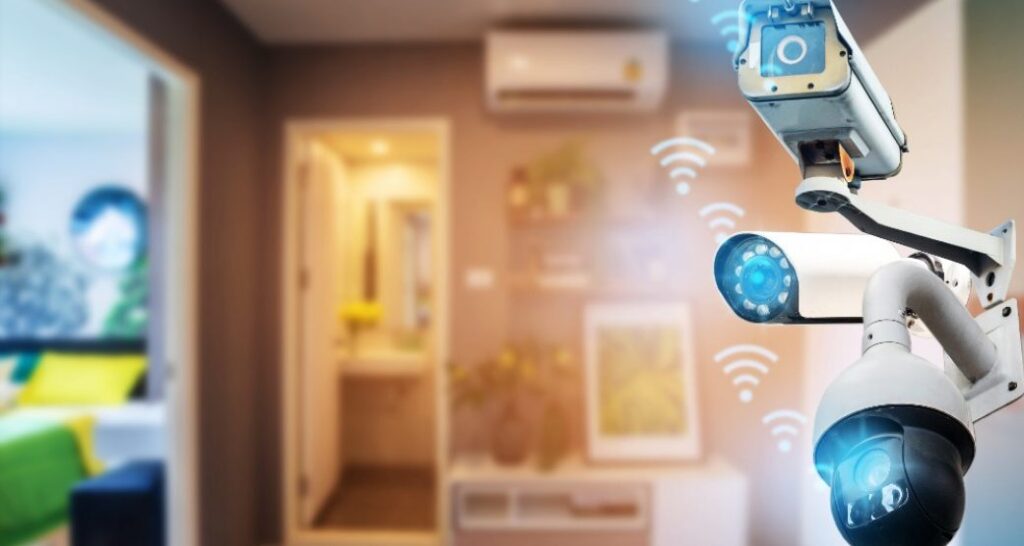

Imagine waking up to a notification that a “thermal anomaly” was detected at your front porch at 3:00 AM. In 2025, you might have squinted at a grainy doorbell camera feed. In 2026, your home security system doesn’t just watch; it anticipates. With the integration of Edge AI and predictive analytics becoming standard, homeowners are facing a critical decision: should you build your own fortress or hire a professional vanguard?
The line between DIY home security and professional monitored home security has blurred significantly this year. We are no longer just talking about sticking sensors on windows; we are talking about ecosystem integration, biometric verification, and automated emergency response protocols. If you’re looking to secure your sanctuary, understanding the nuance of these two paths is the difference between a false sense of security and actual peace of mind.
The Rise of the Smart DIYer: Autonomy with a Catch
The appeal of DIY home security has skyrocketed in 2026, primarily due to the “Plug-and-Protect” revolution. Today’s DIY kits are no longer the flimsy plastic sensors of a decade ago. They are sophisticated, Matter-enabled devices that communicate across platforms seamlessly.
Why Homeowners are Choosing DIY in 2026
For many, the DIY route is about data privacy and cost-efficiency. With the latest self-hosted hubs, you can keep your video footage on local encrypted drives rather than the cloud.
- Zero Monthly Contracts: You pay for the hardware once and own the security data entirely.
- Customization: You can add specific components—like AI-driven perimeter lighting or water leak sensors—only where you need them.
- Portability: If you are renting or planning to move, DIY systems are incredibly easy to uninstall and reset in a new location.
The Hidden Risks of Self-Monitoring
However, the “Self” in self-monitoring is a heavy burden. In a crisis, can you guarantee you’ll see the alert? Recent data suggests that “notification fatigue” is a leading cause of security breaches. If your phone is on “Do Not Disturb” during a movie or while you sleep, a DIY system is essentially a very expensive noisemaker that no one is listening to.
Professional Monitored Home Security: The Human-AI Hybrid
On the other end of the spectrum, monitored home security has evolved into a high-tech concierge service. It’s no longer just a call center waiting for an alarm to trip; 2026 monitoring centers use “Verified Video Response.” This means dispatchers can see AI-filtered clips of the intrusion, allowing them to provide police with real-time descriptions, which significantly speeds up law enforcement response times.
The Advantage of Professional Oversight
- Redundancy: Even if your Wi-Fi is jammed or the power is cut, professional systems use cellular backups to stay connected to the grid.
- Insurance Discounts: Most insurance providers in 2026 offer up to a 20% discount on premiums for homes with 24/7 professional monitoring.
- Emergency Interconnect: When a smoke or carbon monoxide detector goes off, the system doesn’t just beep it automatically unlocks smart locks for firefighters and shuts off the HVAC to prevent smoke from spreading.
Finding the Middle Ground: The Hybrid Approach
Many modern families are finding that a “set it and forget it” mentality doesn’t work. This is where companies like FIRST RATE HOME SECURITY come into play. They bridge the gap by providing the sophisticated hardware typical of high-end DIY setups while backing it with the ironclad reliability of professional monitoring.
By utilizing a professional integrator, you ensure that your DIY home security ambitions don’t fall short due to poor sensor placement or “dead zones” in your mesh network. Professional guidance ensures that your smart home ecosystem actually talks to your security hub without the lag that often plagues amateur setups.
2026 Trends: What’s Changing the Game?
If you are auditing your security today, you need to be aware of three major shifts that have occurred this year:
1. Generative AI Voice Intercoms
Modern systems now use Gen-AI to “talk back” to intruders. Instead of a generic siren, the system can use a firm, human-like voice to say, “You are being recorded, and the police have been dispatched to 75 Cedar Street.” This psychological deterrent has proven 40% more effective than sirens alone.
2. Drone Integration
For larger properties, 2026 has seen the introduction of automated security drones. When a perimeter sensor is tripped, a small drone launches from a weatherproof dock to provide an aerial view of the disturbance, streaming it directly to the monitoring center.
3. Biometric Disarming
Keypads are becoming obsolete. Facial recognition and palm-vein scanning at the door ensure that your kids can get in after school without remembering a code, and stolen key fobs are no longer a security risk.
Which Path Should You Take?
Deciding between these options depends on your lifestyle and your technical “hunger.”
- Choose DIY If: You are tech-savvy, live in a low-risk apartment, or want absolute control over every data packet leaving your home.
- Choose Monitored If: You have a family to protect, travel frequently, or want the assurance that a professional will call 911 when you can’t.
Summary of Key Points
The landscape of 2026 demands more than just a camera; it demands a strategy. Whether you opt for the flexibility of DIY home security or the robust safety net of monitored home security, the goal is the same: reducing the time between a “threat detected” and “help arrived.”
Key Takeaways
- DIY offers lower long-term costs but requires you to be “on-call” 24/7.
- Professional Monitoring provides verified dispatch, which is essential for faster police response.
- AI Integration is the standard in 2026, offering predictive alerts rather than reactive alarms.
- NAP Consistency and professional installation (even for DIY-style gear) prevent the most common system failures.
FAQs
1. Can I switch from DIY to professional monitoring later?
Yes. Most 2026 systems are built on open protocols like Matter or Zigbee, allowing you to start with a self-monitored DIY setup and “opt-in” to a professional monitoring plan later without changing your hardware.
2. Does heavy rain or bad weather affect AI security cameras?
In the past, yes. However, 2026 models use LiDAR and thermal imaging alongside standard lenses, meaning they can “see” through heavy Karachi rain or Plainview snow without triggering false alerts from moving tree branches.
3. Is professional monitoring worth the monthly fee?
If you consider the insurance discounts and the fact that you aren’t tethered to your phone 24/7, the cost usually pays for itself in both literal savings and mental health.
4. How does AI help reduce false alarms?
2026 AI can distinguish between a stray cat, a delivery person, and someone “loitering” with intent. This prevents the “crying wolf” effect that leads many homeowners to eventually ignore their own security alerts.
5. Are wireless security systems easy to hack?
While no system is 100% unhackable, 2026 standards use WPA3 and rolling-code encryption, making it nearly impossible for a standard burglar to bypass the system digitally.