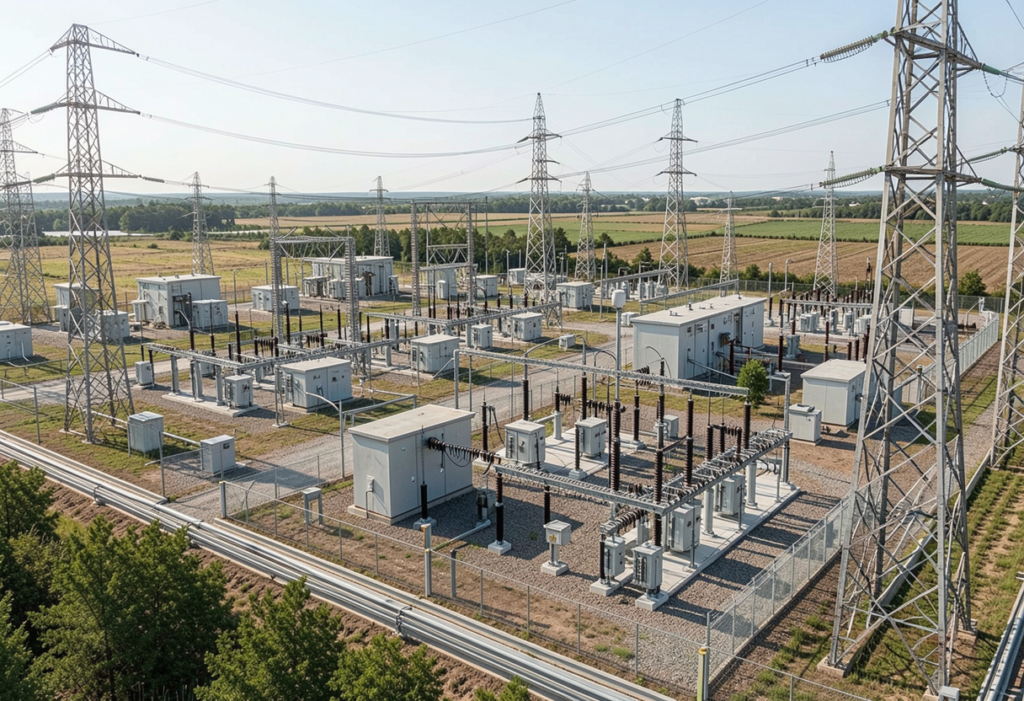

The energy sector is undergoing a major transformation, driven by rapid advancements in digitalization, automation, and smart technologies. At the heart of this transformation lies the modern substation. Once considered a static component of power systems, substations are now becoming intelligent hubs that play a critical role in grid reliability, efficiency, and sustainability.
In this article, we explore how electrical substation design, substation civil engineering design, and overall substation engineering design are evolving to meet the demands of the modern energy landscape.
The Shift from Conventional to Smart Substations
Traditional substations relied heavily on manual monitoring, hardwired systems, and periodic maintenance. While functional, these systems lacked flexibility and real-time responsiveness.
Today’s smart substations integrate digital technologies such as IoT sensors, intelligent electronic devices (IEDs), and advanced communication systems. These innovations enable real-time data collection, remote monitoring, and automated control.
This shift is redefining electrical substation design, making it more adaptive, data-driven, and efficient. Engineers now focus not only on power distribution but also on communication infrastructure and data analytics capabilities within substations.
Digitalization and Automation in Substation Engineering Design
One of the most significant advancements in substation engineering design is the adoption of digital substations. These systems replace traditional copper wiring with fiber-optic communication networks, improving both performance and safety.
Key benefits of digitalization include:
- Reduced wiring complexity
- Improved data accuracy and speed
- Enhanced system reliability
- Lower maintenance costs
Automation also plays a crucial role. Smart substations can automatically detect faults, isolate issues, and restore power without human intervention. This not only minimizes downtime but also enhances grid resilience.
As a result, modern substation engineering design emphasizes interoperability, cybersecurity, and scalability—ensuring substations can evolve alongside future technologies.
Role of Advanced Civil Engineering in Smart Substations
While technology drives intelligence, the physical infrastructure remains equally important. Substation civil engineering design has evolved to support new equipment layouts, environmental considerations, and safety requirements.
Modern civil design focuses on:
- Optimized space utilization for compact digital equipment
- Improved foundation systems for advanced machinery
- Enhanced drainage and flood protection
- Seismic-resistant structures in vulnerable regions
Additionally, sustainability is becoming a priority. Engineers are incorporating eco-friendly materials, reducing land impact, and designing substations that blend with the surrounding environment.
In essence, substation civil engineering design now works hand-in-hand with digital innovation to create robust and future-ready facilities.
Integration of Renewable Energy Sources
The rise of renewable energy sources such as solar and wind has significantly influenced electrical substation design. Unlike traditional power generation, renewables are decentralized and variable, requiring substations to be more flexible and responsive.
Smart substations are equipped to:
- Handle bidirectional power flow
- Manage fluctuating energy inputs
- Support distributed energy resources (DERs)
- Enable energy storage integration
This evolution ensures that substations can efficiently connect renewable energy to the grid without compromising stability. Engineers must now design substations that are not only powerful but also highly adaptable.
Enhanced Monitoring and Predictive Maintenance
Another major advancement in substation engineering design is the use of predictive maintenance powered by data analytics and AI. Sensors installed across equipment continuously monitor parameters such as temperature, voltage, and load conditions.
Benefits include:
- Early fault detection before failures occur
- Reduced maintenance costs through targeted interventions
- Extended equipment lifespan
- Improved operational efficiency
This proactive approach replaces traditional time-based maintenance, making substations more reliable and cost-effective. It also reduces the risk of unexpected outages, which is critical in modern power systems.
Cybersecurity and Communication Infrastructure
As substations become smarter and more connected, cybersecurity has become a key consideration in electrical substation design. Protecting critical infrastructure from cyber threats is now as important as physical safety.
Modern substations incorporate:
- Secure communication protocols
- Encrypted data transmission
- Network segmentation
- Real-time threat monitoring systems
In parallel, robust communication infrastructure ensures seamless data exchange between substations and control centers. This enables utilities to make informed decisions quickly and maintain grid stability.
The Future of Substation Design
The future of substation civil engineering design and substation engineering design lies in further integration of emerging technologies such as artificial intelligence, machine learning, and digital twins.
Digital twins, for example, allow engineers to create virtual models of substations, enabling simulation, testing, and optimization before physical implementation. This reduces risks and improves design accuracy.
Additionally, modular and prefabricated substations are gaining popularity, offering faster deployment and reduced construction costs. These innovations are especially valuable in rapidly growing urban and industrial areas.
Conclusion
Smart technology is fundamentally reshaping how substations are designed, built, and operated. From digitalization and automation to renewable integration and predictive maintenance, every aspect of electrical substation design is evolving to meet modern energy demands.
At the same time, advancements in substation civil engineering design ensure that physical infrastructure supports these innovations effectively. Together, they form a comprehensive approach to modern substation engineering design—one that prioritizes efficiency, reliability, sustainability, and future readiness.
As the energy sector continues to evolve, smart substations will play a pivotal role in building resilient and intelligent power systems. For engineering firms and industry professionals, staying ahead of these trends is not just an advantage—it’s a necessity.
FAQs
1. What is a smart electrical substation?
A smart electrical substation is an advanced power facility that uses digital technologies such as IoT sensors, intelligent electronic devices (IEDs), and automation systems to monitor, control, and optimize operations in real time. It enhances efficiency, reliability, and reduces the need for manual intervention in electrical substation design.
2. How does smart technology improve substation engineering design?
Smart technology improves substation engineering design by enabling automation, real-time data monitoring, and predictive maintenance. It reduces downtime, enhances system performance, and allows engineers to design more flexible and scalable substations that can adapt to future energy demands.
3. Why is civil engineering important in modern substation design?
Substation civil engineering design is essential because it provides the structural foundation for all electrical equipment. It ensures safety, durability, environmental compliance, and supports modern requirements such as compact layouts, flood protection, and seismic resistance in smart substations.
