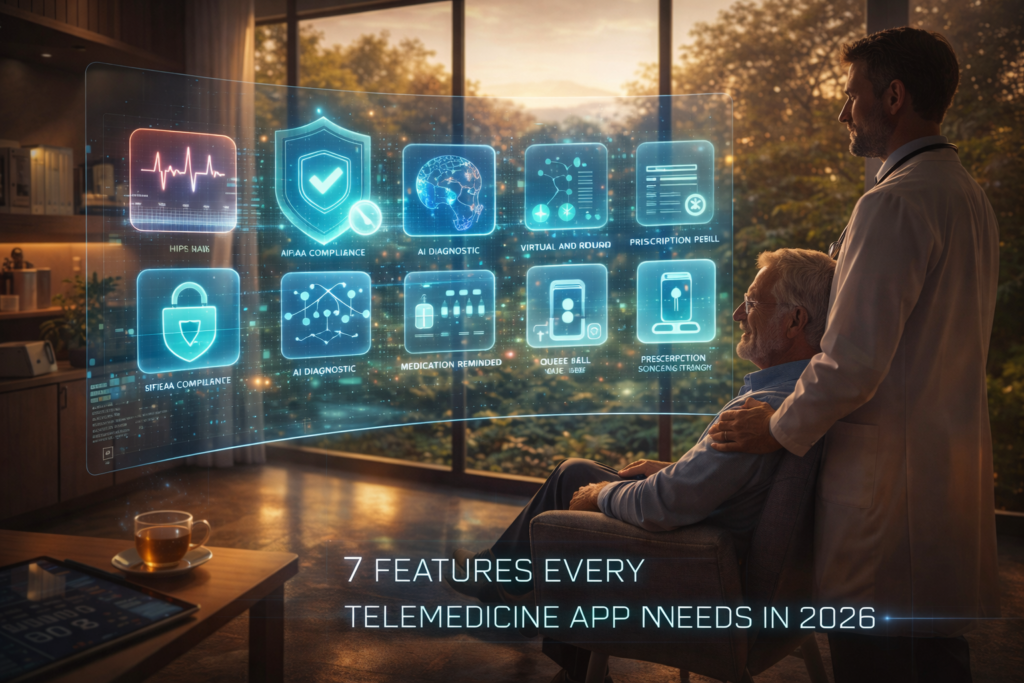

The landscape of virtual healthcare has shifted from emergency adoption to a mature, high-expectation environment. Patients in 2026 demand the same seamless experience from their healthcare providers that they receive from retail or banking apps. They expect intuitive interfaces, instant connectivity, and secure data handling without friction.
For healthcare organizations, this means telemedicine is no longer just a video call; it is an integrated digital ecosystem. Success now depends on leveraging technology to improve diagnostic accuracy, reduce administrative burden, and maintain strict regulatory compliance. As we navigate the complexities of modern healthcare delivery, failing to meet these technological standards can result in poor patient retention and legal liabilities.
1. High-Definition Secure Video Conferencing
The core of any telehealth platform remains the live interaction. In 2026, low-resolution or unstable connections are unacceptable. Patients expect a broadcast-quality experience, while clinicians need clear visuals to make accurate assessments.
Platforms must utilize WebRTC technologies to provide encrypted, high-definition video that adapts to varying bandwidth conditions. This ensures that visual examinations—crucial for dermatological, neurological, or post-operative assessments—are accurate and reliable.
Furthermore, end-to-end encryption is mandatory to maintain patient confidentiality and meet regulatory standards. The video solution must be embedded directly into the application, rather than relying on external third-party apps, to provide a seamless user experience and maintain a closed loop of security.
2. Integrated Electronic Health Records (EHR)
A telemedicine app operating in isolation creates data silos, leading to fragmented care and potential medical errors. True efficiency comes from seamless EHR integration, which is no longer a luxury but a necessity for clinical workflows.
Providers must have instant access to patient history, medication lists, allergy information, and prior imaging results directly within the video interface. Conversely, consultation notes, diagnosis codes, and prescriptions generated during the call must automatically update the central EHR system in real-time.
This bidirectional integration reduces documentation time for clinicians, minimizes transcription errors, and ensures that all care team members have access to the same updated information, fostering better continuity of care.
3. Remote Patient Monitoring (RPM) Device Integration
Telemedicine is evolving toward proactive care rather than just reactive consultations. In 2026, the intersection of telehealth and the Internet of Things (IoT) is crucial for managing chronic conditions effectively.
The integration of IoT medical devices—such as blood pressure monitors, glucose meters, digital stethoscopes, and wearable ECG monitors—allows providers to receive real-time data streams. These devices sync directly with the patient’s app, providing actionable data that informs the consultation and alerts providers to critical changes in a patient’s condition between scheduled visits. This proactive approach significantly reduces hospital readmissions and improves long-term health outcomes.
4. AI-Powered Administrative Workflow Automation
Healthcare staffing shortages and administrative burnout necessitate the use of technology to handle routine tasks, allowing human providers to focus on clinical care and patient interaction.
AI tools now manage appointment scheduling, initial patient triaging, and automated follow-up reminders. Furthermore, AI voice-to-text assistants can document the consultation in real-time, drastically reducing the administrative burden on clinicians. These AI tools can also analyze patient data to suggest preliminary diagnostic paths, which the clinician can then verify, enhancing the efficiency of the diagnostic process.
5. E-Prescription and Pharmacy Integration
Closing the care loop requires a streamlined method for managing medication without requiring the patient to travel.
The app must feature secure e-prescribing capabilities that link directly to pharmacies. This allows the provider to send prescriptions instantly during the call, improving patient adherence and convenience. The system must also check for potential drug interactions automatically against the patient’s known medication history and allergies, providing a crucial layer of safety.
6. Multi-Platform Accessibility and User Experience
Patients access care from diverse locations and devices, ranging from high-end smartphones to older tablets or desktop computers.
A successful application must offer a consistent, intuitive experience across iOS, Android, and web browsers. Designing for inclusivity ensures that elderly patients or those with accessibility needs can navigate the interface without frustration. This includes large fonts, clear navigation, and voice command options, ensuring that the app is accessible to the widest possible patient demographic.
7. Strict HIPAA and Regulatory Compliance
Security is the foundation of trust in healthcare. Any platform handling protected health information (PHI) must adhere strictly to HIPAA guidelines in the U.S., GDPR in Europe, and local regulations elsewhere.
This includes robust authentication protocols, such as multi-factor authentication (MFA), secure data storage with AES-256 encryption, and audit logs to track access to patient records. To achieve this, startups must prioritize security from the architectural phase to build a HIPAA-ready app in 2026. Failure to maintain compliance can lead to devastating fines and loss of reputation.
AI Tools and Resources
Stripe Terminal SDK — Enables secure payment processing for virtual visits
- Best for: Handling co-pays and billing directly within the app experience.
- Why it matters: Streamlines the financial interaction, reducing administrative follow-up and improving cash flow.
- Who should skip it: Non-profit organizations operating entirely on grants or public funding that do not charge patients.
- 2026 status: Fully operational with enhanced security features for recurring billing.
AWS HealthImaging — Secure storage and analysis for medical imaging
- Best for: Storing DICOM images accessible to clinicians during virtual visits.
- Why it matters: Provides high-speed access to large imaging files without lag, ensuring clinicians have all necessary data during a consultation.
- Who should skip it: Small practices only offering audio-based counseling.
- 2026 status: Widely adopted standard for cloud-based medical imaging.
Risks, Trade-offs, and Limitations
When Interoperability Fails: The Data Silo Scenario
If a healthcare provider implements a telemedicine app that does not connect with their existing EHR system, clinical data becomes fragmented.
- Warning signs: Clinicians spend significant time toggling between applications, manually copying notes, or requesting patients to resubmit information.
- Why it happens: Attempting to reduce upfront costs by selecting a proprietary, closed-loop system over a customizable, interoperable platform.
- Alternative approach: Prioritize API-first platforms that guarantee bidirectional integration with major EHR vendors, even if the upfront cost is higher.
Key Takeaways
For telehealth to be effective in 2026, technology must feel invisible to the patient while empowering the provider. By focusing on integration, security, and automated workflows, organizations can enhance care delivery.
For those requiring custom-built solutions, partnering with experts in Mobile App Development in Georgia can bridge the gap between technical requirements and clinical workflows, ensuring a product that is both compliant and user-friendly.
Disclaimer: This information is for educational purposes only and does not constitute legal or medical advice. Consult a qualified healthcare professional and legal counsel for guidance specific to your situation.