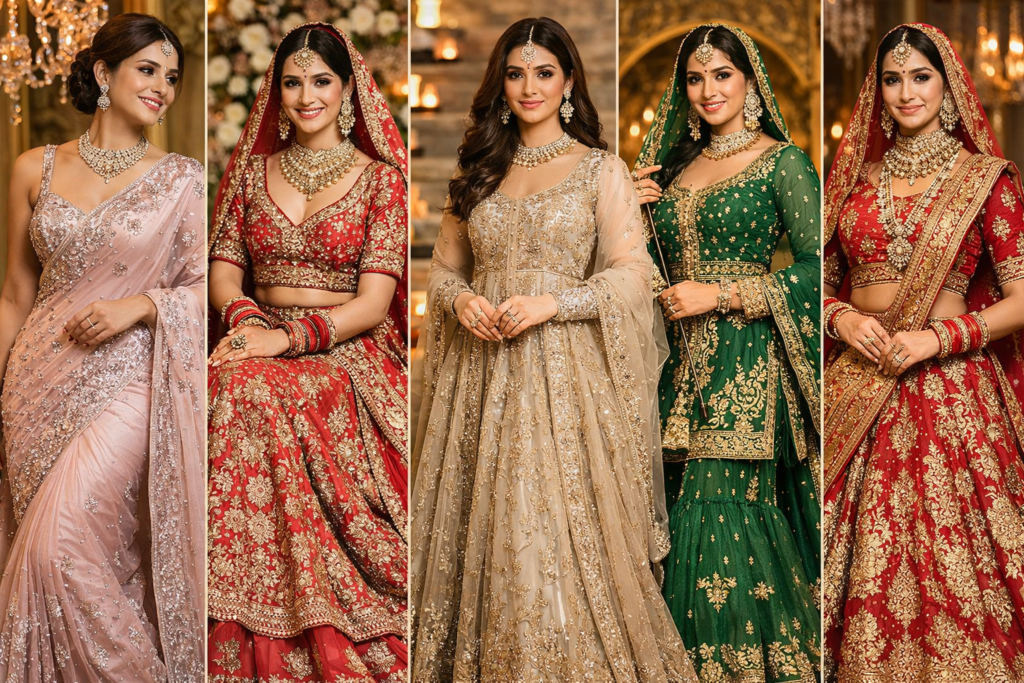

Indian weddings may be evolving in scale and setting, but the emotional weight of bridal fashion remains unchanged. What brides wear on their wedding day is still deeply personal. It reflects family traditions, cultural pride, and individual taste all at once. That is why Indian wedding dresses continue to hold such strong relevance, even as modern influences shape how they look today.
Brides now want outfits that feel meaningful, photograph beautifully, and keep them comfortable throughout long ceremonies. They are no longer choosing a dress just because it is traditional. They are choosing it because it feels right. From timeless classics to softer modern interpretations, these are the Indian wedding outfit styles brides are gravitating towards right now.
Why Are Indian Wedding Dresses Still So Popular?
Indian wedding dresses have a unique ability to balance emotion and elegance. They are designed around rituals, movement, and celebration. Every detail, from fabric choice to embroidery placement, has a purpose. This makes them far more than just clothing.
Another reason these outfits remain popular is versatility. A bride can look regal in heavy layers or graceful in lighter silhouettes without losing the essence of tradition. Whether someone prefers structured tailoring or flowing drapes, Indian dresses offer space for personal expression.
Brides also think long-term. They want wedding photos that age well. Traditional silhouettes, colours, and craftsmanship tend to feel timeless rather than trend-bound. This is why many brides, even after exploring global styles, return to Indian wedding attire when it matters most.
Which Indian Wedding Dress Styles Are Brides Loving Today?
Classic Lehengas with Modern Refinement
Lehengas continue to be one of the most loved Indian wedding dresses. What has changed is how they are designed. Brides are choosing cleaner cuts, refined embroidery, and lighter fabrics that feel luxurious without being overwhelming.

These lehengas allow freedom of movement while still offering grandeur. Many brides pair them with contemporary blouses or softer dupattas to personalise the look. This balance keeps the outfit traditional yet fresh, making it ideal for long wedding ceremonies.
Sarees That Feel Emotional and Elegant
Sarees are making a strong comeback among brides who value heritage. Designer sarees are especially popular because they combine traditional weaving with refined finishing. Brides often choose them for their cultural significance and graceful drape.
Modern styling has made sarees more practical. Pre-stitched pleats, lighter fabrics, and tailored blouses allow brides to move comfortably without losing elegance. For many women, wearing a saree feels deeply symbolic, connecting generations through a single garment.
Structured Suits and Flowing Anarkali Styles
Indian suits have found a strong place in bridal wardrobes, especially for intimate ceremonies. Well-fitted suits offer structure and comfort while still maintaining a ceremonial look. Brides who prefer simplicity often gravitate toward these styles for pre-wedding or smaller wedding rituals.

The Anarkali dress continues to charm brides who love movement and grace. Its flared silhouette adds drama without heaviness. Many brides choose Anarkali dress styles for their timeless appeal and ease during long functions, especially when paired with soft dupattas and subtle detailing.
Fusion Dresses for Modern Brides
Not every bride wants an entirely traditional look. Fusion dresses allow women to blend Indian craftsmanship with modern silhouettes. These outfits often include traditional embroidery on contemporary cuts, making them feel current without losing cultural depth.
Fusion styles appeal to brides who want flexibility. They work well for ceremonies that feel personal and less formal. Many modern brides appreciate how these outfits reflect their individuality while still honouring Indian wedding traditions.
Red, Gold and Pastel Colour Stories
Colour choice plays a decisive role in bridal fashion. Red remains iconic, symbolising tradition and celebration. Brides who choose red often look for updated tones, lighter embellishment, or refined textures to keep the look elegant rather than heavy.

Gold dresses are increasingly popular for their regal presence. They photograph beautifully and feel rich without needing intense colour contrast. Pastel shades, on the other hand, are loved for daytime weddings and intimate settings. Soft pinks, ivories, and muted peaches allow embroidery and fabric quality to shine subtly.
Many brides mix these colour stories across functions, using traditional reds for the ceremony and softer tones for surrounding celebrations. This approach allows variety while keeping the wedding wardrobe cohesive.
How Craftsmanship and Comfort Influence Bridal Choices
Today, brides are paying close attention to craftsmanship. Hand embroidery, thoughtful detailing, and quality fabrics matter more than excessive surface work. These dresses, which show skill and patience, feel more meaningful and personal.
Comfort is no longer optional. Brides want to enjoy their wedding day fully. Lighter layers, better tailoring, and breathable fabrics have changed how traditional outfits feel. Whether it is a saree, suit, or Anarkali dress, modern Indian wedding dresses are designed to support long hours without constant adjustment.
Conclusion
Modern brides are not choosing Indian wedding dresses out of obligation. They are choosing these outfits because they offer balance. They bring together tradition, beauty, comfort, and emotional connection in a way few styles can.
From lehengas and designer sarees to Indian suits and flowing Anarkali dress styles, each choice reflects how tradition can evolve without losing its soul. With thoughtful design, refined colours, and attention to comfort, Indian bridal dresses continue to evolve while retaining their emotional significance. In a wedding landscape that keeps changing, these timeless styles remain a steady, meaningful choice.